
Uncover History’s Secrets with Daily Updates!
Daily News Entertainment
  • Home
  • History
  • Biographies
  • Eras
  • Regions
  • Timeline
No Result
View All Result
History Ours
  • Home
  • History
  • Biographies
  • Eras
  • Regions
  • Timeline
No Result
View All Result
History Ours
No Result
View All Result

Bahis vergilendirmesi Türkiye’de devlet kontrolündedir, ancak yeni açılan casino siteleri gibi uluslararası sitelerde oyuncular kendi kazançlarını yönetir.

Home Biographies

Crafting Thoughtful, Balanced Biographical Narratives That Respect Sources

in Biographies
Crafting Thoughtful, Balanced Biographical Narratives That Respect Sources

A strong biography begins with rigorous research and a clear sense of context.
Writers must balance factual precision with narrative clarity to make a life intelligible and engaging.
This balance helps readers understand choices, constraints, and the broader world a subject inhabited.
Approaching lives with curiosity and restraint produces biographies that inform without imposing tidy judgments.

Research Foundations

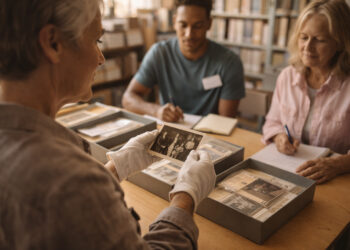
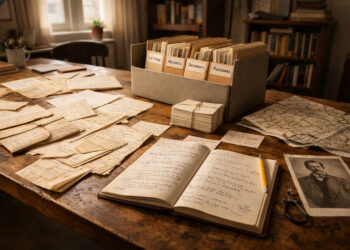
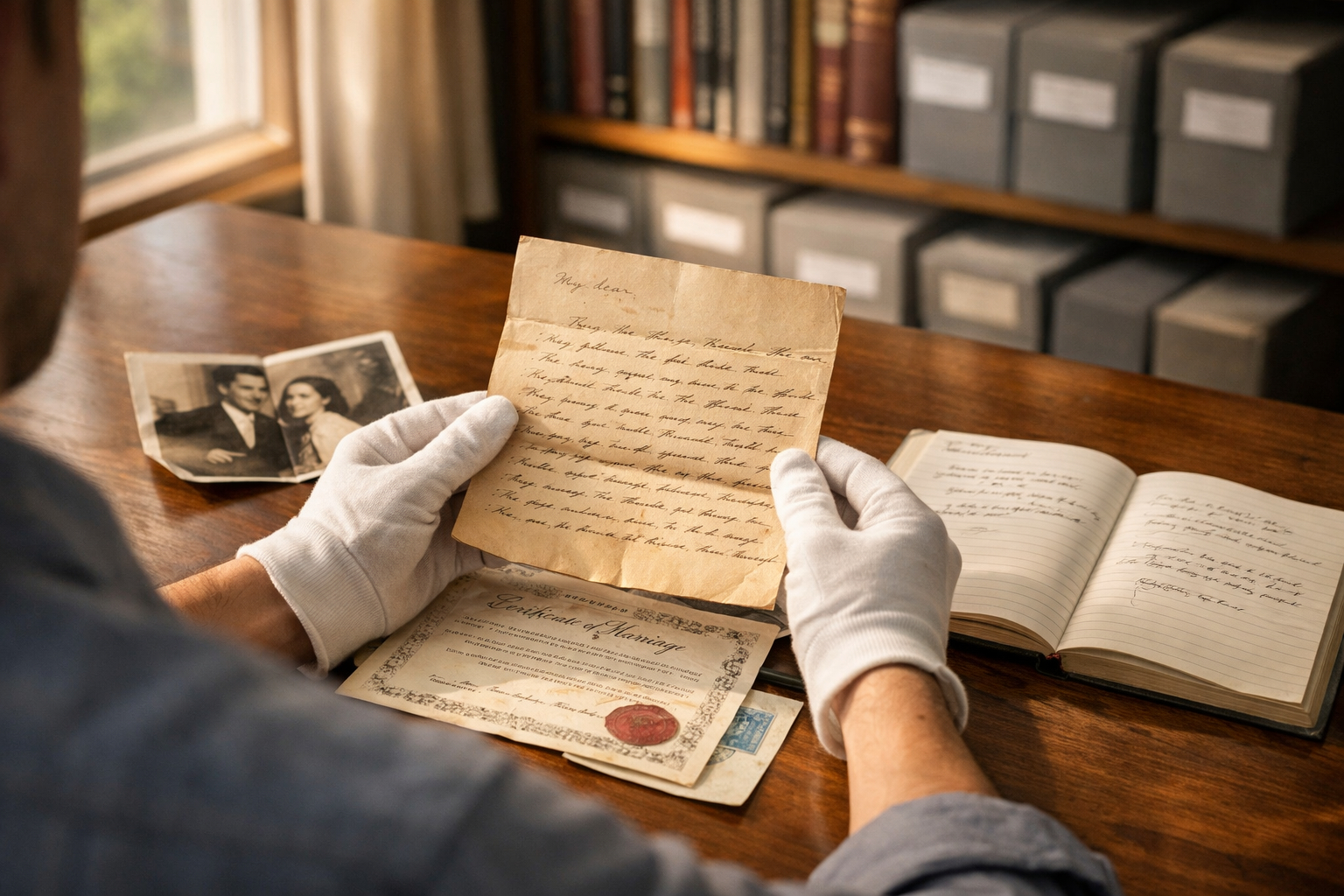
Start by assembling diverse primary and secondary sources to build a layered account of a life. Official records, letters, oral histories, and contemporary newspapers each bring different perspectives and degrees of reliability. Careful cross-checking resolves contradictions and reveals where gaps require cautious interpretation.

  • Official records and certificates
  • Personal letters and diaries
  • Oral histories, newspapers, and photographs

Prioritize documents that illuminate everyday choices as well as public achievements. Annotating uncertainties keeps the narrative honest and allows readers to assess the evidence themselves.

Shaping Narrative and Context

A biography should weave facts into an arc that respects both chronology and thematic coherence. Contextual details—social, economic, and cultural—help readers see how opportunities and constraints shaped decisions. Emphasize patterns and turning points rather than forcing a single moral interpretation of a life. Use anecdotes to illuminate character while avoiding sensationalism that can distort ordinary experience.

Craft transitions that connect events to larger trends without overshadowing personal agency. This approach situates a life within its moment while keeping the subject recognizable and complex.

Ethical Practice and Transparency

Ethical biography demands attention to privacy, consent, and the potential impact on living descendants. When sources are sparse or contested, signal those limits clearly and explain interpretive choices. Reflect on your own biases and how your perspective influences selection and emphasis.

Transparent methodology builds trust and opens the door to future revision. Readers and other researchers benefit from notes that map how conclusions were reached.

Techniques for Voice and Detail

Choosing an appropriate voice helps translate archival fragments into a coherent portrait without fictionalizing facts. Use direct quotations sparingly to let subjects speak for themselves while providing interpretive framing around those quotes. Vary sentence length and episode focus to sustain reader interest and to reflect complexity in character. Where details are missing, be explicit about conjecture and offer alternatives grounded in the available evidence.

  • Selective scene reconstruction for pivotal moments
  • Comparative context to illuminate norms and deviations

Maintain a clear distinction between documented events and inferred motives. Footnotes and methodological notes can carry the heavier load of evidence while the narrative remains readable.

Conclusion

Mindful biographies connect evidence, context, and narrative without privileging sensation over understanding.
By documenting sources and acknowledging uncertainty, writers respect both subjects and readers.
This steady practice produces work that remains useful and persuasive over time.

Previous Post

Tracing Lives Through Sources: A Practical Biographical Guide

Next Post

Applying Eras: Tools for Clear Historical Narratives

Related Posts

Tracing Lives Through Sources: A Practical Biographical Guide
Biographies

Tracing Lives Through Sources: A Practical Biographical Guide

March 9, 2026
A Local Teacher Who Shaped Civic Generations
Biographies

A Local Teacher Who Shaped Civic Generations

March 4, 2026
A Portrait of a Grassroots Archivist’s Quiet Influence
Biographies

A Portrait of a Grassroots Archivist’s Quiet Influence

March 4, 2026
Recovering Hidden Lives Through Careful Biographical Practice
Biographies

Recovering Hidden Lives Through Careful Biographical Practice

February 27, 2026
Next Post
Applying Eras: Tools for Clear Historical Narratives

Applying Eras: Tools for Clear Historical Narratives

Search..

No Result
View All Result

Recent Articles

Lighting, Sanitation, and Civic Order in Historic Towns

Lighting, Sanitation, and Civic Order in Historic Towns

March 13, 2026
Intersections, Households, and Social Life in Market Towns

Intersections, Households, and Social Life in Market Towns

March 13, 2026
Practical Workflow for Creating Accurate Historical Timelines

Practical Workflow for Creating Accurate Historical Timelines

March 12, 2026
Designing Timeline Layouts That Guide Public Understanding

Designing Timeline Layouts That Guide Public Understanding

March 12, 2026
Everyday Borders: Stories of Regional Change and Memory

Everyday Borders: Stories of Regional Change and Memory

March 11, 2026

Subscribe Us

By clicking submit, I authorize History Ours and its affiliated companies to: (1) use, sell, and share my information for marketing purposes, including cross-context behavioral advertising, as described in our Terms of Service and Privacy Policy, (2) supplement the information that I provide with additional information lawfully obtained from other sources, like demographic data from public sources, interests inferred from web page views, or other data relevant to what might interest me, like past purchase or location data, (3) contact me or enable others to contact me by email with offers for goods and services from any category at the email address provided, and (4) retain my information while I am engaging with marketing messages that I receive and for a reasonable amount of time thereafter. I understand I can opt out at any time through an email that I receive, or by clicking here

Subscribe To Our Newsletter

By clicking submit, I authorize History Ours and its affiliated companies to: (1) use, sell, and share my information for marketing purposes, including cross-context behavioral advertising, as described in our Terms of Service and Privacy Policy, (2) supplement the information that I provide with additional information lawfully obtained from other sources, like demographic data from public sources, interests inferred from web page views, or other data relevant to what might interest me, like past purchase or location data, (3) contact me or enable others to contact me by email with offers for goods and services from any category at the email address provided, and (4) retain my information while I am engaging with marketing messages that I receive and for a reasonable amount of time thereafter. I understand I can opt out at any time through an email that I receive, or by clicking here.

© 2026 History Ours | All Rights Reserved

  • Contact Us
  • Privacy Policy
  • Terms of Service
  • Unsubscribe
  • Privacy Choices
  • Contact Us
  • Privacy Policy
  • Terms of Service
  • Unsubscribe
  • Privacy Choices

© 2026 History Ours | All Rights Reserved

No Result
View All Result
  • Home
  • History
  • Biographies
  • Eras
  • Regions
  • Timeline

© 2026 History Ours | All Rights Reserved

Skip to content
Open toolbar Accessibility Tools

Accessibility Tools

  • Increase TextIncrease Text
  • Decrease TextDecrease Text
  • GrayscaleGrayscale
  • High ContrastHigh Contrast
  • Negative ContrastNegative Contrast
  • Light BackgroundLight Background
  • Links UnderlineLinks Underline
  • Readable FontReadable Font
  • Reset Reset