Uncover History’s Secrets with Daily Updates!
Daily News Entertainment
  • Home
  • History
  • Biographies
  • Eras
  • Regions
  • Timeline
No Result
View All Result
History Ours
  • Home
  • History
  • Biographies
  • Eras
  • Regions
  • Timeline
No Result
View All Result
History Ours
No Result
View All Result

Bahis vergilendirmesi Türkiye’de devlet kontrolündedir, ancak yeni açılan casino siteleri gibi uluslararası sitelerde oyuncular kendi kazançlarını yönetir.

Home Biographies

Methods for Reconstructing Lives from Fragmented Sources

in Biographies
Methods for Reconstructing Lives from Fragmented Sources

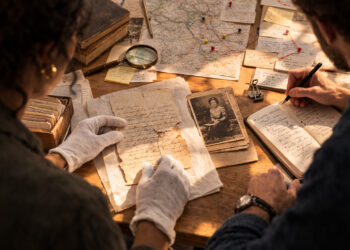
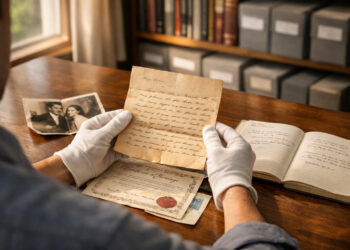
Reconstructing a life from incomplete records is a careful craft that blends evidence and context. Biographers must weigh fragments, oral histories, and public documents to build a plausible narrative. Responsible practice balances storytelling with transparency about limits in the record. This article outlines practical methods to approach fragmented sources while maintaining clarity and respect.

Research and Sources

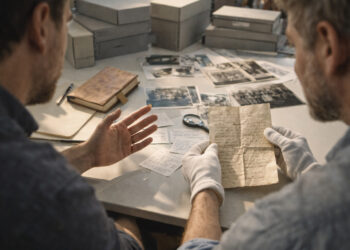
Begin with a wide survey of available material: archives, newspapers, census records, letters, and interviews. Prioritize primary sources but use secondary works to provide context and to guide further inquiry. Keep meticulous notes about provenance, contradictions, and gaps so later claims can be grounded. Triangulation—corroborating details across sources—reduces the risk of overreliance on a single account.

Good source work foregrounds uncertainty when evidence is thin. Explicitly noting what is known, probable, and speculative strengthens credibility.

Organizing a Life

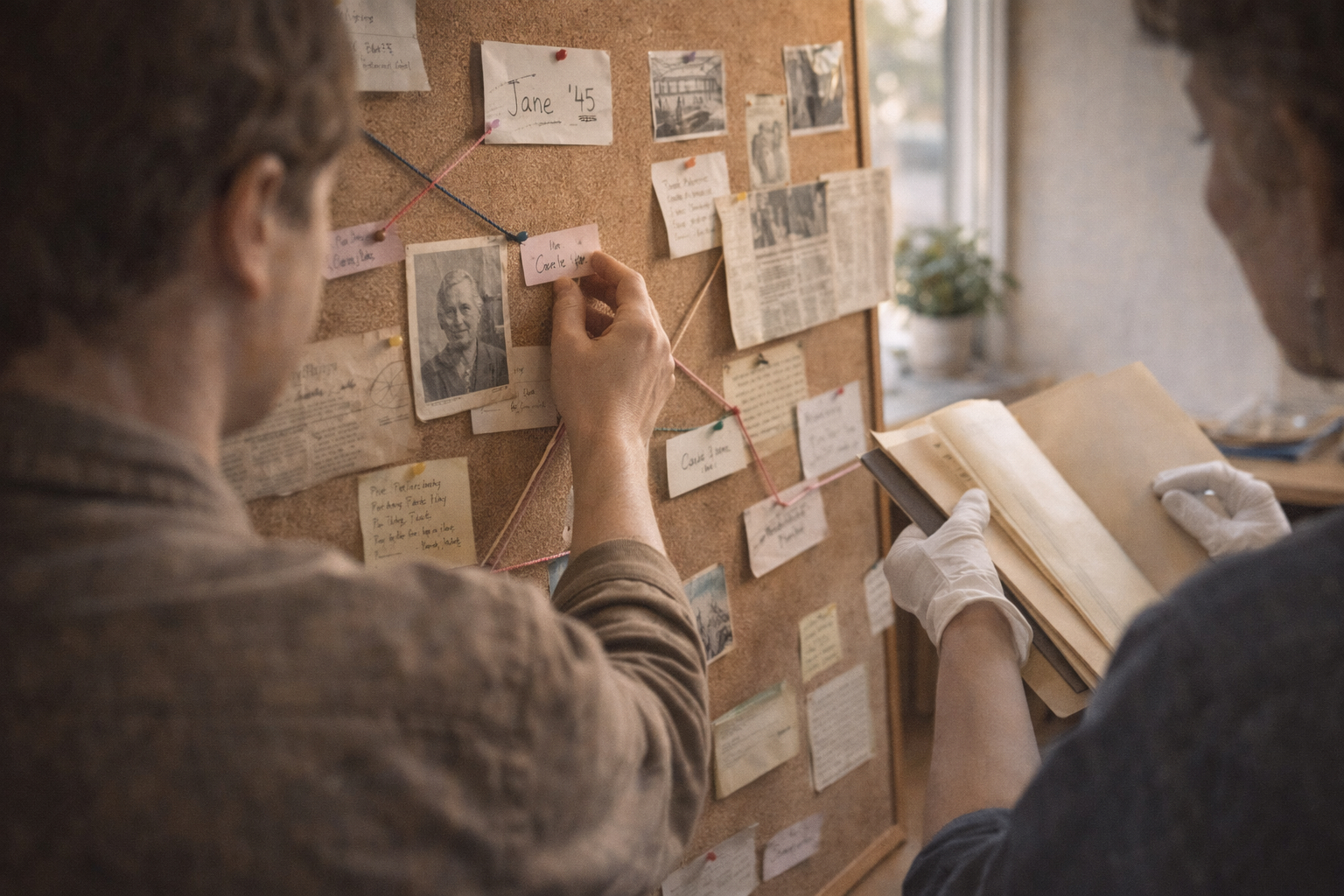
Organize material chronologically to reveal development, but allow thematic chapters when patterns cut across time. Create timelines, source summaries, and annotated bibliographies to map relationships and recurring motifs. Pay attention to social, economic, and cultural contexts that shaped opportunities and choices. A clear structure helps readers follow complex lives without imposing a false coherence.

Structure should serve interpretation, not constrain it. Allow the narrative to remain open where the record is incomplete.

Writing with Empathy

Empathy helps humanize subjects without excusing harmful actions. Ground interpretations in evidence and avoid speculative psychological claims that cannot be supported. Use language that distinguishes fact from inference.

Respect for subjects and their descendants matters in framing sensitive material. Ethical storytelling recognizes power imbalances in the archive.

Navigating Gaps and Uncertainty

Silences in the record are informative and must be treated as data, not simply obstacles. Consider why certain voices are absent and what that reveals about institutions and social hierarchies. Where necessary, offer multiple plausible readings and explain the rationale behind preferred interpretations. Footnotes and methodological sections are valuable places to unpack uncertainties for specialist readers.

Transparent handling of doubt invites reader trust. It also creates space for future research to revise conclusions.

Conclusion

Careful biography combines diligent research, clear organization, and ethical attention to gaps. Writers should label inference, emphasize evidence, and remain open to revision. Practiced methods like triangulation and contextual reading help produce responsible, readable life narratives.
Previous Post

Lighting, Sanitation, and Civic Order in Historic Towns

Next Post

Restoring Quiet Lives: Practical Approaches to Biography

Related Posts

Restoring Quiet Lives: Practical Approaches to Biography
Biographies

Restoring Quiet Lives: Practical Approaches to Biography

March 14, 2026
Crafting Thoughtful, Balanced Biographical Narratives That Respect Sources
Biographies

Crafting Thoughtful, Balanced Biographical Narratives That Respect Sources

March 9, 2026
Tracing Lives Through Sources: A Practical Biographical Guide
Biographies

Tracing Lives Through Sources: A Practical Biographical Guide

March 9, 2026
A Local Teacher Who Shaped Civic Generations
Biographies

A Local Teacher Who Shaped Civic Generations

March 4, 2026
Next Post
Restoring Quiet Lives: Practical Approaches to Biography

Restoring Quiet Lives: Practical Approaches to Biography

Search..

No Result
View All Result

Recent Articles

Restoring Quiet Lives: Practical Approaches to Biography

Restoring Quiet Lives: Practical Approaches to Biography

March 14, 2026
Methods for Reconstructing Lives from Fragmented Sources

Methods for Reconstructing Lives from Fragmented Sources

March 14, 2026
Lighting, Sanitation, and Civic Order in Historic Towns

Lighting, Sanitation, and Civic Order in Historic Towns

March 13, 2026
Intersections, Households, and Social Life in Market Towns

Intersections, Households, and Social Life in Market Towns

March 13, 2026
Practical Workflow for Creating Accurate Historical Timelines

Practical Workflow for Creating Accurate Historical Timelines

March 12, 2026

Subscribe Us

By clicking submit, I authorize History Ours and its affiliated companies to: (1) use, sell, and share my information for marketing purposes, including cross-context behavioral advertising, as described in our Terms of Service and Privacy Policy, (2) supplement the information that I provide with additional information lawfully obtained from other sources, like demographic data from public sources, interests inferred from web page views, or other data relevant to what might interest me, like past purchase or location data, (3) contact me or enable others to contact me by email with offers for goods and services from any category at the email address provided, and (4) retain my information while I am engaging with marketing messages that I receive and for a reasonable amount of time thereafter. I understand I can opt out at any time through an email that I receive, or by clicking here

Subscribe To Our Newsletter

By clicking submit, I authorize History Ours and its affiliated companies to: (1) use, sell, and share my information for marketing purposes, including cross-context behavioral advertising, as described in our Terms of Service and Privacy Policy, (2) supplement the information that I provide with additional information lawfully obtained from other sources, like demographic data from public sources, interests inferred from web page views, or other data relevant to what might interest me, like past purchase or location data, (3) contact me or enable others to contact me by email with offers for goods and services from any category at the email address provided, and (4) retain my information while I am engaging with marketing messages that I receive and for a reasonable amount of time thereafter. I understand I can opt out at any time through an email that I receive, or by clicking here.

© 2026 History Ours | All Rights Reserved

  • Contact Us
  • Privacy Policy
  • Terms of Service
  • Unsubscribe
  • Privacy Choices
  • Contact Us
  • Privacy Policy
  • Terms of Service
  • Unsubscribe
  • Privacy Choices

© 2026 History Ours | All Rights Reserved

No Result
View All Result
  • Home
  • History
  • Biographies
  • Eras
  • Regions
  • Timeline

© 2026 History Ours | All Rights Reserved

Skip to content
Open toolbar Accessibility Tools

Accessibility Tools

  • Increase TextIncrease Text
  • Decrease TextDecrease Text
  • GrayscaleGrayscale
  • High ContrastHigh Contrast
  • Negative ContrastNegative Contrast
  • Light BackgroundLight Background
  • Links UnderlineLinks Underline
  • Readable FontReadable Font
  • Reset Reset