
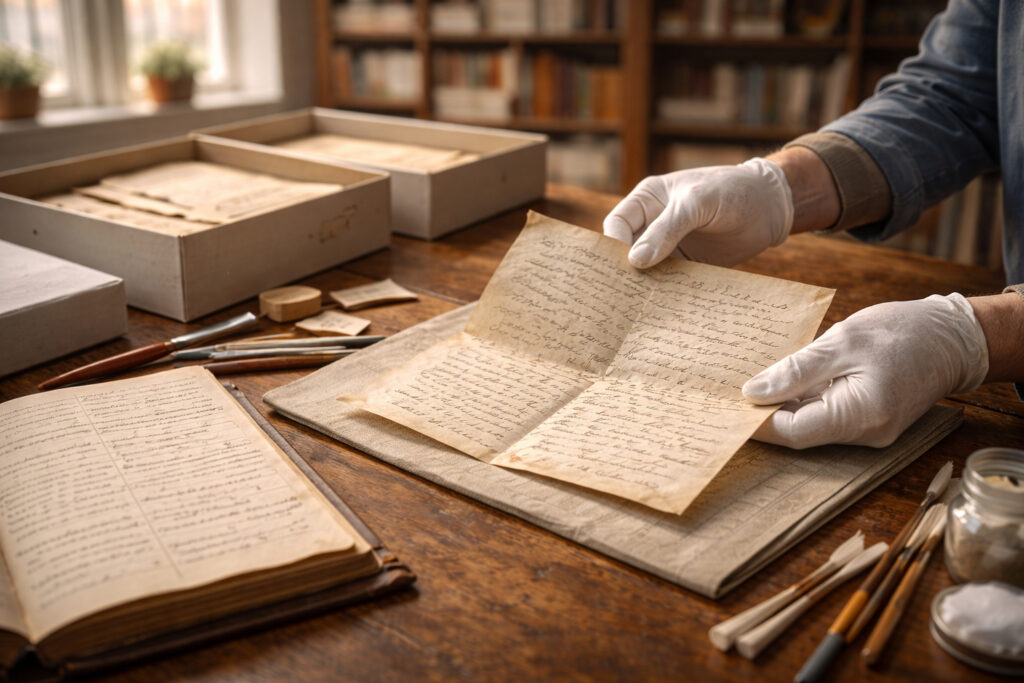
Few figures in archival history combine deep scholarship with practical collection-building as effectively as the librarian scholar at the center of this profile.
Her career bridged the gap between academic research and the daily stewardship of materials, redefining what historical collections can offer to scholars and the public.
She prioritized provenance, community engagement, and the preservation of marginal voices, often against institutional inertia.
This story traces the formative choices and methods that made her work both influential and enduring.
Early life and education
Born into a household that valued books and conversation, she developed an early appetite for primary sources and storytelling. Her formal education combined liberal arts study with specialized training in cataloging and conservation, which gave her both theoretical framework and practical skills. Mentors encouraged a field-based approach: learning in archives, engaging with donors, and understanding the social contexts of materials. These formative experiences shaped a philosophy that archives should serve living communities as well as researchers.
Career and archival innovations
In her institutional roles she introduced cataloging practices that foregrounded context over mere object description, and she advocated for active acquisition of personal papers from underrepresented groups. Her approach emphasized building relationships with donors and local communities to ensure collections reflected a broader social history. She also championed in-house conservation workshops to extend the life of fragile materials and to build staff expertise.
– Contextual cataloging that recorded provenance and community narratives.
– Community-based acquisition programs to diversify holdings.
– Practical conservation training for staff to sustain long-term access.
These innovations reduced barriers between collections and the public. Staff trained under her methods often went on to replicate similar programs elsewhere, spreading her influence beyond any single institution.
Legacy and lessons for researchers
Her legacy is visible in how contemporary archives prioritize inclusive collecting and in the emergence of catalog records that tell more than the bare facts of creation. For researchers, her methodology offers clear lessons: engage with curators early, document the human stories behind materials, and treat preservation as part of scholarship rather than an afterthought. Institutions that adopt her model report richer interpretations and increased public trust in their holdings, demonstrating the practical benefits of a human-centered archival practice.
Conclusion
Her career illustrates how professional rigor and community-mindedness can transform collections into living resources.
By insisting on context, access, and care she helped rewrite expectations for what archives can be.
Her example continues to guide archivists, scholars, and anyone invested in preserving complex pasts.