Uncover History’s Secrets with Daily Updates!
Daily News Entertainment
  • Home
  • History
  • Biographies
  • Eras
  • Regions
  • Timeline
No Result
View All Result
History Ours
  • Home
  • History
  • Biographies
  • Eras
  • Regions
  • Timeline
No Result
View All Result
History Ours
No Result
View All Result

Bahis vergilendirmesi Türkiye’de devlet kontrolündedir, ancak yeni açılan casino siteleri gibi uluslararası sitelerde oyuncular kendi kazançlarını yönetir.

Home Eras

Framing Time: Understanding Historical Eras and Boundaries

in Eras
Framing Time: Understanding Historical Eras and Boundaries

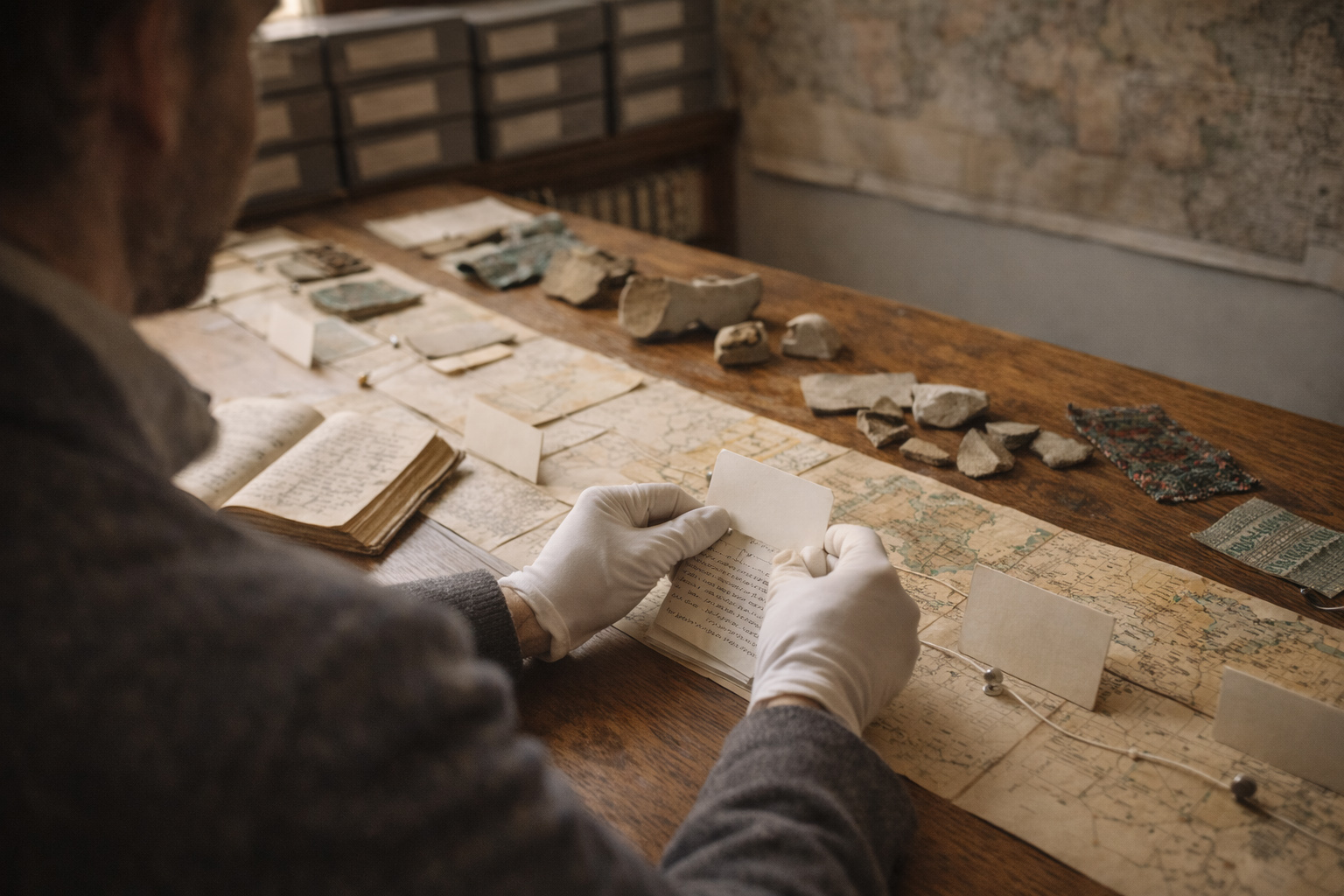
Historical eras organize complex pasts into manageable spans for analysis.
They are interpretive frameworks shaped by scholars, institutions, and public memory.
Recognizing how eras are constructed helps avoid oversimplification and reveals contested transitions.
This article outlines criteria for eras, common methods historians use, and practical approaches for study.

What Constitutes an Era?

Eras are identified when recurring patterns, sustained institutions, or sweeping changes create a recognizable continuity across years or decades. They may center on political structures, economic systems, technological innovation, or broad cultural movements that reconfigure social life. Often eras overlap and vary by region, social group, or discipline, so a label that fits one context may mislead in another. Because markers are interpretive, debates about start and end dates are common and reflect differing priorities in historical explanation.

Clear criteria—such as demonstrable change, longevity, and broad impact—make comparisons more meaningful and help contextualize events within larger narratives. At the same time, flexibility is necessary to accommodate local variation and emerging evidence.

How Eras Are Identified

Historians use a combination of chronological anchors, thematic patterns, and source-based evidence to delimit eras. Chronological anchors might include decisive conflicts, legal reforms, or economic shifts that provide clear temporal markers. Thematic grouping highlights processes like industrialization, migration, or cultural renewal that cut across neat dates and reveal long-term dynamics. Source analysis—contemporary texts, material culture, legal records—shows how people experienced and described change, offering internal perspectives on transitions. Historiography also matters because later scholars often redraw period boundaries to reflect new questions or evidence.

Being explicit about method reduces descriptive bias and clarifies what a period label emphasizes. It also helps readers understand the provisional nature of many periodizations.

Studying Eras Effectively

Approaching eras productively requires balancing big-picture synthesis with close attention to specific cases. Start with a timeline to locate major shifts, then select representative case studies that illuminate how broader processes worked in practice. Comparative work across regions or social groups tests whether an era’s defining traits were widespread or limited. Integrating primary sources with recent scholarship uncovers both lived experience and evolving interpretations. Regularly revisiting period labels prevents complacency and invites fresh connections.

  • Map timelines visually to connect events with long-term trends.
  • Prioritize representative case studies rather than exceptional anecdotes.
  • Engage historiographical debates to see how and why labels change.

Active comparison and source diversity sharpen understanding and make era-based study both rigorous and illuminating. These practices help readers and students treat eras as useful tools rather than fixed truths.

Conclusion

Periodizing history is a practical and interpretive act that clarifies large-scale change.
Good practice combines clear criteria, careful sources, and comparative perspective.
When used thoughtfully, eras reveal patterns without erasing complexity.

Previous Post

A Local Teacher Who Shaped Civic Generations

Next Post

Eras in History: Tools for Organizing the Past

Related Posts

Eras in History: Tools for Organizing the Past
Eras

Eras in History: Tools for Organizing the Past

March 5, 2026
Understanding Transitions Between Major Historical Eras
Eras

Understanding Transitions Between Major Historical Eras

February 28, 2026
Tracing Daily Life Across Successive Historical Eras
Eras

Tracing Daily Life Across Successive Historical Eras

February 28, 2026
Framing Time: How Eras Guide Historical Interpretation
Eras

Framing Time: How Eras Guide Historical Interpretation

February 23, 2026
Next Post
Eras in History: Tools for Organizing the Past

Eras in History: Tools for Organizing the Past

Search..

No Result
View All Result

Recent Articles

Eras in History: Tools for Organizing the Past

Eras in History: Tools for Organizing the Past

March 5, 2026
Framing Time: Understanding Historical Eras and Boundaries

Framing Time: Understanding Historical Eras and Boundaries

March 5, 2026
A Local Teacher Who Shaped Civic Generations

A Local Teacher Who Shaped Civic Generations

March 4, 2026
A Portrait of a Grassroots Archivist’s Quiet Influence

A Portrait of a Grassroots Archivist’s Quiet Influence

March 4, 2026
Hidden Histories: What Daily Items Reveal About Communities

Hidden Histories: What Daily Items Reveal About Communities

March 3, 2026

Subscribe Us

By clicking submit, I authorize History Ours and its affiliated companies to: (1) use, sell, and share my information for marketing purposes, including cross-context behavioral advertising, as described in our Terms of Service and Privacy Policy, (2) supplement the information that I provide with additional information lawfully obtained from other sources, like demographic data from public sources, interests inferred from web page views, or other data relevant to what might interest me, like past purchase or location data, (3) contact me or enable others to contact me by email with offers for goods and services from any category at the email address provided, and (4) retain my information while I am engaging with marketing messages that I receive and for a reasonable amount of time thereafter. I understand I can opt out at any time through an email that I receive, or by clicking here

Subscribe To Our Newsletter

By clicking submit, I authorize History Ours and its affiliated companies to: (1) use, sell, and share my information for marketing purposes, including cross-context behavioral advertising, as described in our Terms of Service and Privacy Policy, (2) supplement the information that I provide with additional information lawfully obtained from other sources, like demographic data from public sources, interests inferred from web page views, or other data relevant to what might interest me, like past purchase or location data, (3) contact me or enable others to contact me by email with offers for goods and services from any category at the email address provided, and (4) retain my information while I am engaging with marketing messages that I receive and for a reasonable amount of time thereafter. I understand I can opt out at any time through an email that I receive, or by clicking here.

© 2026 History Ours | All Rights Reserved

  • Contact Us
  • Privacy Policy
  • Terms of Service
  • Unsubscribe
  • Privacy Choices
  • Contact Us
  • Privacy Policy
  • Terms of Service
  • Unsubscribe
  • Privacy Choices

© 2026 History Ours | All Rights Reserved

No Result
View All Result
  • Home
  • History
  • Biographies
  • Eras
  • Regions
  • Timeline

© 2026 History Ours | All Rights Reserved

Skip to content
Open toolbar Accessibility Tools

Accessibility Tools

  • Increase TextIncrease Text
  • Decrease TextDecrease Text
  • GrayscaleGrayscale
  • High ContrastHigh Contrast
  • Negative ContrastNegative Contrast
  • Light BackgroundLight Background
  • Links UnderlineLinks Underline
  • Readable FontReadable Font
  • Reset Reset