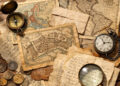


The Renaissance was more than just a cultural awakening — it was a revolution that bridged art, science, and human curiosity. Emerging in Europe between the 14th and 17th centuries, this era redefined how people viewed the world and themselves. Artists became scientists, and scientists became artists, blending creativity with inquiry. The result was an explosion of innovation that transformed philosophy, architecture, anatomy, and astronomy, laying the foundation for the modern age.
A New Way of Seeing the World
Before the Renaissance, much of Europe’s knowledge and expression were shaped by religion and tradition. But as scholars rediscovered classical Greek and Roman works, humanism emerged — a philosophy that placed man, not God, at the center of thought. This shift inspired artists and thinkers to explore the natural world through observation and experimentation. Paintings began to reflect depth, proportion, and realism, mirroring scientific precision.
Leonardo da Vinci: The Perfect Fusion of Art and Science
No figure captures the Renaissance spirit better than Leonardo da Vinci. He was not just a painter but an inventor, engineer, and anatomist. His notebooks are filled with sketches of flying machines, human organs, and mathematical patterns — all drawn with artistic beauty and scientific accuracy. His masterpiece, Vitruvian Man, perfectly symbolizes the era’s pursuit of balance between art and empirical knowledge. For Leonardo, creativity and curiosity were inseparable forces driving human progress.
Science Finds Its Voice
The Renaissance also marked the birth of modern science. Visionaries like Galileo Galilei, Nicolaus Copernicus, and Andreas Vesalius challenged long-held beliefs about the universe and the human body. Through observation and evidence, they replaced dogma with discovery. Galileo’s telescopic studies of the planets and Vesalius’s anatomical drawings redefined truth through visual and mathematical proof — merging artistry with precision.
Art as a Reflection of Scientific Discovery
The advancements in science influenced art in profound ways. The study of optics and geometry led to linear perspective, giving paintings a sense of depth and realism never seen before. Artists like Michelangelo and Raphael combined anatomical accuracy with divine emotion, making their works both spiritual and scientific. Architecture, too, embraced proportion and symmetry, echoing mathematical harmony in cathedrals and domes.
Conclusion
The Renaissance revolution was a celebration of curiosity — a time when imagination met intellect. It proved that art and science are not rivals but partners in understanding the world. By blending creativity with inquiry, Renaissance thinkers set humanity on a path of innovation that continues to shape culture, knowledge, and discovery today.