
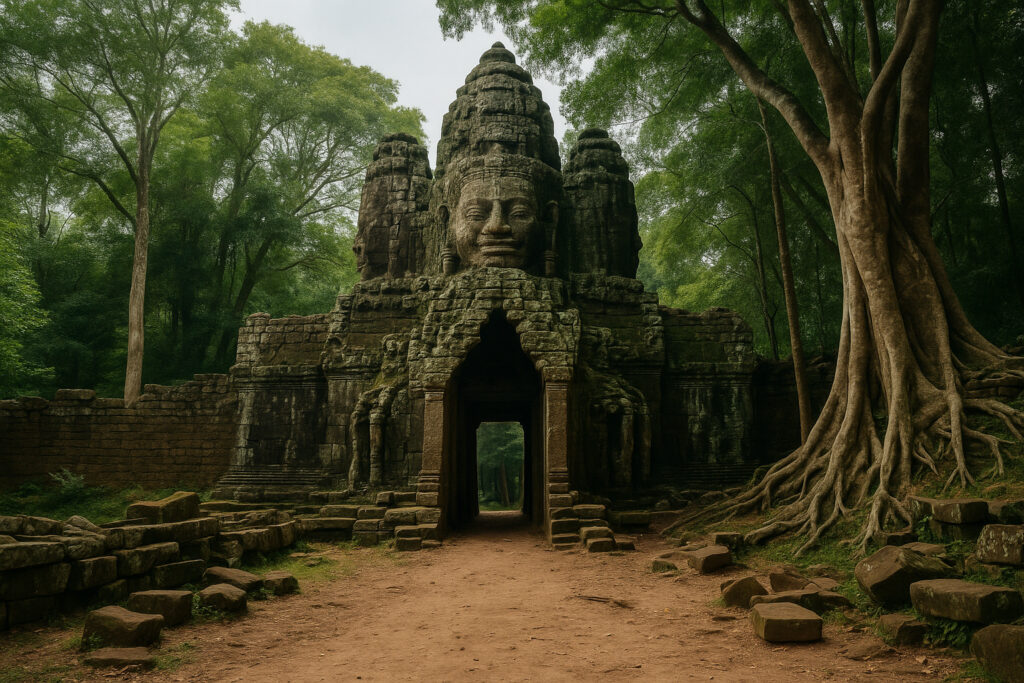
Southeast Asia is home to some of the world’s most fascinating but lesser-known ancient civilizations—societies that thrived long before modern nations existed. From lost cities swallowed by forests to kingdoms that shaped trade, religion, and architecture across continents, these cultures left behind stories carved in stone and buried beneath centuries of history. Exploring these hidden civilizations reveals how inventive, spiritual, and interconnected early Southeast Asian societies truly were, offering a richer understanding of the region’s past.
The Mysterious Kingdoms Beneath the Jungle
Across Southeast Asia, dense rainforests have concealed entire ancient cities for centuries. In Cambodia, archaeological discoveries continue to reveal sophisticated urban networks surrounding Angkor—not just the temples but vast hydraulic systems, roadways, and planned settlements. In Laos and Thailand, lesser-known sites like the Plain of Jars and early Bronze Age settlements show advanced craftsmanship and ceremonial traditions long predating modern records. These findings suggest that many ancient societies in the region were far more complex and organized than once believed.
Maritime Civilizations That Ruled the Seas
The islands of Indonesia and the Philippines were home to powerful maritime cultures that connected Southeast Asia to India, Arabia, and China. Civilizations like Srivijaya controlled major sea routes and spread religion, literature, and art across the region. These cultures mastered shipbuilding and navigation, allowing them to influence global trade centuries before European exploration began. Their legacy remains visible in ancient ports, sunken ships, and inscriptions that reveal vast networks of cultural exchange.
Temple Builders and Spiritual Innovators
The region’s hidden civilizations also contributed to some of the world’s most impressive religious monuments. Borobudur in Java, a massive stone mandala rising from the forest, reveals extraordinary understanding of engineering, cosmology, and Buddhist philosophy. Less known but equally striking temples in Myanmar, Vietnam, and Malaysia show how local kingdoms blended Hindu, Buddhist, and indigenous beliefs. These sites not only served as spiritual centers but also demonstrated mastery of stone carving, astronomy, and architecture.
Rediscovering History Through Modern Technology
Advancements in archaeology—like LiDAR scanning and satellite imaging—have revolutionized the study of Southeast Asia’s ancient civilizations. Structures once hidden beneath jungle canopy or coastal sediment are now being uncovered with remarkable detail. These discoveries continue to reshape historians’ understanding, revealing that Southeast Asia’s early societies were dynamic, interconnected, and advanced. Modern technology is helping to restore their stories and bring long-overlooked histories into the global narrative.
Conclusion
Southeast Asia’s hidden civilizations offer a window into a past filled with innovation, spirituality, and cultural exchange. From jungle-covered cities to maritime empires, these ancient societies shaped the region in profound ways. As new discoveries emerge, they remind us of the depth and richness of human history waiting to be uncovered.