
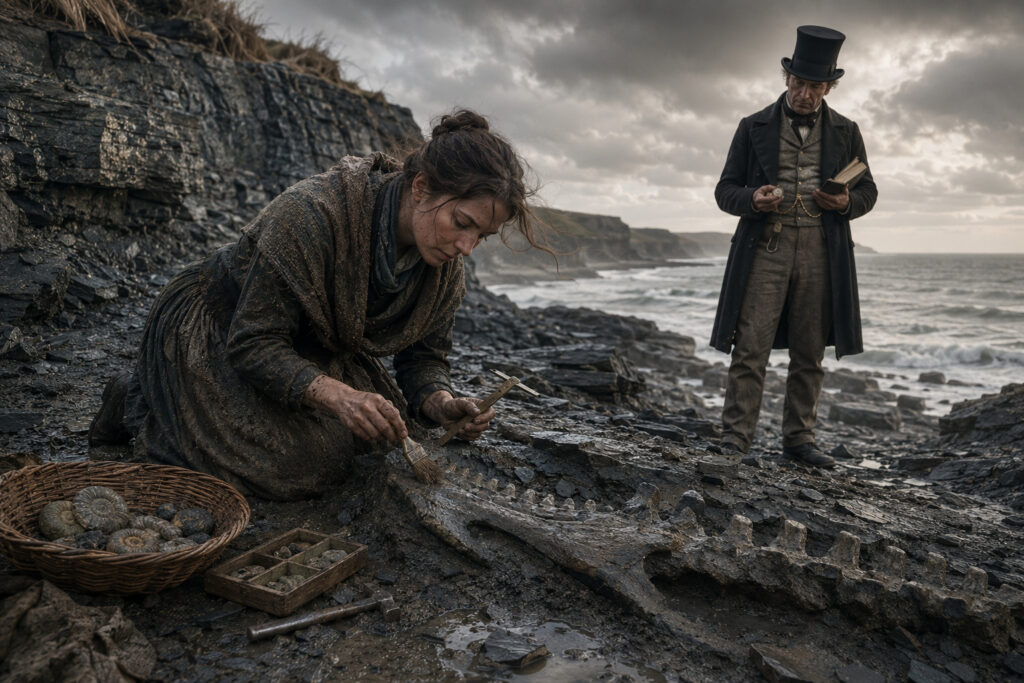
Mary Anning grew up with salt spray and slipping shale underfoot. Born to a carpenter in the Dorset fishing town of Lyme Regis, she learned to hunt fossils on the steep, treacherous stretch of rock known as the Blue Lias. The cliffs periodically disgorged enormous bones after storms, and a market for curiosities—wealthy travelers and collectors—meant that a sharp eye could be a livelihood. Anning sold specimens to visitors and dealers, but she did more than dig for pennies: she learned to prepare, measure and interpret the remains she found.
Fossils that challenged how people saw the world
Over the course of decades Anning uncovered some of the first nearly complete skeletons of giant marine reptiles—ichthyosaurs and plesiosaurs among them—and exquisite ammonites. These finds were not just dramatic souvenirs; they forced naturalists to confront awkward questions. Why were these strange bones embedded in rock far from living sea beds? What did such creatures say about the history of life on Earth? The fossils Mary unearthed became key pieces of evidence in debates about extinction and deep time. Leading geologists and anatomists studied or purchased her specimens, and her observations often corrected or sharpened scientific descriptions produced by men with university affiliations.
Being brilliant where credit was rationed
Anning’s story is also one about class and gender. She worked outside the networks that handed out academic prestige: she hadn’t gone to university and she earned her living by selling fossils. That left her vulnerable to having her expertise described by others who got named in print. Women were barred from societies and their names rarely appeared in formal publications. Still, contemporaries recognized her eye for detail. They admired the accuracy of her fossil preparations, the way she could spot a diagnostic bone in mud and suggest what it meant.
Conclusion
Mary Anning’s legacy is double-edged. For a long time she stood at the margins of scientific credit even as her finds helped reshape natural history. Today she is celebrated not as a footnote but as the practical, observant field naturalist whose hands literally put strange extinct creatures on the table for study. Walk the cliffs at Lyme Regis and the landscape that once paid her wages still yields fragments of deep ancient seas—reminders that discoveries often come from people who know how to look long and closely, regardless of the respect the institutions of their day were willing to grant.