Uncover History’s Secrets with Daily Updates!
Daily News Entertainment
  • Home
  • History
  • Biographies
  • Eras
  • Regions
  • Timeline
No Result
View All Result
History Ours
  • Home
  • History
  • Biographies
  • Eras
  • Regions
  • Timeline
No Result
View All Result
History Ours
No Result
View All Result

Bahis vergilendirmesi Türkiye’de devlet kontrolündedir, ancak yeni açılan casino siteleri gibi uluslararası sitelerde oyuncular kendi kazançlarını yönetir.

Home Biographies

Reading Lives: Practical Steps for Respectful Biographical Research

in Biographies
Reading Lives: Practical Steps for Respectful Biographical Research

Good biography combines curiosity with careful method, turning fragments into a coherent life story. Successful projects start with clear questions about what to explain and why those questions matter for readers. Early decisions about scope, sources, and ethical boundaries shape how the narrative will take form. A steady attention to context keeps the subject recognizable without imposing modern assumptions.

Approaching Sources

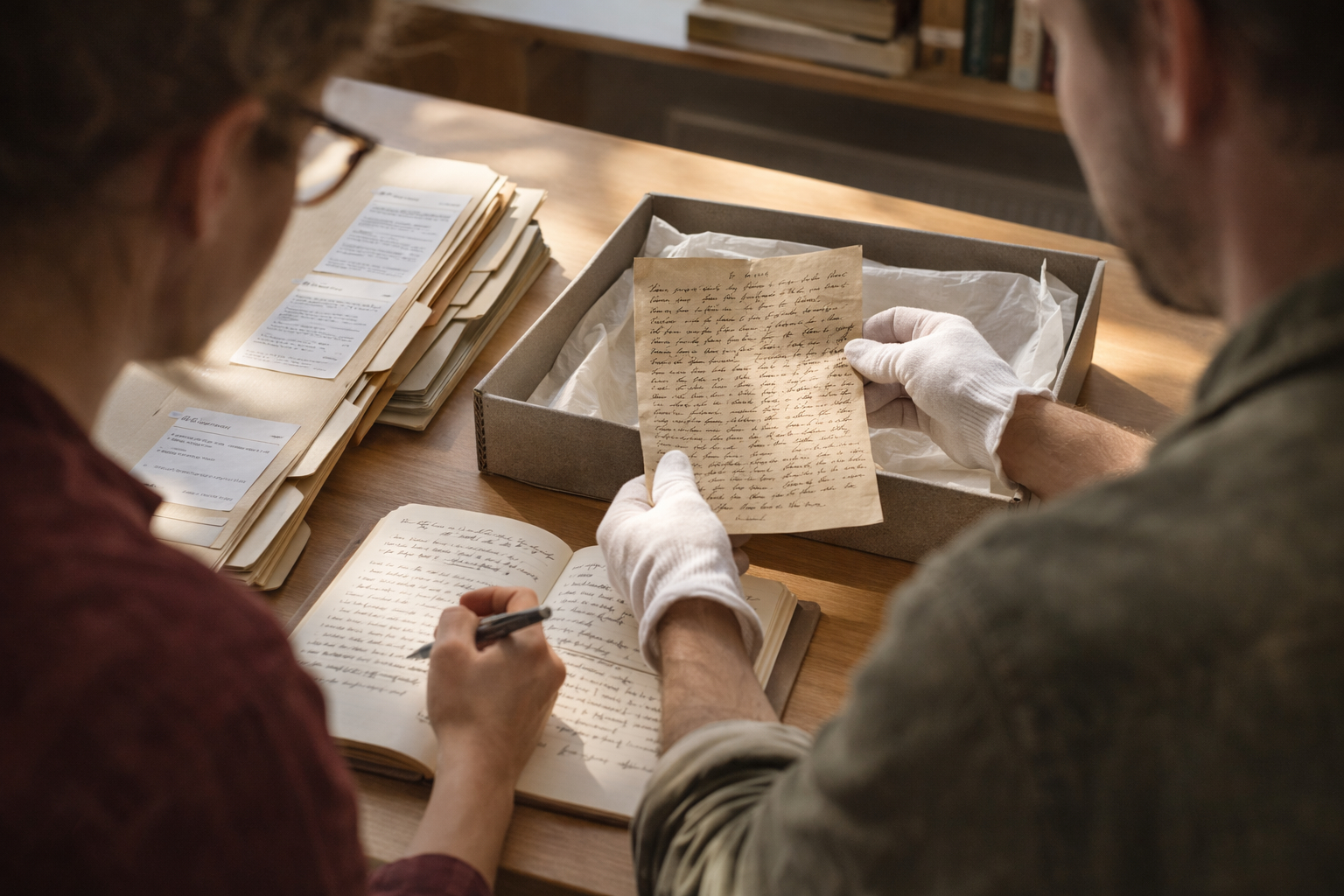
Begin by assembling all available material and treating each item as evidence rather than a finished account. Letters, official records, newspapers, and oral memories each have strengths and limitations, and understanding provenance helps weigh reliability. Corroboration is vital: similar details repeated across independent sources increase confidence, while contradictions flag areas for further investigation. When gaps remain, document the uncertainty rather than filling it with speculation.

  • Prioritize primary materials for direct insight.
  • Use secondary works to frame broader contexts.

Keeping a clear audit trail of where facts came from speeds revision and helps future researchers follow your reasoning. Good note-keeping is as important as interpretation.

Building Context

A subject’s life gains meaning when placed within political, social, and cultural frameworks that shaped choices and opportunities. Context helps explain patterns of work, family interactions, and public behavior without reducing a life to its environment. Use background sources to explain institutions, norms, and common practices relevant to formative periods in the subject’s life. This enables readers to see how individual actions fit into larger currents.

Contextualization also protects against imposing present-day values on past actors. Aim to clarify how conditions limited or enabled options while still recognizing personal agency and contradiction.

Balancing Narrative and Evidence

A compelling biography weaves verified facts into a readable narrative while making its evidentiary choices transparent. Structure chapters around themes or turning points rather than forcing a linear timeline, when that better serves understanding. Cite or describe the basis for key claims and use qualifying language where evidence is partial. Readers trust authors who separate fact, inference, and interpretation.

Storytelling and rigor are complementary: narrative engages attention, and disciplined sourcing preserves credibility. Strive for prose that earns the reader’s trust by being both engaging and honest about limits.

Conclusion

Responsible biographical research demands a balance of empathy, method, and clarity. By organizing sources, situating lives in context, and signaling uncertainty, writers honor both subjects and readers. Thoughtful biography converts fragmentary records into meaningful, trustworthy narratives.


Previous Post

Waterways, Mills, and the Pulse of Market Town Economies

Next Post

Strategies for Weaving Sparse Records into Fuller Biographies

Related Posts

Strategies for Weaving Sparse Records into Fuller Biographies
Biographies

Strategies for Weaving Sparse Records into Fuller Biographies

March 19, 2026
Restoring Quiet Lives: Practical Approaches to Biography
Biographies

Restoring Quiet Lives: Practical Approaches to Biography

March 14, 2026
Methods for Reconstructing Lives from Fragmented Sources
Biographies

Methods for Reconstructing Lives from Fragmented Sources

March 14, 2026
Crafting Thoughtful, Balanced Biographical Narratives That Respect Sources
Biographies

Crafting Thoughtful, Balanced Biographical Narratives That Respect Sources

March 9, 2026
Next Post
Strategies for Weaving Sparse Records into Fuller Biographies

Strategies for Weaving Sparse Records into Fuller Biographies

Search..

No Result
View All Result

Recent Articles

Strategies for Weaving Sparse Records into Fuller Biographies

Strategies for Weaving Sparse Records into Fuller Biographies

March 19, 2026
Reading Lives: Practical Steps for Respectful Biographical Research

Reading Lives: Practical Steps for Respectful Biographical Research

March 19, 2026
Waterways, Mills, and the Pulse of Market Town Economies

Waterways, Mills, and the Pulse of Market Town Economies

March 18, 2026
Seasonal Festivals and Economic Rhythms in Small Towns

Seasonal Festivals and Economic Rhythms in Small Towns

March 18, 2026
Turning Dates into Story: Practical Timeline Construction Techniques

Turning Dates into Story: Practical Timeline Construction Techniques

March 17, 2026

Subscribe Us

By clicking submit, I authorize History Ours and its affiliated companies to: (1) use, sell, and share my information for marketing purposes, including cross-context behavioral advertising, as described in our Terms of Service and Privacy Policy, (2) supplement the information that I provide with additional information lawfully obtained from other sources, like demographic data from public sources, interests inferred from web page views, or other data relevant to what might interest me, like past purchase or location data, (3) contact me or enable others to contact me by email with offers for goods and services from any category at the email address provided, and (4) retain my information while I am engaging with marketing messages that I receive and for a reasonable amount of time thereafter. I understand I can opt out at any time through an email that I receive, or by clicking here

Subscribe To Our Newsletter

By clicking submit, I authorize History Ours and its affiliated companies to: (1) use, sell, and share my information for marketing purposes, including cross-context behavioral advertising, as described in our Terms of Service and Privacy Policy, (2) supplement the information that I provide with additional information lawfully obtained from other sources, like demographic data from public sources, interests inferred from web page views, or other data relevant to what might interest me, like past purchase or location data, (3) contact me or enable others to contact me by email with offers for goods and services from any category at the email address provided, and (4) retain my information while I am engaging with marketing messages that I receive and for a reasonable amount of time thereafter. I understand I can opt out at any time through an email that I receive, or by clicking here.

© 2026 History Ours | All Rights Reserved

  • Contact Us
  • Privacy Policy
  • Terms of Service
  • Unsubscribe
  • Privacy Choices
  • Contact Us
  • Privacy Policy
  • Terms of Service
  • Unsubscribe
  • Privacy Choices

© 2026 History Ours | All Rights Reserved

No Result
View All Result
  • Home
  • History
  • Biographies
  • Eras
  • Regions
  • Timeline

© 2026 History Ours | All Rights Reserved

Skip to content
Open toolbar Accessibility Tools

Accessibility Tools

  • Increase TextIncrease Text
  • Decrease TextDecrease Text
  • GrayscaleGrayscale
  • High ContrastHigh Contrast
  • Negative ContrastNegative Contrast
  • Light BackgroundLight Background
  • Links UnderlineLinks Underline
  • Readable FontReadable Font
  • Reset Reset