Uncover History’s Secrets with Daily Updates!
Daily News Entertainment
  • Home
  • History
  • Biographies
  • Eras
  • Regions
  • Timeline
No Result
View All Result
History Ours
  • Home
  • History
  • Biographies
  • Eras
  • Regions
  • Timeline
No Result
View All Result
History Ours
No Result
View All Result
Home History

Waterways, Mills, and the Pulse of Market Town Economies

in History
Waterways, Mills, and the Pulse of Market Town Economies

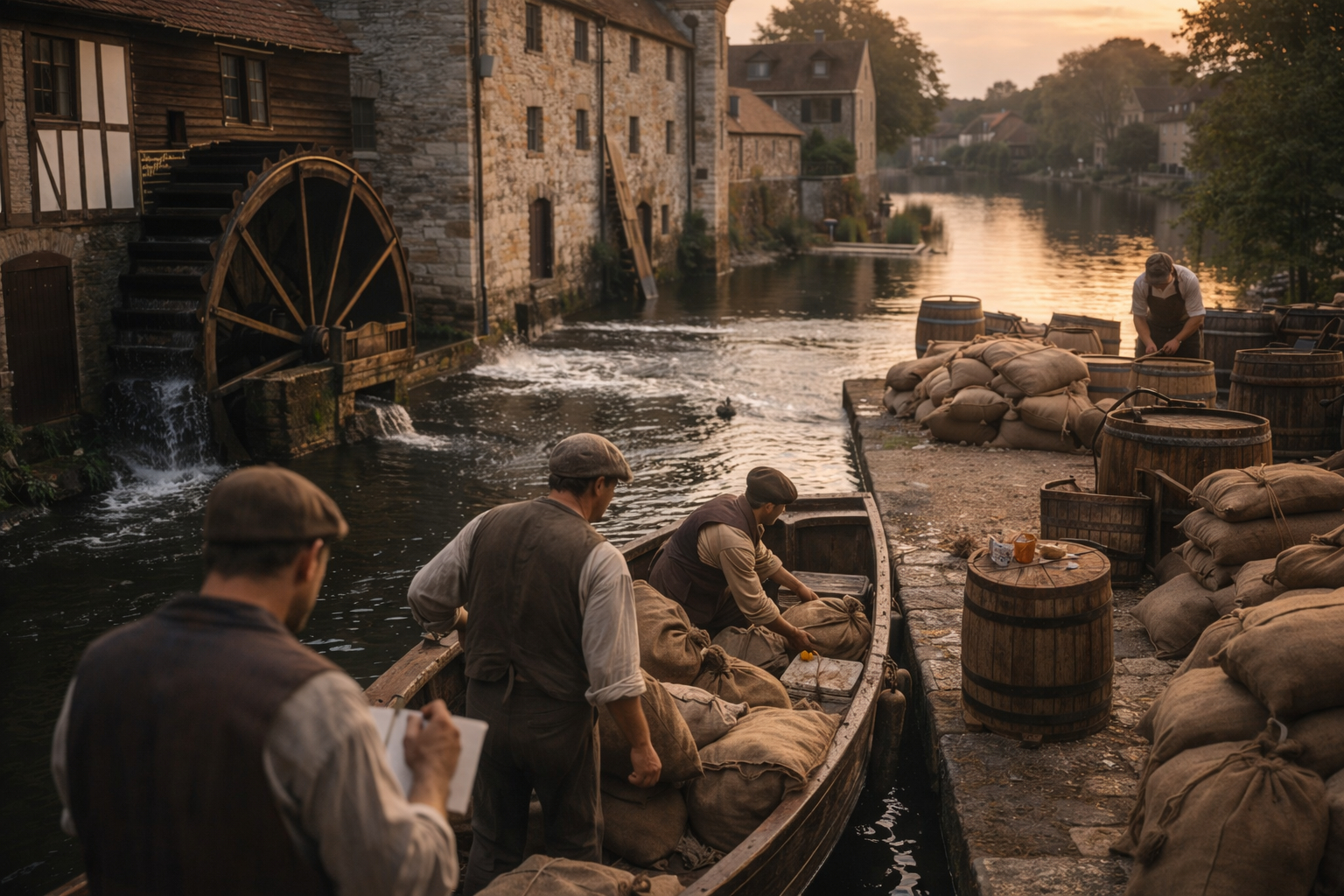
In many pre-industrial and early industrial market towns waterways and mills were central to economic life. Rivers and canals carried goods, people, and information, while mills converted raw materials and powered nascent industries. The interaction between transport routes and milling technology shaped patterns of production, trade, and settlement. This article explores how these elements created resilient local economies and changed social landscapes.

Waterways as Trade Arteries

Waterways reduced transport costs and linked inland producers to regional markets, allowing towns on rivers or canals to specialize. Barges and small boats moved grain, timber, coal, and finished goods more efficiently than roads, which were often poor. Proximity to a navigable stretch could turn a minor village into a thriving market center within a generation.

Access influenced not only merchants but also settlement layouts, with quays, warehouses, and wholesalers clustering along the banks. Town authorities frequently invested in locks, dredging, or canal connections to sustain growth and attract trade.

Mills, Manufacturing, and Local Specialization

Mills harnessed water power to process local resources—grain, cloth, paper, and metal—concentrating skills and capital in specific towns. The presence of a mill encouraged upstream and downstream businesses: farmers delivered grain, cooperages made barrels, and retailers sold processed goods. Over time a reputation for a particular product could stimulate wider trade networks and apprenticeships.

Technological improvements, from more efficient waterwheels to early turbines, amplified output and encouraged investment in complementary crafts. Mill owners and millers became influential civic figures, shaping labor relations and local markets.

Social and Spatial Consequences

Economic concentration around waterways and mills affected town life, creating distinct commercial corridors and working neighborhoods. Noise, traffic, and seasonal rhythms of milling and shipping defined daily routines and social hierarchies. Workers, artisans, and merchants lived close to production sites, while wealthier residents built homes on higher ground or away from the industrial bustle.

These spatial arrangements also left material legacies: mill-race channels, converted warehouses, and dockside streets that often survive in town plans and heritage interpretations. They reveal how infrastructure and industry shaped both physical form and communal identity.

Adaptation and Decline

As roads improved and railways emerged, the primacy of waterways and traditional mills shifted but did not vanish overnight. Some towns adapted by linking docks to railheads or by converting mills for new products; others declined as trade rerouted. Competition from coal-powered factories and larger urban centers changed local labor markets and investment patterns. Yet many communities repurposed waterfronts and preserved mill buildings, blending heritage with new economic functions.

This adaptive capacity varied widely, depending on local leadership, access to capital, and geographic advantages. The trajectories of towns illustrate broader processes of economic transformation.

Conclusion

Waterways and mills acted together as engines of market town growth, structuring trade, technology, and social life. Their combined influence produced specialized economies and lasting urban forms. Understanding this relationship sheds light on how infrastructure drove historical economic change.
Previous Post

Seasonal Festivals and Economic Rhythms in Small Towns

Next Post

Reading Lives: Practical Steps for Respectful Biographical Research

Related Posts

John Snow, the Broad Street Pump, and Cholera’s Fall
History

John Snow, the Broad Street Pump, and Cholera’s Fall

October 29, 2026
The Vasa: Sweden’s Giant Ship That Couldn’t Sail
History

The Vasa: Sweden’s Giant Ship That Couldn’t Sail

October 29, 2026
The Ghost Army: How Artists Fooled Hitler’s Front
History

The Ghost Army: How Artists Fooled Hitler’s Front

October 24, 2026
How Iceland’s 1783 Laki Fissure Eruption Chilled an Age
History

How Iceland’s 1783 Laki Fissure Eruption Chilled an Age

October 24, 2026
Next Post
Reading Lives: Practical Steps for Respectful Biographical Research

Reading Lives: Practical Steps for Respectful Biographical Research

Search..

No Result
View All Result

Recent Articles

How Carrara’s Marble Carved a Peculiar Mountain Region

How Carrara’s Marble Carved a Peculiar Mountain Region

November 1, 2026
The Great Dismal Swamp: Refuge, Labor, and a Hidden Region

The Great Dismal Swamp: Refuge, Labor, and a Hidden Region

November 1, 2026
The Salon Era: How Conversation Shaped the Enlightenment

The Salon Era: How Conversation Shaped the Enlightenment

October 31, 2026
Tenement New York: Life in Vertical Slums, 1870–1910

Tenement New York: Life in Vertical Slums, 1870–1910

October 31, 2026
Mary Seacole: The Jamaican Nurse Who Went to War

Mary Seacole: The Jamaican Nurse Who Went to War

October 30, 2026

Subscribe Us

By clicking submit, I authorize History Ours and its affiliated companies to: (1) use, sell, and share my information for marketing purposes, including cross-context behavioral advertising, as described in our Terms of Service and Privacy Policy, (2) supplement the information that I provide with additional information lawfully obtained from other sources, like demographic data from public sources, interests inferred from web page views, or other data relevant to what might interest me, like past purchase or location data, (3) contact me or enable others to contact me by email with offers for goods and services from any category at the email address provided, and (4) retain my information while I am engaging with marketing messages that I receive and for a reasonable amount of time thereafter. I understand I can opt out at any time through an email that I receive, or by clicking here

Subscribe To Our Newsletter

By clicking submit, I authorize History Ours and its affiliated companies to: (1) use, sell, and share my information for marketing purposes, including cross-context behavioral advertising, as described in our Terms of Service and Privacy Policy, (2) supplement the information that I provide with additional information lawfully obtained from other sources, like demographic data from public sources, interests inferred from web page views, or other data relevant to what might interest me, like past purchase or location data, (3) contact me or enable others to contact me by email with offers for goods and services from any category at the email address provided, and (4) retain my information while I am engaging with marketing messages that I receive and for a reasonable amount of time thereafter. I understand I can opt out at any time through an email that I receive, or by clicking here.

© 2026 History Ours | All Rights Reserved

  • Contact Us
  • Privacy Policy
  • Terms of Service
  • Unsubscribe
  • Privacy Choices
  • Contact Us
  • Privacy Policy
  • Terms of Service
  • Unsubscribe
  • Privacy Choices

© 2026 History Ours | All Rights Reserved

No Result
View All Result
  • Home
  • History
  • Biographies
  • Eras
  • Regions
  • Timeline

© 2026 History Ours | All Rights Reserved

Skip to content
Open toolbar Accessibility Tools

Accessibility Tools

  • Increase TextIncrease Text
  • Decrease TextDecrease Text
  • GrayscaleGrayscale
  • High ContrastHigh Contrast
  • Negative ContrastNegative Contrast
  • Light BackgroundLight Background
  • Links UnderlineLinks Underline
  • Readable FontReadable Font
  • Reset Reset