
Uncover History’s Secrets with Daily Updates!
Daily News Entertainment
  • Home
  • History
  • Biographies
  • Eras
  • Regions
  • Timeline
No Result
View All Result
History Ours
  • Home
  • History
  • Biographies
  • Eras
  • Regions
  • Timeline
No Result
View All Result
History Ours
No Result
View All Result

Bahis vergilendirmesi Türkiye’de devlet kontrolündedir, ancak yeni açılan casino siteleri gibi uluslararası sitelerde oyuncular kendi kazançlarını yönetir.

Home Biographies

Strategies for Weaving Sparse Records into Fuller Biographies

in Biographies
Strategies for Weaving Sparse Records into Fuller Biographies

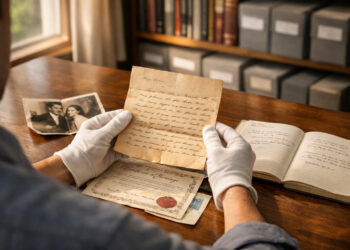
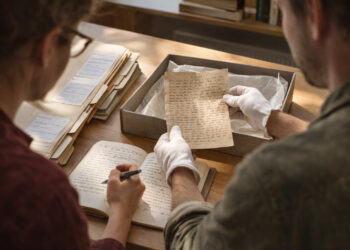
Writing a biography from limited evidence requires both rigor and imagination. Researchers must balance what can be demonstrated with plausible reconstruction that enriches understanding. Careful methods help avoid speculation that misleads readers while still offering a coherent life story. The following strategies emphasize source assessment, contextual framing, and ethical transparency.

Assessing and Prioritizing Sources

Begin by cataloguing every available item of evidence and noting provenance, date, and reliability. Treat absences as informative: gaps may indicate loss, privacy, or systematic exclusion rather than irrelevance. Prioritize contemporaneous records and corroborated details, but remain open to less direct materials that illuminate routine experience. Judicious weighting of sources reduces the risk of overclaiming while assembling a credible factual scaffold.

When conflicts arise, record the disagreement and favor the version best supported by context and multiple attestations. Maintain a running archive of uncertainties to revisit as new material appears.

Contextual Reconstruction

Place fragmentary facts within social, occupational, and geographic contexts to suggest plausible routines and constraints that shaped a life. Use comparative examples from similar individuals, institutions, or communities to bridge logical gaps without inventing private thoughts. Where direct evidence is absent, indicate which inferences are based on typical practices and which stem from unique particulars of the case. Clear labeling of conjecture helps readers distinguish between documented fact and informed interpretation.

Contextual work enriches narrative while remaining anchored to evidence. It also expands the biography’s relevance by showing how a single life interacted with broader structures.

Narrative Ethics and Transparency

Be explicit about methods, uncertainties, and the limits of argument, and provide notes or appendices that document choices and discarded hypotheses. Avoid rhetorical flourishes that present speculation as certainty, and resist filling silence with vivid but unsubstantiated interiority. When plausible scenarios are included, mark them as interpretive and explain the reasoning chain that supports them. This practice preserves credibility and invites scholarly engagement and correction.

Ethical transparency fosters trust with readers and sources alike. It allows the biography to serve as both narrative and a research tool open to revision.

Practical Tools and Documentation

Adopt a transparent workflow that records provenance, transcription decisions, and interpretive notes alongside the text of the biography. Digital tools and databases can track variants, link artifacts, and make the research traceable for others. Carefully prepared appendices and citations allow readers to follow the evidentiary path and evaluate the strength of claims. Good documentation makes a biography a living project that can be updated as discoveries emerge.

Keeping clear records prevents later conflation of sources and supports future research. It also demonstrates the historian’s diligence to critical readers and peers.

Conclusion

Composing biographies from scant records demands careful method and humility. Clear sourcing and contextual inference produce meaningful life portraits without overstating evidence. Practicing transparency keeps the account useful and fair to subjects and readers.

Previous Post

Reading Lives: Practical Steps for Respectful Biographical Research

Related Posts

Reading Lives: Practical Steps for Respectful Biographical Research
Biographies

Reading Lives: Practical Steps for Respectful Biographical Research

March 19, 2026
Restoring Quiet Lives: Practical Approaches to Biography
Biographies

Restoring Quiet Lives: Practical Approaches to Biography

March 14, 2026
Methods for Reconstructing Lives from Fragmented Sources
Biographies

Methods for Reconstructing Lives from Fragmented Sources

March 14, 2026
Crafting Thoughtful, Balanced Biographical Narratives That Respect Sources
Biographies

Crafting Thoughtful, Balanced Biographical Narratives That Respect Sources

March 9, 2026

Search..

No Result
View All Result

Recent Articles

Strategies for Weaving Sparse Records into Fuller Biographies

Strategies for Weaving Sparse Records into Fuller Biographies

March 19, 2026
Reading Lives: Practical Steps for Respectful Biographical Research

Reading Lives: Practical Steps for Respectful Biographical Research

March 19, 2026
Waterways, Mills, and the Pulse of Market Town Economies

Waterways, Mills, and the Pulse of Market Town Economies

March 18, 2026
Seasonal Festivals and Economic Rhythms in Small Towns

Seasonal Festivals and Economic Rhythms in Small Towns

March 18, 2026
Turning Dates into Story: Practical Timeline Construction Techniques

Turning Dates into Story: Practical Timeline Construction Techniques

March 17, 2026

Subscribe Us

By clicking submit, I authorize History Ours and its affiliated companies to: (1) use, sell, and share my information for marketing purposes, including cross-context behavioral advertising, as described in our Terms of Service and Privacy Policy, (2) supplement the information that I provide with additional information lawfully obtained from other sources, like demographic data from public sources, interests inferred from web page views, or other data relevant to what might interest me, like past purchase or location data, (3) contact me or enable others to contact me by email with offers for goods and services from any category at the email address provided, and (4) retain my information while I am engaging with marketing messages that I receive and for a reasonable amount of time thereafter. I understand I can opt out at any time through an email that I receive, or by clicking here

Subscribe To Our Newsletter

By clicking submit, I authorize History Ours and its affiliated companies to: (1) use, sell, and share my information for marketing purposes, including cross-context behavioral advertising, as described in our Terms of Service and Privacy Policy, (2) supplement the information that I provide with additional information lawfully obtained from other sources, like demographic data from public sources, interests inferred from web page views, or other data relevant to what might interest me, like past purchase or location data, (3) contact me or enable others to contact me by email with offers for goods and services from any category at the email address provided, and (4) retain my information while I am engaging with marketing messages that I receive and for a reasonable amount of time thereafter. I understand I can opt out at any time through an email that I receive, or by clicking here.

© 2026 History Ours | All Rights Reserved

  • Contact Us
  • Privacy Policy
  • Terms of Service
  • Unsubscribe
  • Privacy Choices
  • Contact Us
  • Privacy Policy
  • Terms of Service
  • Unsubscribe
  • Privacy Choices

© 2026 History Ours | All Rights Reserved

No Result
View All Result
  • Home
  • History
  • Biographies
  • Eras
  • Regions
  • Timeline

© 2026 History Ours | All Rights Reserved

Skip to content
Open toolbar Accessibility Tools

Accessibility Tools

  • Increase TextIncrease Text
  • Decrease TextDecrease Text
  • GrayscaleGrayscale
  • High ContrastHigh Contrast
  • Negative ContrastNegative Contrast
  • Light BackgroundLight Background
  • Links UnderlineLinks Underline
  • Readable FontReadable Font
  • Reset Reset