
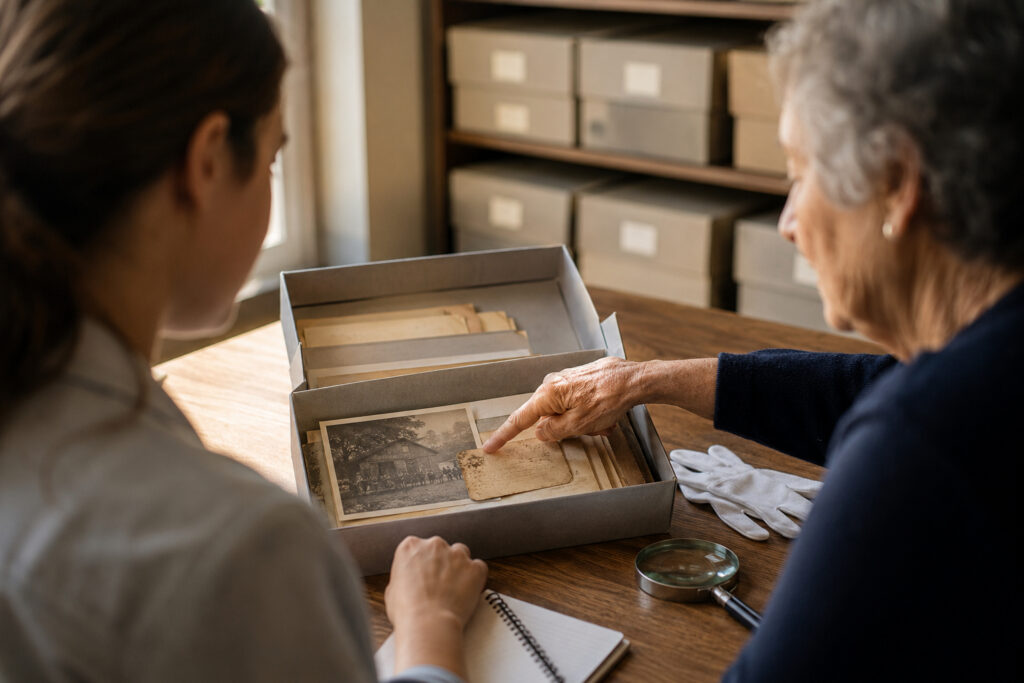
Writing biography from limited records requires deliberate choices and humility.
The challenge is to assemble a life without inventing details or flattening complexity.
This short guide offers practical approaches to research, contextual interpretation, and ethical narration.
It is aimed at historians, public writers, and anyone wanting to present a fuller picture responsibly.
Start with Verifiable Facts
Begin by cataloguing every verifiable detail: dates, places, relationships, occupations and material traces.
Treat each item as evidence rather than story and record its source and degree of certainty.
Look for repetition across different documents; corroboration strengthens claims even when records are sparse.
When facts are absent, note the silence and consider what types of records are missing and why.
A clear evidentiary table prevents speculation from being mistaken for fact.
That discipline builds trust with readers and preserves analytical honesty.
Contextualize Rather Than Speculate
Contextualization fills necessary gaps by placing an individual within institutions, economic conditions and social norms.
Use demographic studies, local histories, and material culture to indicate the range of plausible experiences.
Avoid asserting inner thoughts or motives unless supported by correspondence, testimony, or other close evidence.
Explain inference clearly, distinguishing between likely scenarios and confirmed facts.
Responsible context helps readers understand possibilities without mistaking them for certainties.
Framing uncertainty honestly is itself a narrative choice that respects the subject and the record.
Narrative Tools and Ethical Choices
Even concise biographies benefit from narrative shape: a chronological thread, thematic focus, and selective detail.
Use descriptive language to evoke setting while flagging conjecture with phrases like “it is possible” or “may have”.
Short illustrative episodes drawn from common experiences can illuminate a life when clearly presented as representative, not definitive.
When using creative devices such as reconstructed dialogue, mark them clearly and keep them minimal.
- Checklist: source citation, degree of certainty, alternative explanations.
- Review by knowledgeable peers or descendants where appropriate.
Ethical narration privileges clarity over polish and accuracy over narrative completeness.
Editors and peer review help maintain that balance.
Collaborate with Communities and Archives
Engage with archives, descendants, and community historians who can provide perspectives not present in official records.
Oral histories, family papers, and local knowledge often reveal patterns and meanings that documents alone cannot.
Obtain permissions and be transparent about how such contributions will be used and represented.
Wherever possible, share drafts and sources so contributors can correct, add context, or withdraw sensitive material.
This collaborative approach expands evidence and fosters ethical accountability.
It also returns some control of the story to those most affected by its telling.
Conclusion
Good biography balances evidence, context, and humility.
Make distinctions between fact and inference explicit.
Aim to make lives visible without claiming more than the sources allow.