
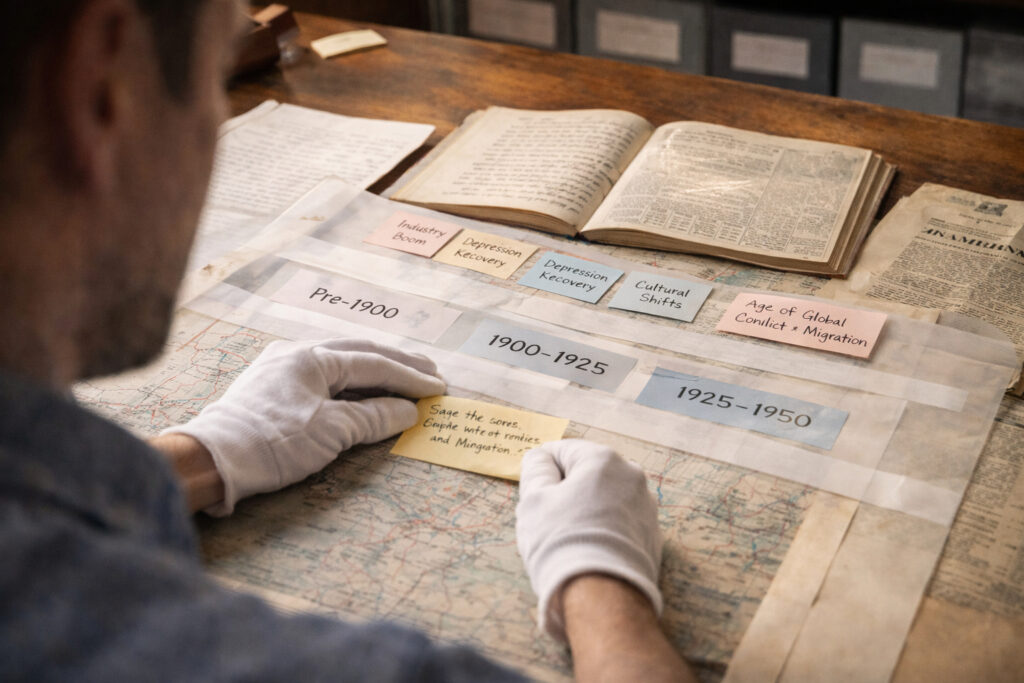
Historians use eras to group events, trends, and cultural shifts into manageable narratives.
Eras help readers see patterns over time and provide frameworks for comparison.
They are not fixed containers but analytical tools shaped by sources and perspective.
A careful approach balances clarity with complexity when assigning labels to the past.
Why Eras Matter
Eras organize large spans of time so complex developments become comprehensible to audiences and students. They allow historians to highlight continuities, disruptions, and turning points without reciting every detail. When chosen thoughtfully, era labels can illuminate causal chains and cultural transformations. An explicit periodization helps connect local events to broader regional and thematic processes. They also guide research agendas by suggesting comparative questions and hypotheses.
However, the usefulness of an era depends on how well it captures significant change. Good periodization is evidence-driven and adaptable to new research. Scholars should revisit era boundaries as new evidence emerges.
Criteria for Defining Eras
Scholars typically rely on a mix of economic, political, social, and cultural indicators to justify an era. Key developments such as technological innovation, institutional change, or major conflicts often mark boundaries. Sources and available evidence also influence whether a proposed era resonates beyond specialist debates. Transparency about criteria improves the interpretive value of any chronological scheme. Cross-disciplinary evidence strengthens claims about why a period stands out.
- Economic shifts
- Institutional transformations
- Cultural realignments
Using clear criteria avoids arbitrary labels and supports comparative work across regions and themes. Bullet points can help readers quickly grasp the reasons behind a chosen periodization. In published work, footnotes can document the evidence behind chosen cutoffs.
Using Eras Responsibly
Responsible use of eras recognizes their limits and avoids reifying labels as natural facts. Historians should indicate when a boundary is contested or regionally specific rather than universal. Teaching and public history benefit from maps and timelines that show overlap and exceptions. Digital tools can reveal continuities and variations that single labels might obscure. Collaborative projects that map overlapping timelines can make period complexity visible.
Engaging audiences with the provisional nature of eras encourages critical thinking about historical interpretation. Eras are powerful when they guide inquiry rather than replace it. Clear explanation of choices builds trust with non-specialist audiences.
Conclusion
Eras are practical devices that shape how we tell historical stories and frame inquiry across topics.
Applied thoughtfully, they reveal patterns, highlight causal links, and remain open to revision as research progresses.
Clear criteria, transparent justification, and visible boundaries help keep periodization accountable, useful, and responsive to new evidence.