
Introduction
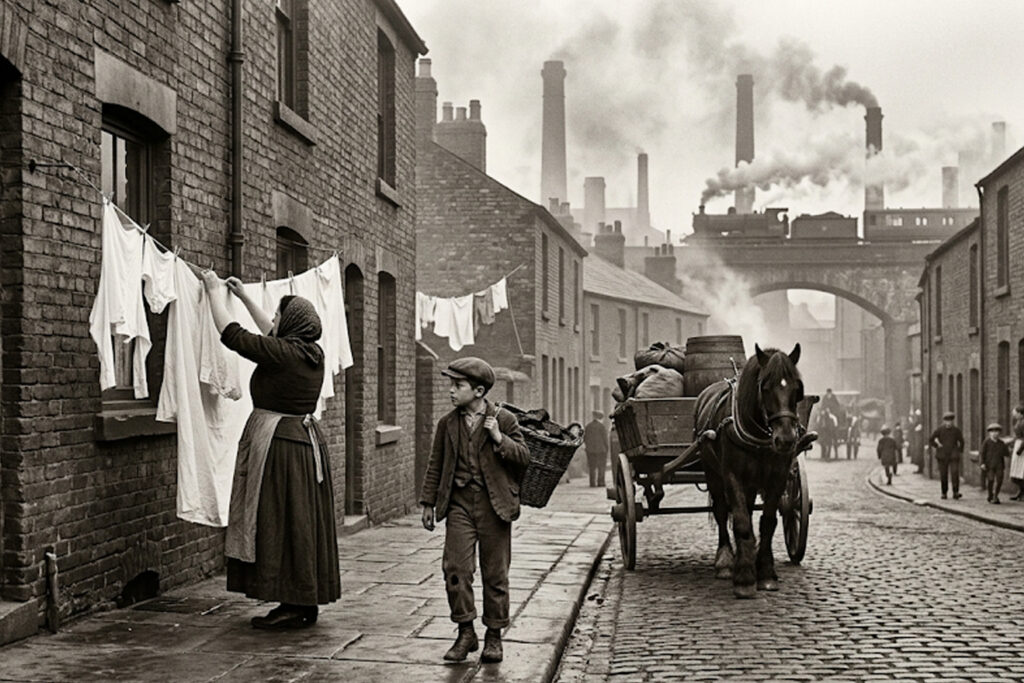
The Industrial Revolution reshaped daily life for millions who moved from rural landscapes into expanding towns and cities. Households, work routines, and social structures adapted rapidly to the rhythms of factories, railways, and new forms of labor. At the same time, improvements in goods and transport created fresh opportunities while exposing sharp inequalities. Understanding everyday experiences reveals how technological change affected ordinary people beyond the headlines.
Urban Growth and Labor Patterns
As manufacturing concentrated in urban centers, population density rose quickly and unpredictably in many towns. Employment shifted from seasonal agricultural work to regimented factory shifts with fixed hours and strict supervision. Living conditions often lagged behind economic growth, producing overcrowded housing, inadequate sanitation, and public health challenges. The contrast between rising output and everyday hardship shaped political and social responses.
Workers developed strategies to cope, including mutual aid networks and informal economies that eased short-term pressures. These adaptations helped communities survive while advocating for improved labor standards and municipal services.
Home Life and Family Roles
Domestic life changed as wage labor drew family members into different spheres of activity and timekeeping. Women and children frequently joined factory work or piecework at home, supplementing household incomes but also altering traditional responsibilities. Consumer goods became more available, changing eating habits, clothing, and household management. Yet many families balanced new income against the instability of low wages and irregular employment.
Family strategies often included shared childcare, extended kin support, and careful budgeting to stretch limited resources. Over time, public institutions and employers gradually introduced measures that reshaped household expectations.
Technology, Transport, and Daily Routines
Innovations in machinery, steam power, and transportation reorganized how people experienced time and distance. Railways and canals reduced travel times, enabling commuting, wider markets, and faster distribution of goods. Mechanized production standardized many tasks, making some work monotonous while increasing output and lowering certain costs. These changes created new rhythms of punctuality and predictability in daily schedules.
At the same time, access to printed news, pamphlets, and later periodicals expanded shared knowledge and leisure options, gradually influencing public discourse and personal habits.
Cultural Shifts and Community Life
Urbanization fostered diverse and concentrated communities where social life extended beyond kinship to include trade associations, religious groups, and civic organizations. New forms of entertainment, education, and political mobilization emerged, reflecting a growing public sphere. These cultural shifts provided outlets for collective identity and reform movements responding to economic and social change. Local festivals, reading circles, and workplace solidarities helped knit disparate populations into functioning communities.
Such communal structures often balanced the anonymity of city life, offering practical support and a sense of belonging that eased the transition from rural settings.
Conclusion
The Industrial Revolution transformed everyday realities through work, housing, technology, and social life. Ordinary people adapted in creative ways while pressing for improvements that would shape modern societies. Studying daily experience clarifies how broad changes affected the lives of many, not just the few.