Uncover History’s Secrets with Daily Updates!
Daily News Entertainment
  • Home
  • History
  • Biographies
  • Eras
  • Regions
  • Timeline
No Result
View All Result
History Ours
  • Home
  • History
  • Biographies
  • Eras
  • Regions
  • Timeline
No Result
View All Result
History Ours
No Result
View All Result
Home Eras

Practical Frameworks for Defining Historical Eras

in Eras
Practical Frameworks for Defining Historical Eras

Introduction

Defining historical eras helps researchers, teachers, and readers make sense of large-scale change over time. Periodization organizes complex events into interpretable sequences, but it also introduces choices that shape narratives. Thoughtful frameworks balance evidence, scale, and purpose so eras illuminate rather than obscure historical dynamics. This article outlines practical criteria and methods to construct defensible period boundaries for scholarly and public-facing work.

Careful periodization fosters clearer arguments and encourages productive comparison across regions and themes.

Why Periodization Matters

Periodization is not merely labeling; it frames questions, highlights patterns, and directs attention to causation. When scholars adopt a particular era, they prioritize certain forces—political upheaval, economic transformation, cultural shifts, or technological innovation. Good frameworks make those priorities explicit and invite debate about alternatives. Clear period definitions improve communication across disciplines and support more precise analyses.

Recognizing why a period matters prevents arbitrary dating and supports cumulative knowledge building.

Criteria for Defining Eras

Several practical criteria help determine when one era ends and another begins: identifiable structural change, pervasive cultural shifts, measurable economic transformation, and widespread technological adoption. Chronologies should reflect both abrupt ruptures and long-term continuities, acknowledging that different systems may change at different paces. Combining qualitative narratives with quantitative indicators strengthens claims about boundaries. Transparency about which criteria drive a chosen cut is essential for credibility.

  • Structural change: governance, institutions, or major policy shifts.
  • Cultural markers: language, religion, or popular practices gaining prominence.
  • Economic/technological indicators: trade patterns, production methods, or communication networks.

Using multiple criteria reduces the risk of privileging a single perspective and makes periodization more robust.

Applying Frameworks in Practice

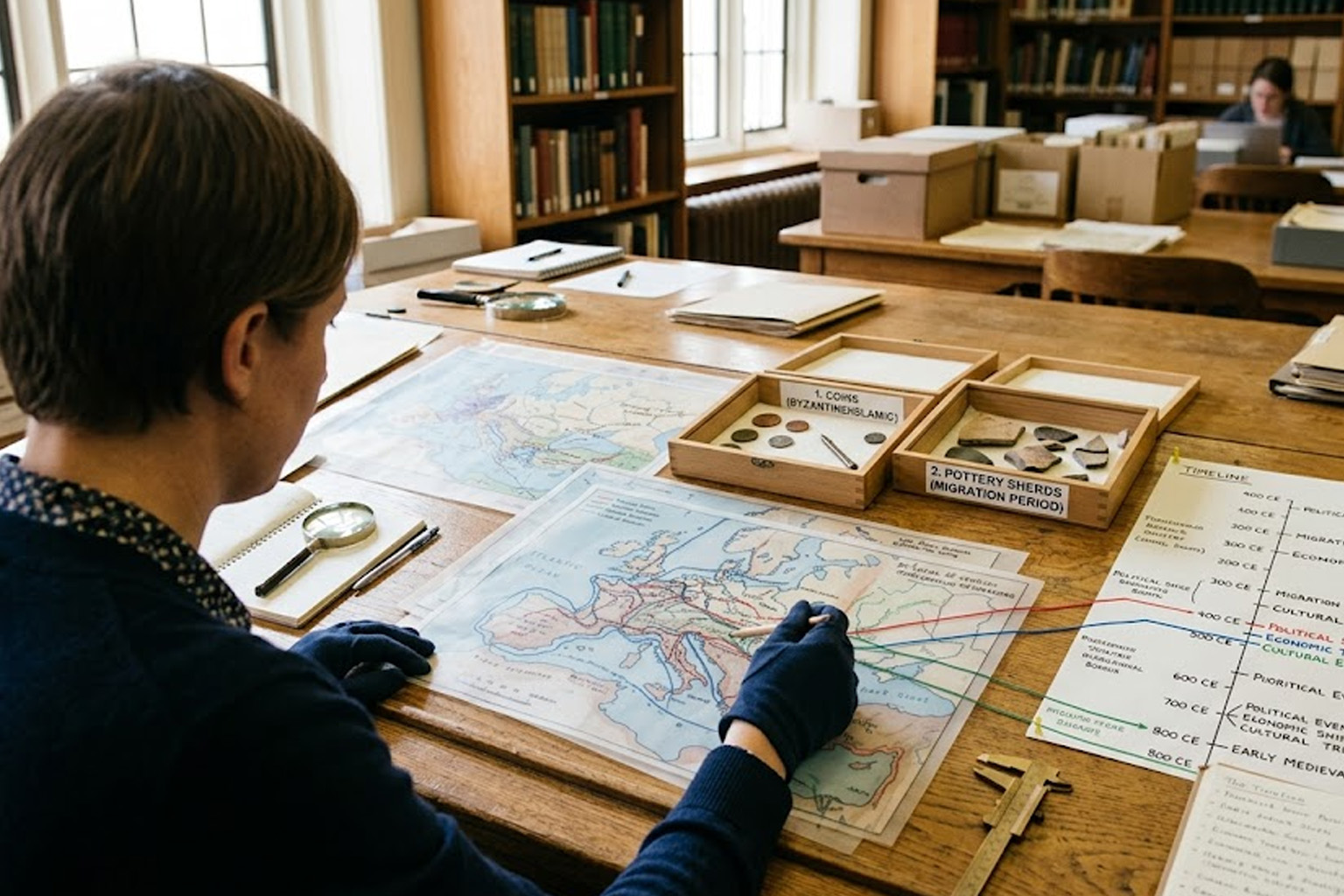
Start by defining the research question and scale—local, regional, or transregional—which shapes suitable period boundaries. Use interdisciplinary sources: archival documents, material culture, demographic data, and digital datasets can each reveal different timing for change. Test proposed boundaries against counterexamples and alternative chronologies to see where they hold or fail. Be prepared to revise periodization as new evidence or analytic tools emerge.

Documenting methodology and engaging with peer critique improves the transparency and usability of the chosen eras.

Conclusion

Effective periodization combines clear criteria, methodological transparency, and openness to revision. When eras are constructed with purpose and evidence, they become tools for insight rather than constraints. Practitioners should treat period boundaries as hypotheses to test and refine over time.


Previous Post

Reading Eras Through Everyday Lives and Structures

Next Post

Mapping Memory: Everyday Landscapes and Local Narratives

Related Posts

Edo: Japan’s Urban Revolution of Lanterns and Printshops
Eras

Edo: Japan’s Urban Revolution of Lanterns and Printshops

September 16, 2026
How the Little Ice Age Changed Everyday Life in Europe
Eras

How the Little Ice Age Changed Everyday Life in Europe

September 16, 2026
Pax Mongolica: How Mongol Rule Rewired the Old World
Eras

Pax Mongolica: How Mongol Rule Rewired the Old World

September 15, 2026
Life Under the Tokugawa: How Edo Japan Rewrote Social Order
Eras

Life Under the Tokugawa: How Edo Japan Rewrote Social Order

September 15, 2026
Next Post
Mapping Memory: Everyday Landscapes and Local Narratives

Mapping Memory: Everyday Landscapes and Local Narratives

Search..

No Result
View All Result

Recent Articles

Edo: Japan’s Urban Revolution of Lanterns and Printshops

Edo: Japan’s Urban Revolution of Lanterns and Printshops

September 16, 2026
How the Little Ice Age Changed Everyday Life in Europe

How the Little Ice Age Changed Everyday Life in Europe

September 16, 2026
The Disguise That Broke Chains: Ellen and William Craft

The Disguise That Broke Chains: Ellen and William Craft

September 15, 2026
Bass Reeves: The Marshal Who Hunted Outlaws in Indian Territory

Bass Reeves: The Marshal Who Hunted Outlaws in Indian Territory

September 15, 2026
How the Crystal Palace Turned Glass and Iron into a Modern Stage

How the Crystal Palace Turned Glass and Iron into a Modern Stage

September 15, 2026

Subscribe Us

By clicking submit, I authorize History Ours and its affiliated companies to: (1) use, sell, and share my information for marketing purposes, including cross-context behavioral advertising, as described in our Terms of Service and Privacy Policy, (2) supplement the information that I provide with additional information lawfully obtained from other sources, like demographic data from public sources, interests inferred from web page views, or other data relevant to what might interest me, like past purchase or location data, (3) contact me or enable others to contact me by email with offers for goods and services from any category at the email address provided, and (4) retain my information while I am engaging with marketing messages that I receive and for a reasonable amount of time thereafter. I understand I can opt out at any time through an email that I receive, or by clicking here

Subscribe To Our Newsletter

By clicking submit, I authorize History Ours and its affiliated companies to: (1) use, sell, and share my information for marketing purposes, including cross-context behavioral advertising, as described in our Terms of Service and Privacy Policy, (2) supplement the information that I provide with additional information lawfully obtained from other sources, like demographic data from public sources, interests inferred from web page views, or other data relevant to what might interest me, like past purchase or location data, (3) contact me or enable others to contact me by email with offers for goods and services from any category at the email address provided, and (4) retain my information while I am engaging with marketing messages that I receive and for a reasonable amount of time thereafter. I understand I can opt out at any time through an email that I receive, or by clicking here.

© 2026 History Ours | All Rights Reserved

  • Contact Us
  • Privacy Policy
  • Terms of Service
  • Unsubscribe
  • Privacy Choices
  • Contact Us
  • Privacy Policy
  • Terms of Service
  • Unsubscribe
  • Privacy Choices

© 2026 History Ours | All Rights Reserved

No Result
View All Result
  • Home
  • History
  • Biographies
  • Eras
  • Regions
  • Timeline

© 2026 History Ours | All Rights Reserved

Skip to content
Open toolbar Accessibility Tools

Accessibility Tools

  • Increase TextIncrease Text
  • Decrease TextDecrease Text
  • GrayscaleGrayscale
  • High ContrastHigh Contrast
  • Negative ContrastNegative Contrast
  • Light BackgroundLight Background
  • Links UnderlineLinks Underline
  • Readable FontReadable Font
  • Reset Reset