
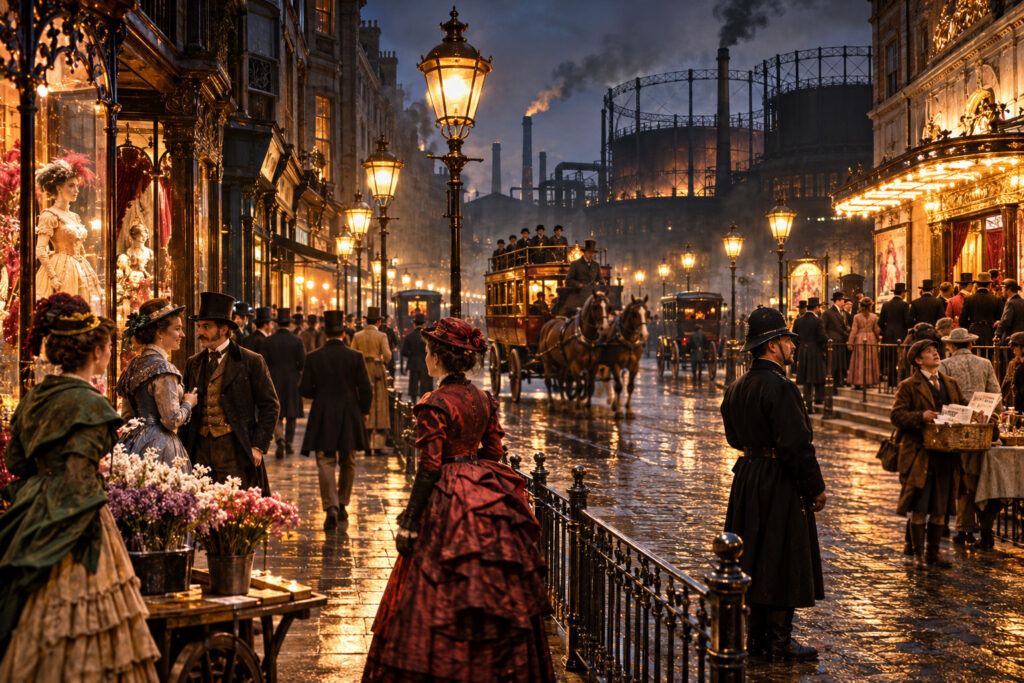
Before gas, a city’s after-dark life was small and flickering: whale-oil lamps, smoky candles, and private lanterns. The introduction of coal-gas illumination changed that in a few decades. Inventors and entrepreneurs — notably William Murdoch, who experimented with coal gas in the 1790s, and promoters who followed — turned a smoky byproduct of coal into public light. Municipal streets and commercial fronts began to glow in a steadier, more widespread way than ever before.
What the lamps actually did to cities
Gaslight did more than banish darkness. It stretched the day. Shops stayed open later, theater goers and cafe patrons could cross broad, better-lit thoroughfares, and new forms of evening entertainment flourished. Cast-iron lamp posts, neat rows of glowing globes and flame-shaped mantles, became part of the streetscape — a visible symbol of modernity.
Technically, gasworks at the edge of town distilled coal to make ‘town gas,’ and the factories produced coke as a valuable byproduct. Gas companies laid networks of pipes that turned light into a utility sold by the hour. The light itself evolved: the gas mantle, introduced in the 1880s, made flames whiter and brighter and kept gas competitive with the nascent electric industry for a time.
The effect on social life was tangible. Night felt safer for many, and urban women could travel farther after dusk than in earlier generations. Shopfronts and window displays acquired a new theatricality — merchants arranged goods to take advantage of lamplight. At the same time, nightlife could be raucous: gas-lit streets concentrated crowds, vendors, and street crime in ways that pressured emerging police forces to adapt.
Pollution, danger, and the slow end of an era
Gaslight was not benign. Coal gas stank; faulty pipes leaked; explosions and fires were not uncommon. Cities gained hours of brightness but also a new kind of industrial menace. The physical presence of gasworks — with their tanks, retorts, and smoky chimneys — kept the cost of illumination tied to heavy industry.
Electric light did not replace gas overnight. Improvements in mantles and burners prolonged the gas era, and many urban households and theaters used both technologies side by side. By the early 20th century, however, electrical grids and incandescent bulbs reshaped the night once again, making gas street lamps increasingly anachronistic.
Conclusion
The gaslight era left a visible and social imprint: continuous, managed urban nights, new commercial practices, and infrastructure that treated light as a public service. Walking old city streets today, the rows of surviving cast-iron lamp posts are reminders that the idea of the modern city was partly an idea of light — an ordinary convenience that changed how people lived, worked, and moved after dark.