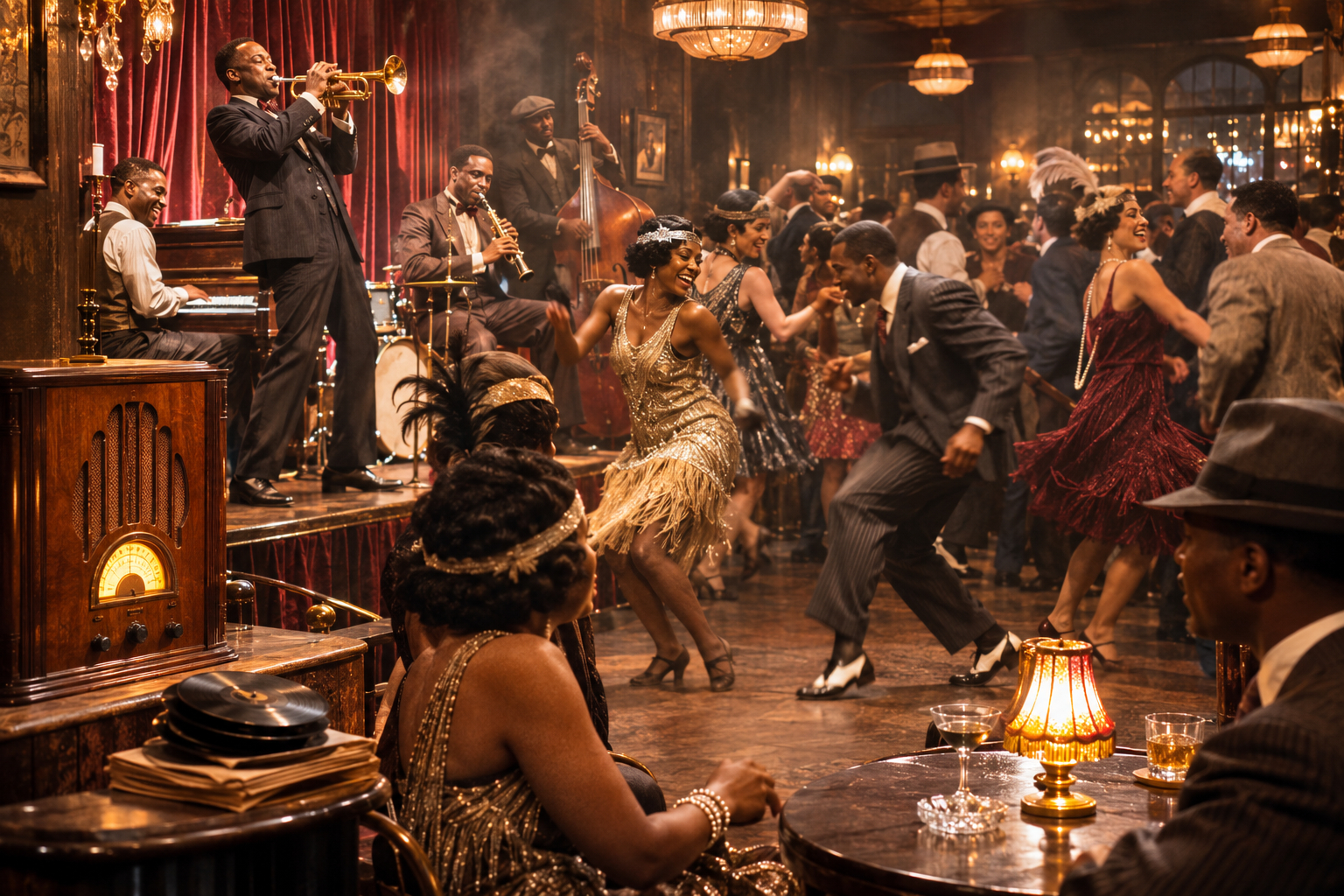
Jazz didn’t arrive fully formed in a single place; it grew where African American musical traditions met new urban life. Ragtime, blues, brass-band parades and church music filtered into crowded neighborhoods and boarding houses as the Great Migration carried musicians north. New Orleans players relocated to Chicago and New York; their improvising—a mix of syncopation, call-and-response and loose rhythms—became the language of the decade.
Names that have survived feel familiar because their recordings and tours spread the music: Louis Armstrong’s trumpet solos, Duke Ellington’s band arrangements, Bessie Smith’s powerhouse blues voice. But just as important were countless local bands playing rent parties and church halls, testing ideas that later reached national audiences.
Nightlife, technology, and money
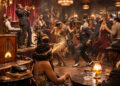
Prohibition reshaped where people gathered. With legal saloons gone, private clubs and speakeasies multiplied; jazz flourished in rooms where the music was part of the draw. Dance halls like Harlem’s Savoy Ballroom offered mixed audiences—sometimes more integrated on the dance floor than the street—while venues like the Cotton Club showcased Black performers for largely white crowds.
At the same time, new technologies amplified the scene. 78-rpm records brought a hot solo or a catchy chorus into many homes. Radio stations broadcast live performances, making distant brass breaks household soundtracks and creating regional stars. The record industry and touring circuits turned jazz from a local language into a commercial phenomenon—one that fed costume changes, dance crazes and a growing youth market.
The era’s contradictions
The Jazz Age was exhilarating and uneasy. It promised social experiments—flappers, freer dances, interracial nightlife—but lived under segregation, economic inequality and moral backlash. Many Black musicians found fame while facing pay disparities and limited control over venues and recordings.
Despite these tensions, the era left a clear imprint: new rhythms became the template for later popular music, and urban life itself was reimagined around night-time leisure. The decade’s look—drop-waist dresses, shorter hair, tailored suits—was as much a public performance as the music that scored it.
Conclusion
The Jazz Age was more than a playlist. It was a social experiment played out in clubs, on the airwaves and on the street—part cultural revolution, part commercial boom, and always improvisation. Its beats and contradictions still echo in the way cities sound and in the popular music that followed.