
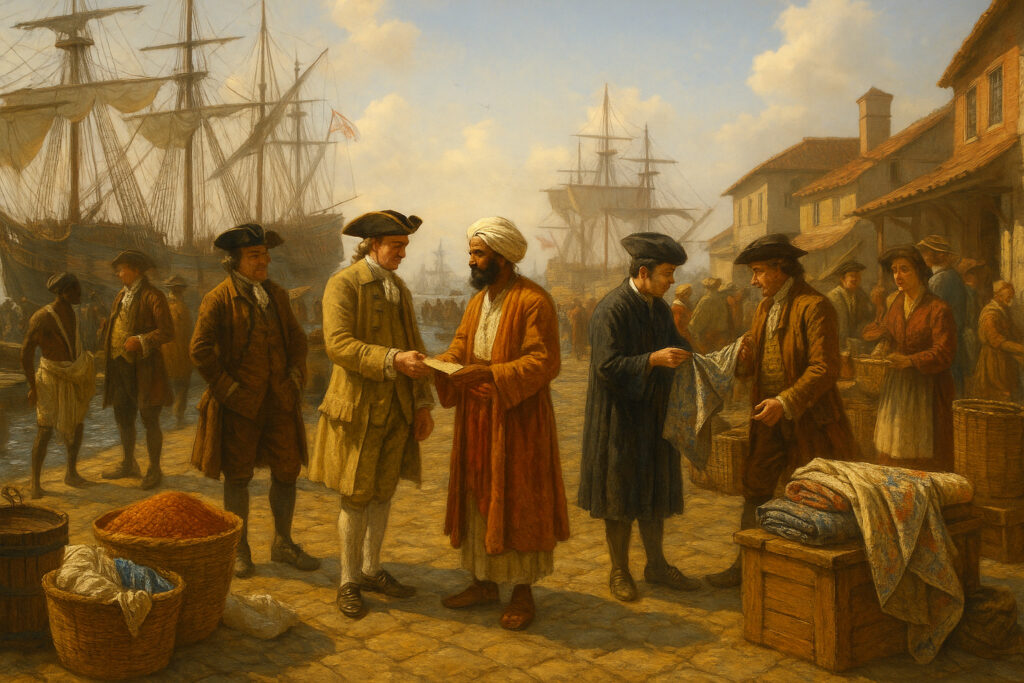
The Colonial Era marked a defining chapter in world history—a time when nations expanded their reach across oceans in search of wealth, power, and influence. What began as trade and exploration evolved into conquest, cultural fusion, and transformation on a global scale. Though controversial and complex, this period reshaped economies, societies, and identities, leaving a legacy that still echoes today.
1. The Age of Exploration and Economic Ambition
The story of colonization began with the Age of Exploration in the 15th and 16th centuries. European powers like Spain, Portugal, England, and France sought new routes to Asia, driven by the promise of spices, silk, and gold.
The discovery of the Americas and sea routes to Africa and Asia turned trade into empire-building. Ships became the arteries of global exchange, carrying goods like sugar, cotton, and slaves—creating wealth for some and suffering for many.
2. The Race for Territory and Power
As trade flourished, territorial control became the next goal. Colonies served as strategic hubs, providing resources and markets for European industries. The British Empire, the Spanish colonies, and the Dutch East India Company symbolized the vast reach of colonial power.
However, expansion came at a cost. Indigenous populations faced displacement, exploitation, and cultural erasure. While empires grew rich, colonized lands bore the heavy burden of transformation and resistance.
3. Cultural Exchange and Transformation
Despite the hardships, the Colonial Era also sparked profound cultural and intellectual exchange. Art, architecture, religion, and cuisine merged across continents. Coffee from Ethiopia became a global staple; Indian textiles shaped European fashion; and new languages and identities emerged in colonial societies.
The blending of traditions created hybrid cultures that continue to define nations in Asia, Africa, and the Americas today.
4. Seeds of Revolution and Change
Over time, the desire for independence and equality grew stronger. Enlightenment ideals inspired revolutions across the world—from the American Revolution (1776) to anti-colonial movements in Asia and Africa. The same global networks that spread trade also spread ideas of freedom and self-determination.
By the 20th century, decolonization movements reshaped the global map, marking the end of formal empires but leaving behind deep economic and political imprints.
Conclusion
The Colonial Era was an age of contradictions—innovation and exploitation, progress and oppression. It transformed trade into globalization and territories into interconnected nations. Understanding this complex history helps us recognize both the triumphs and tragedies that built our modern world, reminding us that every act of expansion carries the weight of transformation.