
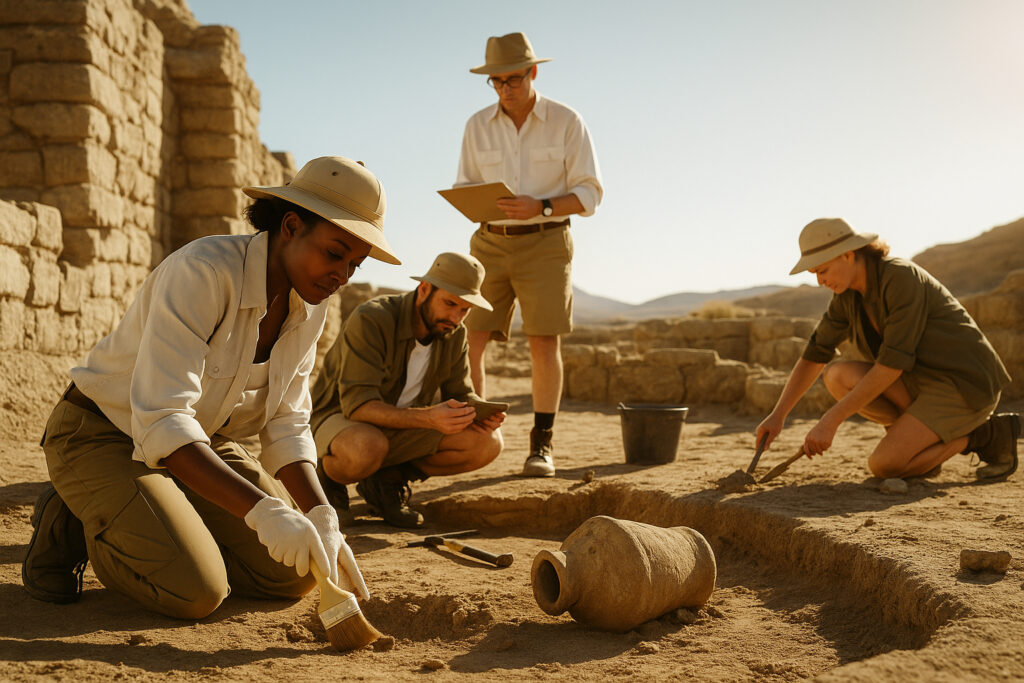
The story of humanity isn’t written in books—it’s buried in the ground. Archaeology bridges the gap between past and present, uncovering clues that reveal how ancient civilizations lived, worked, and thought. Through excavation, preservation, and interpretation, archaeologists keep history alive, transforming forgotten artifacts into powerful connections to our collective heritage.
1. Unearthing Stories Beneath the Surface
Every artifact tells a story. From pottery shards to buried temples, archaeologists piece together the lives of those who came before us. Excavations across Egypt, Greece, and the Americas have revealed not just physical objects but deep insights into social structures, trade, and belief systems.
Even small discoveries—like a child’s toy or a farmer’s tool—can reshape our understanding of history, showing that human emotions, creativity, and community have always been universal.
2. The Science Behind Discovery
Modern archaeology is a blend of art and science. Tools like radiocarbon dating, satellite imaging, and DNA analysis allow researchers to date artifacts accurately and reconstruct ancient lifestyles.
Technology has also expanded what’s possible. LiDAR (Light Detection and Ranging), for instance, can map entire lost cities hidden beneath jungles, like those of the Maya in Central America. These scientific methods ensure that discoveries are preserved and interpreted responsibly.
3. Preserving the Past for the Future
Archaeology isn’t just about digging—it’s about protecting. Conservation efforts safeguard fragile relics and sites from natural decay, urbanization, and conflict. Museums, archives, and digital 3D models ensure that ancient artifacts remain accessible for generations to come.
Cultural heritage laws and collaborations with local communities further ensure that discoveries are shared ethically and respectfully, honoring the people whose ancestors created them.
4. Connecting the Ancient and the Modern
Perhaps the most fascinating aspect of archaeology is how it reveals the timeless nature of humanity. Ancient inscriptions, art, and architecture show that our ancestors grappled with many of the same questions—love, death, power, and meaning—that we still face today.
By studying the past, we not only learn where we came from but also gain perspective on where we’re headed.
Conclusion
Archaeology keeps history alive by transforming dust and debris into living stories. Each dig site and discovery reminds us that the past isn’t gone—it’s waiting to be rediscovered and retold. In uncovering ancient worlds, archaeologists preserve the soul of humanity itself, ensuring that our collective journey is never forgotten.