
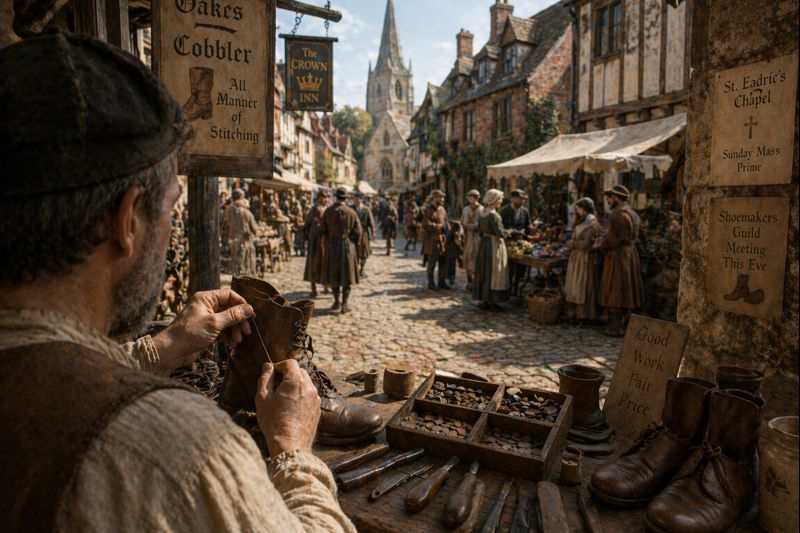
Everyday spaces in historic market towns—streets, inns, chapels, and market stalls—were more than physical amenities; they structured social life. Residents moved through these places multiple times a day, carrying work, gossip, obligations and leisure into shared settings. Such patterns produced regular encounters that reinforced obligations and created informal networks of trust. Exploring these spaces reveals how routine interaction shaped identity, cooperation, and local governance.
Shared Streets and Daily Exchange
Streets functioned as the town’s primary public room, combining circulation with commerce and conversation. Craftspeople displayed wares, children played, and neighbors negotiated access to water, waste, and space in ways that were visible and often negotiated face-to-face. The layout of thoroughfares—narrow lanes, market crosses, and open squares—determined who met whom and how frequently, producing predictable social geographies. These encounters embedded norms about behavior, reputation, and mutual aid.
Because interactions were repeated, reputations mattered and social sanctions were effective. Everyday negotiation on the street maintained equilibrium without formal institutions.
Inns, Taverns and Informal Networks
Inns and taverns served as hubs for exchange across social boundaries, hosting travelers, merchants, and locals in a shared setting. Their tables and benches were sites of news circulation, credit arrangements, and dispute resolution that bypassed formal courts. Proprietors often acted as information brokers, while patrons forged partnerships that could become long-term economic or kinship ties. Over time these networks lowered transaction costs and sustained market activity.
They also created spaces where outsiders could be assessed and integrated. The social capital formed within these rooms was essential to a town’s resilience.
Religious Spaces, Markets and Moral Order
Chapels and parish churches structured town rhythms through services, feast days, and charity distributions that gathered diverse residents. Religious spaces reinforced moral expectations about honesty, charity, and public comportment, often translating into civic regulations and communal enforcement. Market times were frequently aligned with liturgical calendars, blending sacred and secular rhythms into everyday schedules. This fusion helped legitimize communal decisions and provided moral language for resolving conflicts.
Religious authority thus complemented economic practice in shaping behavior. The moral economy of the town rested on both sermon and sale.
Material Culture and Embedded Memory
Objects—tokens, signboards, guild marks, and household goods—made social ties visible and durable across generations. They signaled status, occupation, and networks of obligation that newcomers learned to read and negotiate. Repairing and reusing goods also reinforced frugality and interdependence, connecting households across time through shared material practices. Such artifacts carried memory, turning ordinary transactions into anchored stories about belonging.
Material culture helped reproduce social norms beyond immediate interactions. Over time it bound people to place and to one another.
Conclusion
Reading the ordinary spaces of market towns offers a clearer view of how social bonds were produced and sustained. Streets, inns, chapels and objects shaped encounters that fostered trust, obligation, and local governance. Understanding these dynamics enriches our sense of how communities endured and adapted.