
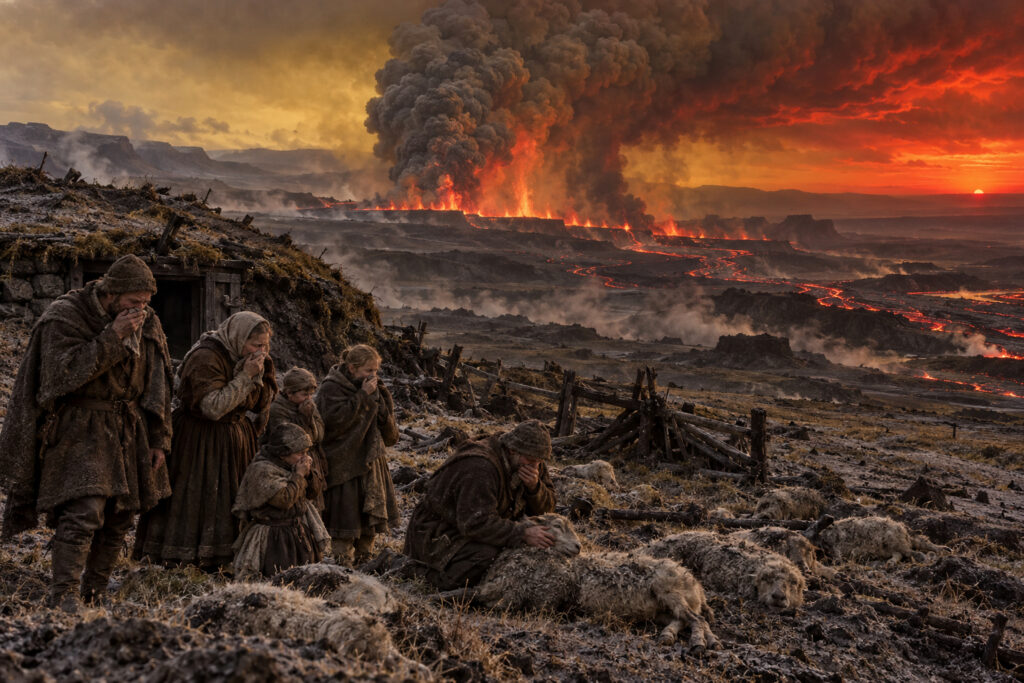
In the summer of 1783 a crack opened in the Icelandic earth and refused to be discreet. The Laki fissure, a volcanic wound roughly 25 kilometers long, produced rivers of basaltic lava and a plume of gases that rose into weather systems. Locally the spectacle was apocalyptic: fields buried by lava, houses blanketed in ash, and water tainted by toxic run-off. But the real surprise came as that plume rode the winds far beyond Iceland’s shores.
The smell, the fog, and a strange cold
Across Europe eyewitnesses described a persistent, sulfurous haze—sheets of yellowish fog that dimmed the sun and left a bitter, rotten-egg taste in the air. People noted sore throats, eye irritation, and unexplained respiratory illness. Contemporary reports speak of unusual atmospheric effects: bright, blood-red sunsets and a pall that seemed to linger for months. Those were not mere oddities. The eruption injected massive quantities of sulfur dioxide into the upper atmosphere, where it became sulfate aerosols that reflected sunlight back to space. The result: summers and winters that felt off-kilter—heat in some places, crushing cold in others, crop failures and a muddled growing season.
Hardship at home, ripples abroad
In Iceland the consequences were immediate and brutal. Fluorine released by the eruption poisoned grazing animals; livestock died in large numbers and survivors produced tainted milk and meat. With pasture ruined and food scarce, many communities faced famine. Beyond the island, failing harvests and sharp weather swings across northern Europe contributed to higher food prices and hardship in rural districts. Ships reported acidic deposits on decks and a cleanliness problem in wells and cisterns. Far-flung accounts even record unusual weather in parts of North America and North Africa—the eruption’s atmospheric reach was surprisingly global for an event centered on a remote volcanic fissure.
Conclusion
Laki’s story is a reminder that dramatic local disasters can rewrite distant lives. A lava field carved into Icelandic farmland, a foul haze that made the sun look unfamiliar, and poisoned flocks were all part of the same episode. Scientists today reconstruct the event from ice cores, tree rings, and ship logs; historians trace its social consequences in parish records and price lists. The fissure that opened in 1783 is a single natural rupture, but what it disturbed were fragile human systems already stretched thin—food supplies, health, and economies—and for a time, it changed weather and fortune across an entire hemisphere.