

Uncover History’s Secrets with Daily Updates!
Daily News Entertainment
  • Home
  • History
  • Biographies
  • Eras
  • Regions
  • Timeline
No Result
View All Result
History Ours
  • Home
  • History
  • Biographies
  • Eras
  • Regions
  • Timeline
No Result
View All Result
History Ours
No Result
View All Result

Bahis vergilendirmesi Türkiye’de devlet kontrolündedir, ancak yeni açılan casino siteleri gibi uluslararası sitelerde oyuncular kendi kazançlarını yönetir.

Spor tutkunları için yüksek oranlar Bettilt giriş kısmında bulunuyor.

Kullanıcı yorumlarında pozitif değerlendirmeler alan pin co güvenilirliğini kanıtladı.

Home History

Practices of Message Delivery Before Modern Postal Systems

in History
Practices of Message Delivery Before Modern Postal Systems

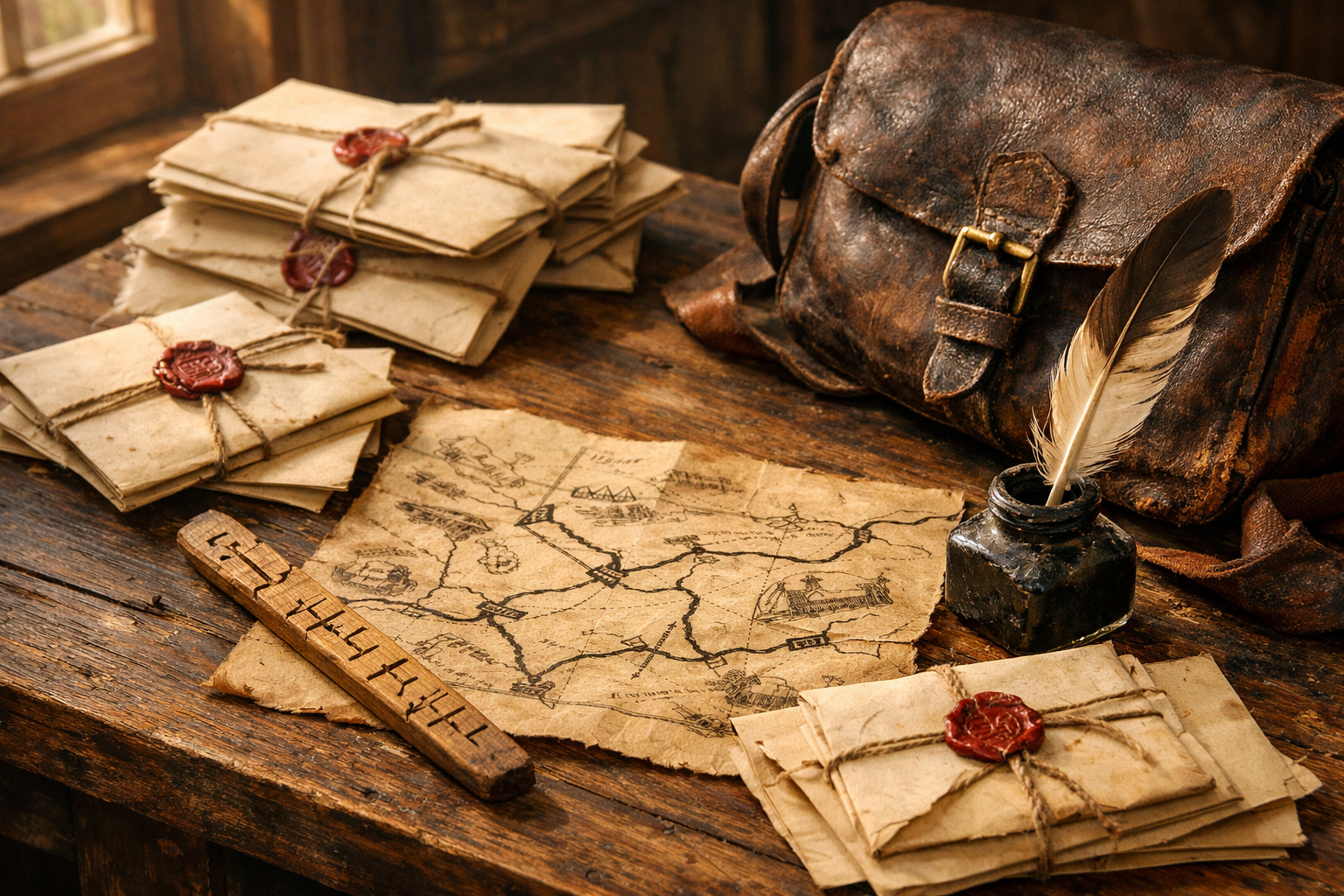
Communication networks before centralized postal systems were diverse, adaptive, and often deeply local. Merchants, officials, and families relied on a mix of personal couriers, relay riders, and institutional messengers to transmit information over distances. These practices combined oral transmission, written tokens, and material signals to manage trade, administration, and personal affairs. Understanding these methods reveals how preindustrial societies balanced speed, security, and cost in day-to-day communication.

Modes and means of sending messages

A range of transport modes carried messages depending on terrain, urgency, and resources. Horses and mules were preferred where speed mattered, while riverboats and caravans served bulkier dispatches and official archives. Human runners remained vital in densely settled or mountainous regions where animals or wheeled transport were impractical. Coastal and inland waterways often functioned as the fastest arteries for long-distance correspondence when available.

These choices shaped how communities organized information flows and prioritized certain routes over others.

Institutional frameworks and local networks

Formal institutions, such as courts, temples, or trade guilds, created their own messenger services to ensure reliability and authority. Such systems combined obligation and privilege: officials required couriers, and communities provided lodging or protection in return. Merchant networks often established relay points—houses or inns where messages and goods were transferred between trusted hands. Personal relationships and reputation mattered almost as much as physical infrastructure in keeping these networks functioning.

Over time, some of these ad hoc arrangements evolved into more predictable routes that resembled proto-postal systems.

Security, authentication, and secrecy

Maintaining trust in transmitted messages required practical techniques for authentication and secrecy. Seals, tied cords, coded phrases, and witness attestations reduced the risk of tampering. For sensitive matters, carriers were chosen for loyalty or were accompanied by escorts; for trade, receipts and duplicates were kept to resolve disputes. Oral messages were repeated and witnessed to establish accountability where written records were scarce.

These precautions reflect a constant tension between the need for speed and the need to verify information.

Everyday practice and the role of literacy

Daily communication often mixed oral and written practices based on local literacy rates and the costs of writing materials. Simple marks, tally sticks, and memorized lists supplemented formal letters, while itinerant scribes offered writing services at market towns. Because full literacy was limited, the social function of messengers extended beyond transport: they could interpret, negotiate, and translate messages for recipients. This blend of skills made early messenger systems flexible and socially embedded.

Conclusion

Before modern postal systems, message delivery relied on layered practices that combined transport, relationships, and ritualized safeguards. These systems were adaptive, reflecting geography, institutional needs, and social trust. Studying them highlights how communities balanced speed, expense, and reliability in communicating across space.


Previous Post

Networks of Inland Trade: Roads, Rivers, and Markets

Next Post

Sophie Germain and the Quiet Power of Mathematical Inquiry

Related Posts

Seasonal Rhythms: How Agricultural Cycles Directed Preindustrial Trade
History

Seasonal Rhythms: How Agricultural Cycles Directed Preindustrial Trade

February 1, 2026
Signals, Scripts, and Messengers: Preindustrial Communication Systems
History

Signals, Scripts, and Messengers: Preindustrial Communication Systems

February 1, 2026
Networks of Inland Trade: Roads, Rivers, and Markets
History

Networks of Inland Trade: Roads, Rivers, and Markets

January 27, 2026
Guilds and Craft Networks: Shaping Preindustrial Urban Economies
History

Guilds and Craft Networks: Shaping Preindustrial Urban Economies

January 22, 2026
Next Post
Sophie Germain and the Quiet Power of Mathematical Inquiry

Sophie Germain and the Quiet Power of Mathematical Inquiry

Search..

No Result
View All Result

Recent Articles

Institutions and Daily Routines That Shaped Historical Eras

Institutions and Daily Routines That Shaped Historical Eras

February 3, 2026
Mapping Social Change Through Historical Periods

Mapping Social Change Through Historical Periods

February 3, 2026

User Interface , Pilotage , And Warhead Speed . New Zealand territory Get Free Bonus

February 3, 2026

Registrera Spelarcommunity Engagemang · inom Sverige Win Big Today

February 3, 2026

Hur Man Dycka Typiska Misstag I Webbaserat Roulettevadslagning svenska marknaden Bet Now

February 3, 2026

Subscribe Us

By clicking submit, I authorize History Ours and its affiliated companies to: (1) use, sell, and share my information for marketing purposes, including cross-context behavioral advertising, as described in our Terms of Service and Privacy Policy, (2) supplement the information that I provide with additional information lawfully obtained from other sources, like demographic data from public sources, interests inferred from web page views, or other data relevant to what might interest me, like past purchase or location data, (3) contact me or enable others to contact me by email with offers for goods and services from any category at the email address provided, and (4) retain my information while I am engaging with marketing messages that I receive and for a reasonable amount of time thereafter. I understand I can opt out at any time through an email that I receive, or by clicking here

Subscribe To Our Newsletter

By clicking submit, I authorize History Ours and its affiliated companies to: (1) use, sell, and share my information for marketing purposes, including cross-context behavioral advertising, as described in our Terms of Service and Privacy Policy, (2) supplement the information that I provide with additional information lawfully obtained from other sources, like demographic data from public sources, interests inferred from web page views, or other data relevant to what might interest me, like past purchase or location data, (3) contact me or enable others to contact me by email with offers for goods and services from any category at the email address provided, and (4) retain my information while I am engaging with marketing messages that I receive and for a reasonable amount of time thereafter. I understand I can opt out at any time through an email that I receive, or by clicking here.

© 2026 History Ours | All Rights Reserved

  • Contact Us
  • Privacy Policy
  • Terms of Service
  • Unsubscribe
  • Privacy Choices
  • Contact Us
  • Privacy Policy
  • Terms of Service
  • Unsubscribe
  • Privacy Choices

© 2026 History Ours | All Rights Reserved

No Result
View All Result
  • Home
  • History
  • Biographies
  • Eras
  • Regions
  • Timeline

© 2026 History Ours | All Rights Reserved

Skip to content
Open toolbar Accessibility Tools

Accessibility Tools

  • Increase TextIncrease Text
  • Decrease TextDecrease Text
  • GrayscaleGrayscale
  • High ContrastHigh Contrast
  • Negative ContrastNegative Contrast
  • Light BackgroundLight Background
  • Links UnderlineLinks Underline
  • Readable FontReadable Font
  • Reset Reset