
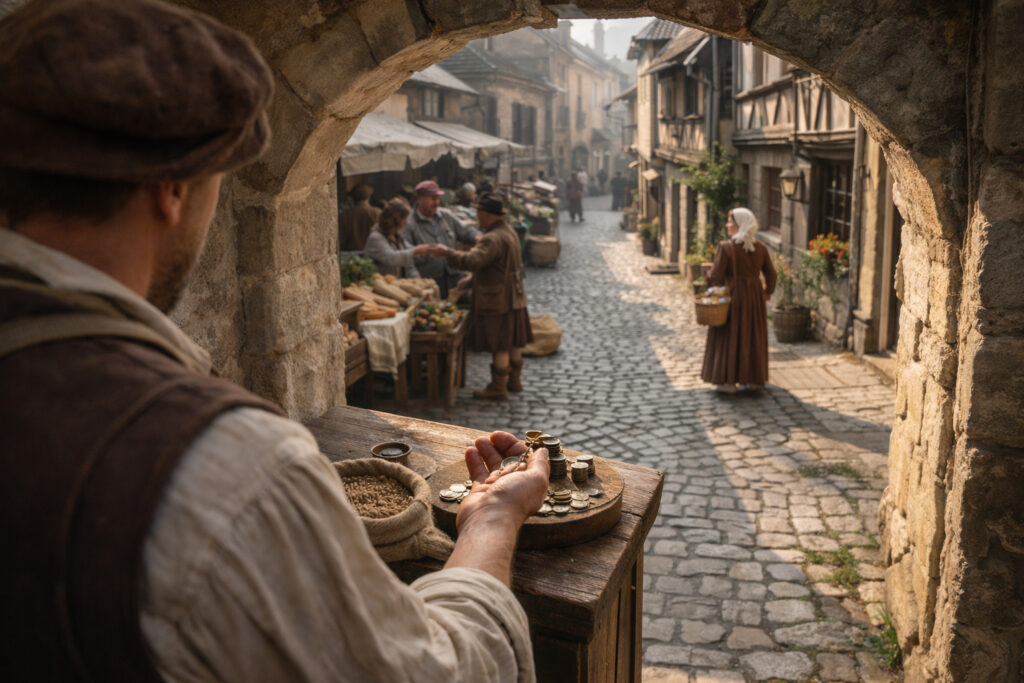
In historic towns, borders were rarely fixed lines on a map; they were lived and negotiated every day. Streets, gates, marketplaces, and parish boundaries shaped patterns of movement and sets of expectations for behaviour. Residents and visitors alike learned where certain exchanges were acceptable and where authority tightened or relaxed. Understanding these micro-geographies reveals how communities organized work, family life, and public order.
Defining Urban Borders
Urban borders took many forms: legal jurisdictions, natural features, and socially policed thresholds such as bridges or market entrances. These limits structured who paid tolls, where goods could be sold, and which officials had the right to intervene. Boundaries could be contested in court, negotiated at communal meetings, or enforced informally by neighbors. The character of a border often reflected the town’s economic role and its relationship with surrounding countryside.
Close observation of records and maps shows how mutable these borders were in practice. Rather than static edges, they functioned as zones of interaction where rules could be bent or reinforced according to circumstance.
Movement, Routes, and Daily Commerce
Routes through towns — alleyways, main thoroughfares, and market paths — shaped daily routines and commercial opportunities. Traders, craftsmen, and domestic workers followed established circuits that linked production spaces with consumption points. These patterns produced predictable encounters and a tacit understanding of where particular activities belonged. The flow of people and goods also informed patterns of surveillance and policing.
Understanding these routes helps explain why some streets became specialized for certain trades while others remained mixed-use. Over time, routine movements solidified into the spatial grammar of town life.
Public Rituals, Authority, and Informal Order
Public rituals such as weekly markets, religious processions, and fair days reinforced social norms and helped negotiate competing claims on space. Officials used ceremonies to mark authority, while everyday practices — noise, dispute resolution, and mutual aid — created informal mechanisms of control. These overlapping systems balanced formal sanctions with community enforcement. The result was a layered order that could be flexible enough to accommodate change yet robust enough to sustain daily life.
Attention to ritual and routine reveals how power was exercised through presence and practice rather than solely through proclamation. Small acts of cooperation often mattered as much as formal decrees.
Conclusion
Historic urban borders were active structures that shaped social interaction and economic practice. They emerged through repeated routines, negotiated authority, and shared understandings of space. Studying these dynamics offers insight into how communities made cities livable and governable over time.