Uncover History’s Secrets with Daily Updates!
Daily News Entertainment
  • Home
  • History
  • Biographies
  • Eras
  • Regions
  • Timeline
No Result
View All Result
History Ours
  • Home
  • History
  • Biographies
  • Eras
  • Regions
  • Timeline
No Result
View All Result
History Ours
No Result
View All Result

Bahis vergilendirmesi Türkiye’de devlet kontrolündedir, ancak yeni açılan casino siteleri gibi uluslararası sitelerde oyuncular kendi kazançlarını yönetir.

Spor tutkunları için yüksek oranlar Bettilt giriş kısmında bulunuyor.

Kullanıcı yorumlarında pozitif değerlendirmeler alan pin co güvenilirliğini kanıtladı.

Home History

Urban Marketplaces: Centers of Commerce, Culture, and Power

in History
Urban Marketplaces: Centers of Commerce, Culture, and Power

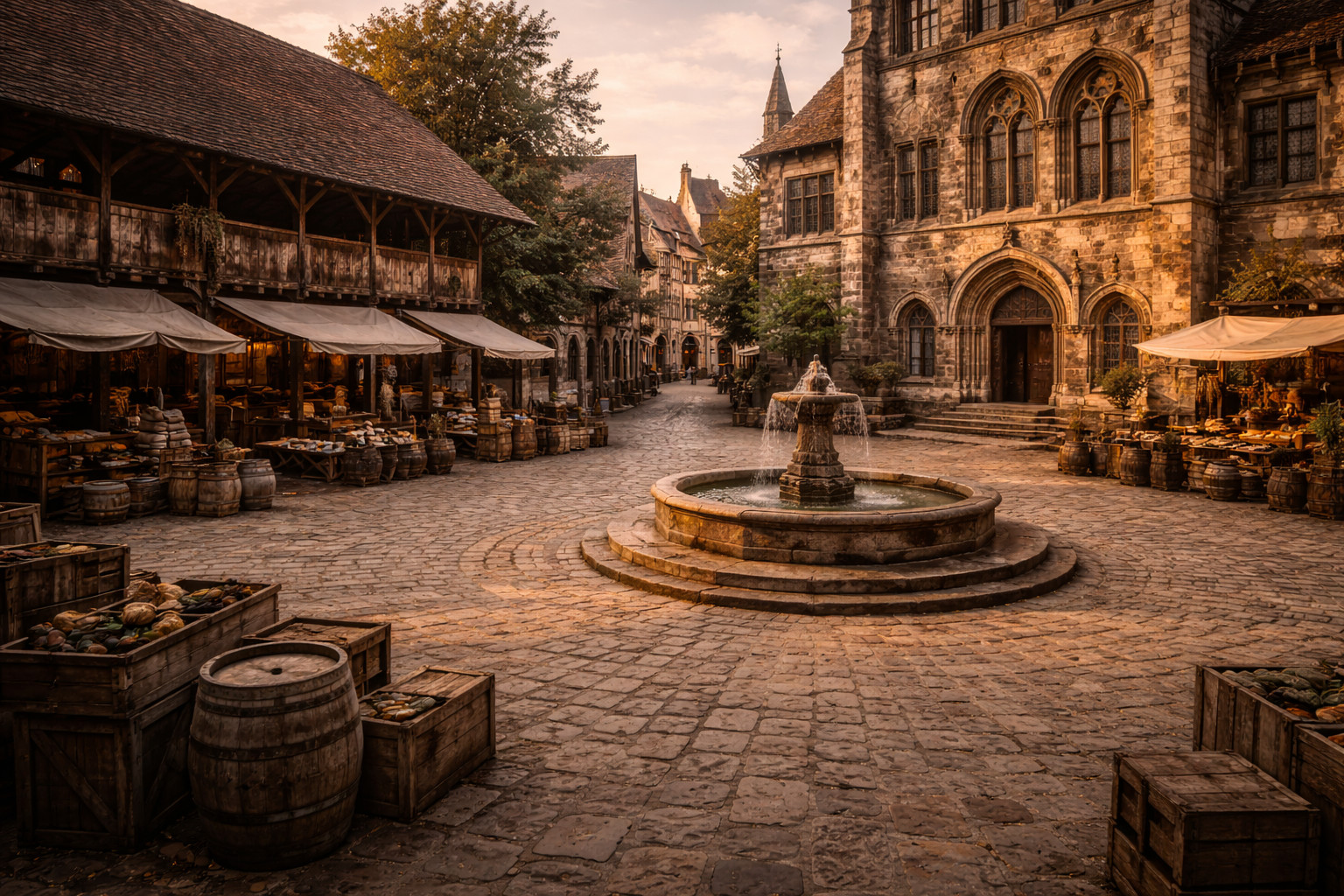
Markets have long been more than places to buy and sell; they helped shape cities, social order, and economic life. From early town squares to covered bazaars, marketplaces concentrated people, goods, and information in ways that transformed surrounding neighborhoods. Their rhythms governed production cycles, transport routes, and even legal frameworks for trade. Studying these spaces reveals how everyday interactions built larger political and commercial structures.

Early Origins and Urban Formation

Markets frequently emerged at crossroads, riverbanks, or near administrative centers, where travel and governance intersected. These locations offered natural advantages for gathering producers and consumers, and over time simple trading sites attracted craftsmen, inns, and administrative offices. The clustering of services around markets accelerated urban growth and often determined a settlement’s long-term character. As hubs, marketplaces catalyzed specialization and the division of labor that underpin urban economies.

Markets changed the physical and social geography of towns, concentrating wealth and creating visible centers of civic life. Their permanence encouraged investment in infrastructure and public buildings that further anchored urban populations.

Economic Networks and Commodity Flows

A market’s importance stemmed from its role in broader economic networks that linked hinterlands, artisans, and distant traders. Through regular fairs and daily stalls, information about prices, demand, and scarcity circulated rapidly, allowing merchants and producers to adjust production and transport. Markets also facilitated credit, standard weights, and measures, which reduced transaction costs and made long-distance trade more reliable. Over time, famous markets became nodes in continental and interregional commodity chains.

– Common traded goods included staple foods, textiles, metalwares, and luxury items that signaled social status.
– Markets often hosted itinerant brokers and money changers who smoothed exchanges across linguistic and monetary zones.

These flows made marketplaces essential for economic integration and for the diffusion of technology and farming innovations.

Social Life, Rituals, and Public Communication

Beyond commerce, markets functioned as stages for social interaction, political discourse, and ritual performance. They were places where news traveled, ideas were debated, and authorities issued proclamations to assembled crowds. Festivals, religious observances, and public punishments often took place in or near market areas, linking economic life to civic identity and moral order. The market’s social density made it a barometer of public sentiment and a venue for contestation.

– Market rituals could mark seasonal cycles, contract renewals, or civic anniversaries.
– Informal networks formed among sellers and buyers that supported mutual aid and reputation systems.

These social dimensions reinforced markets as central to communal cohesion and urban governance.

Architectural Design and Market Regulation

The material form of markets—open squares, covered halls, or regulated stalls—reflected climatic, economic, and political priorities. Authorities often imposed rules on prices, weights, stall locations, and sanitation, balancing merchant interests with consumer protection and revenue collection. Over time, specialized spaces such as guild halls or commodity-specific quarters emerged to manage complexity and maintain standards. Architecture and regulation together shaped the daily experience and durability of market life.

Regulatory frameworks and built environments combined to make marketplaces resilient institutions that adapted to changing economic and social demands.

Conclusion

Marketplaces were foundational urban institutions that integrated commerce, culture, and governance into daily life. Their physical presence and social dynamics influenced urban growth, economic networks, and public communication. Understanding markets offers a grounded perspective on how cities and societies evolved through routine transactions and shared spaces.

Previous Post

Landmarks in Human Communication and Cultural Change

Next Post

Wayside Inns and Markets: Social Infrastructure of Old Roads

Related Posts

Wayside Inns and Markets: Social Infrastructure of Old Roads
History

Wayside Inns and Markets: Social Infrastructure of Old Roads

February 11, 2026
The Infrastructure of Preindustrial Supply and Movement
History

The Infrastructure of Preindustrial Supply and Movement

February 6, 2026
Taxation and Toll Networks That Funded Empires
History

Taxation and Toll Networks That Funded Empires

February 6, 2026
Seasonal Rhythms: How Agricultural Cycles Directed Preindustrial Trade
History

Seasonal Rhythms: How Agricultural Cycles Directed Preindustrial Trade

February 1, 2026
Next Post
Wayside Inns and Markets: Social Infrastructure of Old Roads

Wayside Inns and Markets: Social Infrastructure of Old Roads

Search..

No Result
View All Result

Recent Articles

What Is The Receive Proffer For Freshly Histrion _ across Australia Spin & Win

February 11, 2026

Chip Sin Fiebre De Giro — territorio nacional español Bet Now

February 11, 2026
Wayside Inns and Markets: Social Infrastructure of Old Roads

Wayside Inns and Markets: Social Infrastructure of Old Roads

February 11, 2026
Urban Marketplaces: Centers of Commerce, Culture, and Power

Urban Marketplaces: Centers of Commerce, Culture, and Power

February 11, 2026
Regional Memory and the Making of Historical Landscapes

Landmarks in Human Communication and Cultural Change

February 10, 2026

Subscribe Us

By clicking submit, I authorize History Ours and its affiliated companies to: (1) use, sell, and share my information for marketing purposes, including cross-context behavioral advertising, as described in our Terms of Service and Privacy Policy, (2) supplement the information that I provide with additional information lawfully obtained from other sources, like demographic data from public sources, interests inferred from web page views, or other data relevant to what might interest me, like past purchase or location data, (3) contact me or enable others to contact me by email with offers for goods and services from any category at the email address provided, and (4) retain my information while I am engaging with marketing messages that I receive and for a reasonable amount of time thereafter. I understand I can opt out at any time through an email that I receive, or by clicking here

Subscribe To Our Newsletter

By clicking submit, I authorize History Ours and its affiliated companies to: (1) use, sell, and share my information for marketing purposes, including cross-context behavioral advertising, as described in our Terms of Service and Privacy Policy, (2) supplement the information that I provide with additional information lawfully obtained from other sources, like demographic data from public sources, interests inferred from web page views, or other data relevant to what might interest me, like past purchase or location data, (3) contact me or enable others to contact me by email with offers for goods and services from any category at the email address provided, and (4) retain my information while I am engaging with marketing messages that I receive and for a reasonable amount of time thereafter. I understand I can opt out at any time through an email that I receive, or by clicking here.

© 2026 History Ours | All Rights Reserved

  • Contact Us
  • Privacy Policy
  • Terms of Service
  • Unsubscribe
  • Privacy Choices
  • Contact Us
  • Privacy Policy
  • Terms of Service
  • Unsubscribe
  • Privacy Choices

© 2026 History Ours | All Rights Reserved

No Result
View All Result
  • Home
  • History
  • Biographies
  • Eras
  • Regions
  • Timeline

© 2026 History Ours | All Rights Reserved

Skip to content
Open toolbar Accessibility Tools

Accessibility Tools

  • Increase TextIncrease Text
  • Decrease TextDecrease Text
  • GrayscaleGrayscale
  • High ContrastHigh Contrast
  • Negative ContrastNegative Contrast
  • Light BackgroundLight Background
  • Links UnderlineLinks Underline
  • Readable FontReadable Font
  • Reset Reset