Uncover History’s Secrets with Daily Updates!
Daily News Entertainment
  • Home
  • History
  • Biographies
  • Eras
  • Regions
  • Timeline
No Result
View All Result
History Ours
  • Home
  • History
  • Biographies
  • Eras
  • Regions
  • Timeline
No Result
View All Result
History Ours
No Result
View All Result

Bahis vergilendirmesi Türkiye’de devlet kontrolündedir, ancak yeni açılan casino siteleri gibi uluslararası sitelerde oyuncular kendi kazançlarını yönetir.

Spor tutkunları için yüksek oranlar Bettilt giriş kısmında bulunuyor.

Kullanıcı yorumlarında pozitif değerlendirmeler alan pin co güvenilirliğini kanıtladı.

Home History

Wayside Inns and Markets: Social Infrastructure of Old Roads

in History
Wayside Inns and Markets: Social Infrastructure of Old Roads

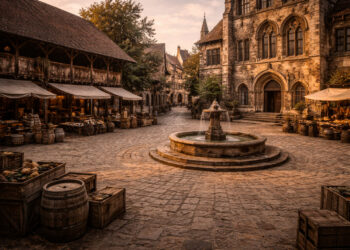
Wayside inns and roadside markets were more than convenient stops for travelers; they formed an essential layer of social and economic infrastructure along historic routes. These nodes supported movement of goods and people, provided services, and helped distribute information across long distances. Over time they shaped settlement patterns, encouraged specialized crafts, and anchored seasonal fairs that linked hinterlands to long-distance trade. Understanding their roles reveals how modest buildings and stalls underpinned regional connectivity long before modern transport networks.

The practical functions of inns and markets
Wayside inns served core practical needs for travelers and merchants, offering food, lodging, and stables in places where distances between settlements were significant. They reduced the cost and risk of travel by providing predictable points for rest, repair, and resupply, which in turn encouraged regular traffic on particular routes. Markets clustered near inns because travelers provided a steady demand for local produce and crafted goods, creating mutually reinforcing economies. These sites often became logical choices for later permanent towns as trade volumes grew.

Services, specialization, and economic spillovers
Small clusters of services developed around inns and markets to meet varied traveler needs, and these services often became specialized over time. Blacksmiths, wheelwrights, muleteers, and millers found reliable business near busy waysides and adjusted their skills to suit the mix of local and long-distance customers.
– Market days concentrated buyers and sellers and permitted exchange of bulky or seasonal goods.
– Craftspeople used inns as informal showrooms, reaching customers beyond their immediate village.
– Food and lodging adapted to diverse dietary and cultural expectations of travelers.
These specializations generated economic spillovers into surrounding villages, encouraging craft guilds, storage facilities, and even localized credit arrangements as trade became more regular.

Social, administrative, and security roles
Beyond commerce, inns and markets acted as hubs of social life and informal governance along roads. Travelers shared news, legal complaints could be aired in public, and local officials sometimes used market days to collect dues or announce regulations. The presence of a reliable public meeting place also contributed to communal problem solving about road maintenance, banditry, and water supply.
– Markets provided a forum for dispute resolution and informal contracts.
– Inns often doubled as postal relay points or lodgings for itinerant officials.
These institutions helped create predictable social rhythms and a semblance of order that made long-distance travel and trade feasible.

Seasonal rhythms and long-term urban impact
The activity at wayside inns and markets followed agricultural seasons and pilgrimage cycles, with peaks tied to harvests, festivals, and trade fairs. These rhythms structured itineraries, determined the viability of certain routes, and informed investment in infrastructure like bridges and warehouses. Over centuries, repeated use and incremental investment around such nodes could transform a roadside stop into a market town with broader regional influence.

Conclusion
Wayside inns and roadside markets knitted together travel, commerce, and community in preindustrial landscapes. Their layered functions—practical, economic, social, and administrative—made them indispensable to historical mobility. Studying them clarifies how small scale institutions sustained long-distance connections before modern transport.
Previous Post

Urban Marketplaces: Centers of Commerce, Culture, and Power

Next Post

Chip Sin Fiebre De Giro — territorio nacional español Bet Now

Related Posts

Urban Marketplaces: Centers of Commerce, Culture, and Power
History

Urban Marketplaces: Centers of Commerce, Culture, and Power

February 11, 2026
The Infrastructure of Preindustrial Supply and Movement
History

The Infrastructure of Preindustrial Supply and Movement

February 6, 2026
Taxation and Toll Networks That Funded Empires
History

Taxation and Toll Networks That Funded Empires

February 6, 2026
Seasonal Rhythms: How Agricultural Cycles Directed Preindustrial Trade
History

Seasonal Rhythms: How Agricultural Cycles Directed Preindustrial Trade

February 1, 2026
Next Post

Chip Sin Fiebre De Giro -- territorio nacional español Bet Now

Search..

No Result
View All Result

Recent Articles

What Is The Receive Proffer For Freshly Histrion _ across Australia Spin & Win

February 11, 2026

Chip Sin Fiebre De Giro — territorio nacional español Bet Now

February 11, 2026
Wayside Inns and Markets: Social Infrastructure of Old Roads

Wayside Inns and Markets: Social Infrastructure of Old Roads

February 11, 2026
Urban Marketplaces: Centers of Commerce, Culture, and Power

Urban Marketplaces: Centers of Commerce, Culture, and Power

February 11, 2026
Regional Memory and the Making of Historical Landscapes

Landmarks in Human Communication and Cultural Change

February 10, 2026

Subscribe Us

By clicking submit, I authorize History Ours and its affiliated companies to: (1) use, sell, and share my information for marketing purposes, including cross-context behavioral advertising, as described in our Terms of Service and Privacy Policy, (2) supplement the information that I provide with additional information lawfully obtained from other sources, like demographic data from public sources, interests inferred from web page views, or other data relevant to what might interest me, like past purchase or location data, (3) contact me or enable others to contact me by email with offers for goods and services from any category at the email address provided, and (4) retain my information while I am engaging with marketing messages that I receive and for a reasonable amount of time thereafter. I understand I can opt out at any time through an email that I receive, or by clicking here

Subscribe To Our Newsletter

By clicking submit, I authorize History Ours and its affiliated companies to: (1) use, sell, and share my information for marketing purposes, including cross-context behavioral advertising, as described in our Terms of Service and Privacy Policy, (2) supplement the information that I provide with additional information lawfully obtained from other sources, like demographic data from public sources, interests inferred from web page views, or other data relevant to what might interest me, like past purchase or location data, (3) contact me or enable others to contact me by email with offers for goods and services from any category at the email address provided, and (4) retain my information while I am engaging with marketing messages that I receive and for a reasonable amount of time thereafter. I understand I can opt out at any time through an email that I receive, or by clicking here.

© 2026 History Ours | All Rights Reserved

  • Contact Us
  • Privacy Policy
  • Terms of Service
  • Unsubscribe
  • Privacy Choices
  • Contact Us
  • Privacy Policy
  • Terms of Service
  • Unsubscribe
  • Privacy Choices

© 2026 History Ours | All Rights Reserved

No Result
View All Result
  • Home
  • History
  • Biographies
  • Eras
  • Regions
  • Timeline

© 2026 History Ours | All Rights Reserved

Skip to content
Open toolbar Accessibility Tools

Accessibility Tools

  • Increase TextIncrease Text
  • Decrease TextDecrease Text
  • GrayscaleGrayscale
  • High ContrastHigh Contrast
  • Negative ContrastNegative Contrast
  • Light BackgroundLight Background
  • Links UnderlineLinks Underline
  • Readable FontReadable Font
  • Reset Reset