Uncover History’s Secrets with Daily Updates!
Daily News Entertainment
  • Home
  • History
  • Biographies
  • Eras
  • Regions
  • Timeline
No Result
View All Result
History Ours
  • Home
  • History
  • Biographies
  • Eras
  • Regions
  • Timeline
No Result
View All Result
History Ours
No Result
View All Result

Bahis vergilendirmesi Türkiye’de devlet kontrolündedir, ancak yeni açılan casino siteleri gibi uluslararası sitelerde oyuncular kendi kazançlarını yönetir.

Home Regions

Regions in Layers: Landscape, Memory, and Everyday Lives

in Regions
Regions in Layers: Landscape, Memory, and Everyday Lives

Regional history is not a single story but a composition of overlapping lives, practices, and memories.
Landscapes preserve choices about transport, industry, and settlement alongside traces of everyday routines.
Paying attention to ordinary acts—work patterns, market rhythms, and seasonal habits—reveals how places are made and remade.
This piece outlines ways historians and interested readers can read material and social traces to understand regional identity.

Landscape and Memory

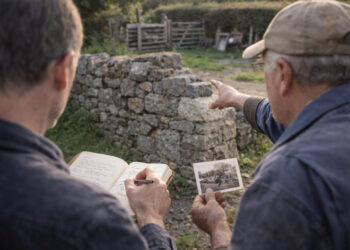
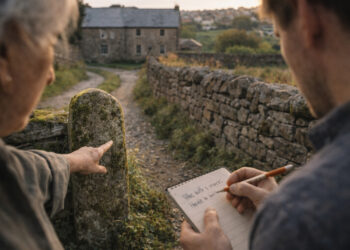
Land and built environments act as repositories of memory where past decisions remain legible in field boundaries, road networks, and industrial ruins. These features shape how people navigate, narrate, and value a region, offering clues to historical economies and social relations. Reading the landscape asks for attention to scale, combining maps, photographs, and on-the-ground observation to connect visible forms with archival records. Such readings resist tidy teleologies and instead foreground contingency and local adaptability.

By tracing physical continuities and ruptures, researchers can place individual stories within longer temporal frames. This approach tends to highlight interactions between environment and human agency in producing regional distinctiveness.

Everyday Practices and Regional Identity

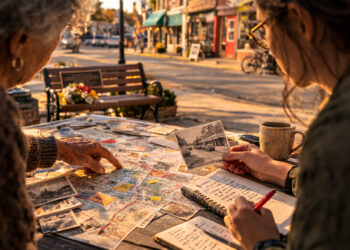
Everyday routines—what people eat, how they travel, where they socialize—structure experience and reproduce regional norms over time. Practices accumulate into patterns that outsiders may mistake for tradition when they are often adaptive responses to economic or ecological conditions. Oral histories, diaries, and material cultures like tools or household objects help recover practices that leave few official traces. Combining those sources with quantitative data can show how widespread or contested particular practices were.

Understanding practices also reveals how communities negotiate change, preserving some routines while transforming others. That negotiation is central to a living regional identity rather than a fixed heritage.

Archives, Voices, and Method

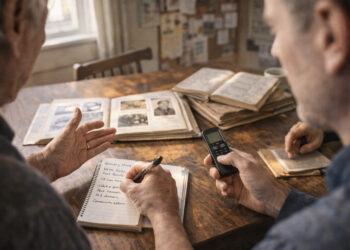
Researching regions requires plural methods that centre local voices and underused sources. Small newspapers, parish records, estate papers, and family photograph albums often yield rich evidence about daily life and social networks. Paying attention to non-textual sources helps recover perspectives overlooked by institutional archives.

  • Cross-referencing oral testimony with material remains strengthens interpretive claims.
  • Digital mapping and crowd-sourced inventories can open access to dispersed local knowledge.

Methodological diversity also means acknowledging silences and biases in the record and seeking collaborative ways to fill them. Working with communities transforms research into a conversation about past and present.

Conclusion

Reading regions closely shows how landscape, practice, and memory interlock to produce place. Simple narratives give way to layered, sometimes contradictory stories that enrich understanding. A regional approach invites both careful description and inclusive inquiry.
Previous Post

Unearthing Regional Belonging Through Everyday Landscapes

Related Posts

Unearthing Regional Belonging Through Everyday Landscapes
Regions

Unearthing Regional Belonging Through Everyday Landscapes

March 16, 2026
Everyday Borders: Stories of Regional Change and Memory
Regions

Everyday Borders: Stories of Regional Change and Memory

March 11, 2026
Rediscovering Regional Voices Through Everyday Archives
Regions

Rediscovering Regional Voices Through Everyday Archives

March 11, 2026
Reading Place: Everyday Acts and Regional Histories
Regions

Reading Place: Everyday Acts and Regional Histories

March 6, 2026

Search..

No Result
View All Result

Recent Articles

Regions in Layers: Landscape, Memory, and Everyday Lives

Regions in Layers: Landscape, Memory, and Everyday Lives

March 16, 2026
Unearthing Regional Belonging Through Everyday Landscapes

Unearthing Regional Belonging Through Everyday Landscapes

March 16, 2026
Principles for Classifying Historical Eras and Transitions

Principles for Classifying Historical Eras and Transitions

March 15, 2026
Period Boundaries and the Practice of Historical Eras

Period Boundaries and the Practice of Historical Eras

March 15, 2026
Restoring Quiet Lives: Practical Approaches to Biography

Restoring Quiet Lives: Practical Approaches to Biography

March 14, 2026

Subscribe Us

By clicking submit, I authorize History Ours and its affiliated companies to: (1) use, sell, and share my information for marketing purposes, including cross-context behavioral advertising, as described in our Terms of Service and Privacy Policy, (2) supplement the information that I provide with additional information lawfully obtained from other sources, like demographic data from public sources, interests inferred from web page views, or other data relevant to what might interest me, like past purchase or location data, (3) contact me or enable others to contact me by email with offers for goods and services from any category at the email address provided, and (4) retain my information while I am engaging with marketing messages that I receive and for a reasonable amount of time thereafter. I understand I can opt out at any time through an email that I receive, or by clicking here

Subscribe To Our Newsletter

By clicking submit, I authorize History Ours and its affiliated companies to: (1) use, sell, and share my information for marketing purposes, including cross-context behavioral advertising, as described in our Terms of Service and Privacy Policy, (2) supplement the information that I provide with additional information lawfully obtained from other sources, like demographic data from public sources, interests inferred from web page views, or other data relevant to what might interest me, like past purchase or location data, (3) contact me or enable others to contact me by email with offers for goods and services from any category at the email address provided, and (4) retain my information while I am engaging with marketing messages that I receive and for a reasonable amount of time thereafter. I understand I can opt out at any time through an email that I receive, or by clicking here.

© 2026 History Ours | All Rights Reserved

  • Contact Us
  • Privacy Policy
  • Terms of Service
  • Unsubscribe
  • Privacy Choices
  • Contact Us
  • Privacy Policy
  • Terms of Service
  • Unsubscribe
  • Privacy Choices

© 2026 History Ours | All Rights Reserved

No Result
View All Result
  • Home
  • History
  • Biographies
  • Eras
  • Regions
  • Timeline

© 2026 History Ours | All Rights Reserved

Skip to content
Open toolbar Accessibility Tools

Accessibility Tools

  • Increase TextIncrease Text
  • Decrease TextDecrease Text
  • GrayscaleGrayscale
  • High ContrastHigh Contrast
  • Negative ContrastNegative Contrast
  • Light BackgroundLight Background
  • Links UnderlineLinks Underline
  • Readable FontReadable Font
  • Reset Reset