
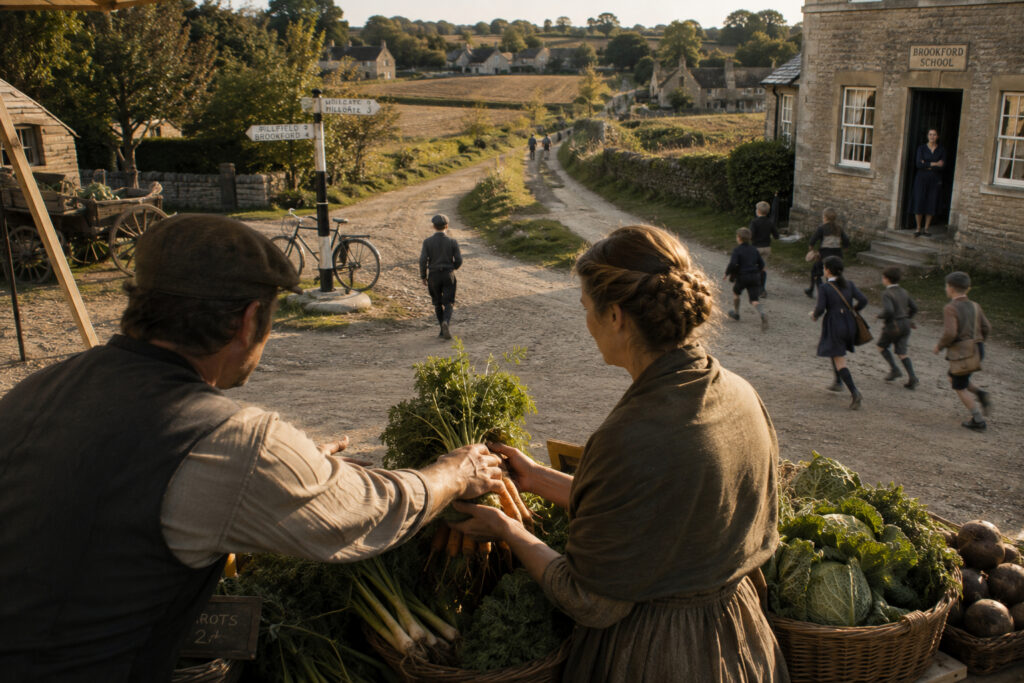
Regions are built from routine acts that accumulate over decades, not from singular founding events.
They become visible where people meet, trade, and maintain institutions that coordinate daily life.
This introduction points to the ways small practices, paths, and rituals create durable patterns of belonging.
Attending to these ordinary traces reveals how regions endure through economic and political change.
Everyday Institutions as Regional Anchors
Local institutions such as markets, schools, cooperatives, and religious halls organize rhythms that residents come to expect. These places regulate exchange, knowledge, and social ties across neighborhoods and settlements. Over time they develop reputations and linkages that extend a sense of regional coherence beyond administrative boundaries. Their persistence often matters more than official maps in shaping how people imagine their shared past.
Because institutions mediate daily interaction, they also transmit norms and practical skills across generations. They function as nodes in wider networks, anchoring identities even when political jurisdictions shift.
Landscapes, Routes, and Economic Rhythms
Physical landscapes and transport routes structure movement and opportunity, and so they are central to regional formation. Roads, rivers, field systems, and market trails channel flows of goods and people, giving rise to predictable economic cycles. These spatial patterns create local specializations and mutual dependencies among communities. Such dependencies shape collective responses to crises and innovations alike.
Because paths and productive systems tie places together, they foster shared calendars and seasonal practices. These recurring rhythms make regions legible to those who live and work within them.
Memory, Ritual, and the Archive of Practice
Memory is often held in practice rather than formal archives: festivals, commemorations, and everyday labor carry historical knowledge. Rituals mark time and reinforce communal narratives that bond residents to a regional story. Oral histories, craft techniques, and household records form an improvised archive that scholars and local actors can read for insight. This archive helps explain why some places attract return migration, investment, or symbolic attention while others remain marginal.
Preserving and interpreting these living records requires attention to material traces and to the people who perform them. Doing so opens pathways for more inclusive regional histories.
Conclusion
Regions form through ongoing practices, landscapes, and shared memory.
Recognizing the ordinary institutions and routes that bind places gives clearer historical explanations.
Studying these mundane ties makes regional history both richer and more accessible.