
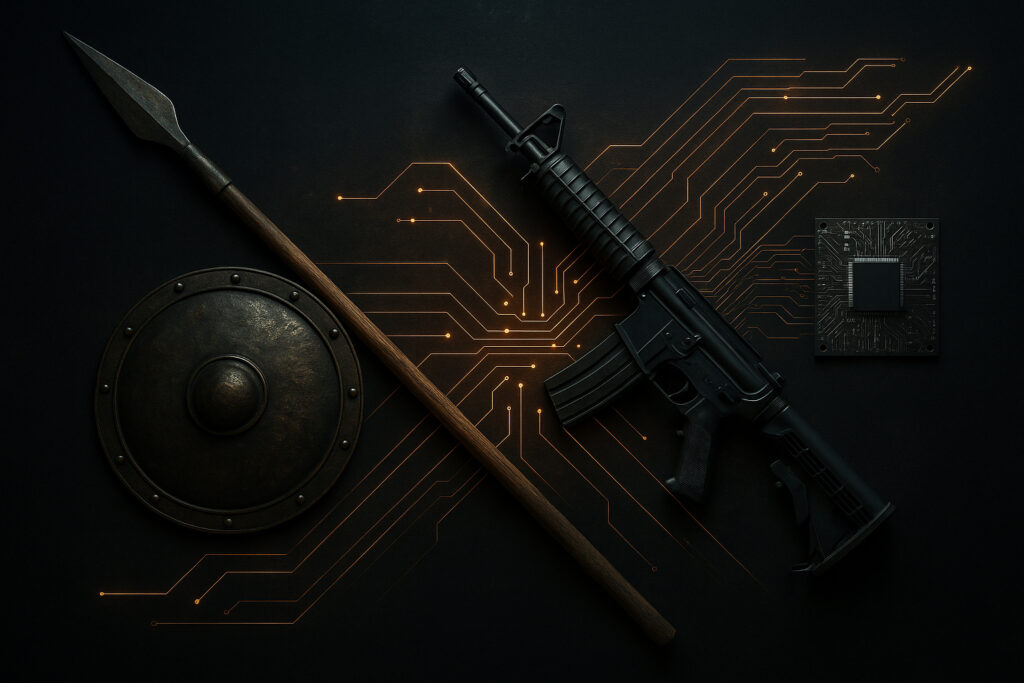
Warfare has changed more dramatically than almost any other human activity. What began as simple hand-to-hand combat using stone-tipped spears has grown into a complex digital battlefield where nations defend against invisible threats. Each era of innovation — from metal weapons to gunpowder, mechanized armies, and today’s cyber domain — has reshaped how conflicts are fought and how societies protect themselves.
This evolution reflects humanity’s technological progress and the constant search for faster, smarter, and more efficient ways to gain an advantage. Understanding this journey reveals how strategy, innovation, and security have transformed across time.
The Age of Primitive and Melee Weapons
Early warfare relied on basic tools crafted from stone, wood, and bone. Spears, clubs, and simple blades dominated combat. These weapons required physical strength, close-range skill, and teamwork. Battles were personal, direct, and shaped by terrain and survival instincts.
Metal Weapons and Organized Armies
The discovery of bronze and later iron changed warfare forever. Swords, shields, armor, and chariots improved both offense and defense, while organized armies formed to maintain order and expand territories. Empires used disciplined infantry and cavalry to control vast regions, showing how technology and strategy began to work hand in hand.
Gunpowder and the Birth of Modern Warfare
The introduction of gunpowder revolutionized conflict. Cannons, muskets, and explosives transformed battlefields by increasing range and destructive power. Fortifications evolved, tactics shifted, and warfare became more about coordination than physical strength. This era marked the beginning of modern military strategy.
Industrialization and Global Conflict
The 19th and 20th centuries brought railroads, tanks, aircraft, and advanced artillery. Wars became larger, faster, and more mechanized. Communication tools like radio and radar changed how armies coordinated movements. Technology determined victory, and nations realized that innovation was as crucial as manpower.
The Cyber Age: Invisible Battlefields
Today, warfare has expanded into the digital world. Nations protect computer networks with the same importance as physical borders. Cyberweapons can disable infrastructure, steal classified information, and influence political systems — all without firing a single shot. These invisible attacks require new defenses, new expertise, and constant vigilance.
Conclusion
Warfare has evolved from primitive tools to cutting-edge digital strategies. Each transformation reflects changing technology, new threats, and the shifting nature of global power. Understanding this evolution helps us prepare for a future where both physical and digital security shape the world’s stability.