
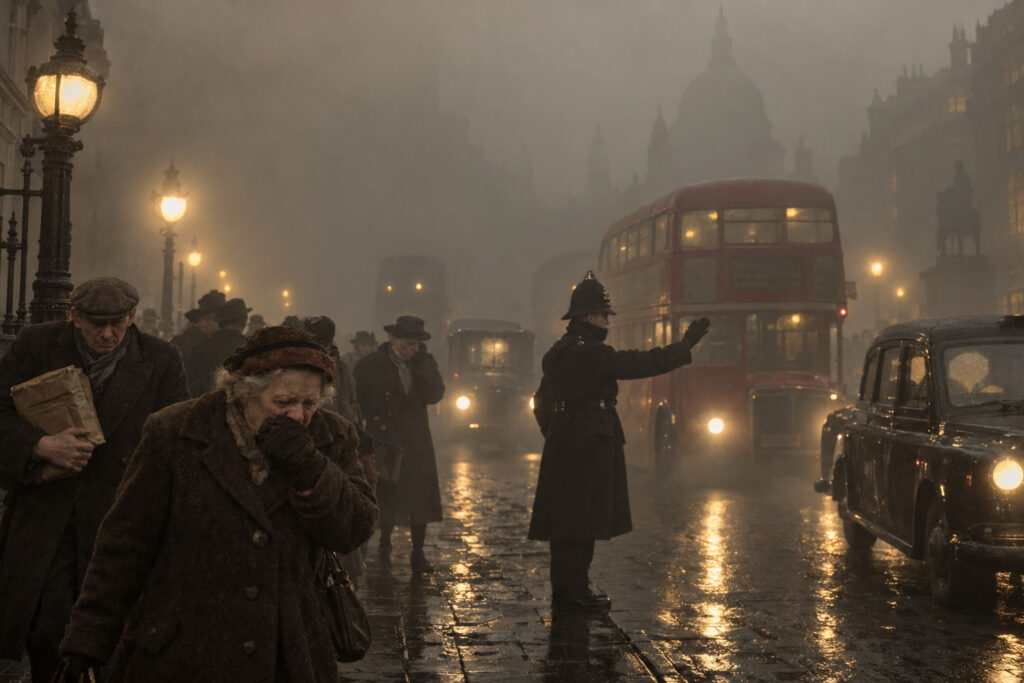
London in early December 1952 was cold and hungry for heat. Households burned cheap, sulfur-rich coal; factories and power stations belched smoke. An unusual high-pressure weather system settled over southern England, trapping pollutants near the ground. Over several days the city’s usual London fog — already a seasonal nuisance — turned into something thicker, darker, and chemically deadly. What began as soot and sulphur dioxide in the air became a choking blanket that would show how vulnerable cities were to pollution.
Five days that paralysed a capital: December 5–9, 1952
On December 5 visibility collapsed. Street lamps glowed like moons behind curtains; drivers crawled along with headlights on; theatres and cinemas reported patrons leaving because they could not find their seats. The smog hung heavy and damp, sticking to lungs and clothes. Hospitals saw a spike in respiratory distress and cardiac problems. By December 8 and 9 the fog began to lift, but the immediate human toll had already mounted and the air remained unhealthy for days afterwards.
Witnesses described coughing, burning eyes, and a sense of disorientation; municipal services were stretched thin. London’s famous skyline vanished into the gray. The Thames and train services were affected; dock and warehouse workers struggled in the low visibility. For many residents, it was a new kind of urban disaster — not a blast or a flood, but a slow, invisible assault from the air they breathed.
Aftermath: deaths, science, and policy
Official accounts at the time estimated around 4,000 deaths attributable to the smog in the weeks that followed, mainly among the elderly and those with heart or lung conditions. Subsequent research has suggested the long-term excess mortality could have been higher — some studies place the toll nearer to 12,000 when later effects are counted — though estimates vary and scholars debate methods. What is clear is that the crisis spurred scientific inquiry into air pollution’s health effects and forced politicians to act.
The most direct policy response was Britain’s Clean Air Act of 1956, which introduced smoke-control zones, encouraged smokeless fuels, and phased out the most polluting domestic practices. The Great Smog did not simply become a grim statistic; it changed how cities thought about industrial, domestic, and environmental planning.
Conclusion
The December of 1952 is a stark reminder that everyday choices — what people burn to keep warm, where factories are allowed to emit smoke — can cascade into civic catastrophe when weather and technology collide. The Great Smog forced London and the rest of Britain to rewrite the rules for urban air, turning a short-term emergency into long-term reform.