Uncover History’s Secrets with Daily Updates!
Daily News Entertainment
  • Home
  • History
  • Biographies
  • Eras
  • Regions
  • Timeline
No Result
View All Result
History Ours
  • Home
  • History
  • Biographies
  • Eras
  • Regions
  • Timeline
No Result
View All Result
History Ours
No Result
View All Result
Home Biographies

A Steward of Records Who Shaped Collective Memory

in Biographies
A Steward of Records Who Shaped Collective Memory

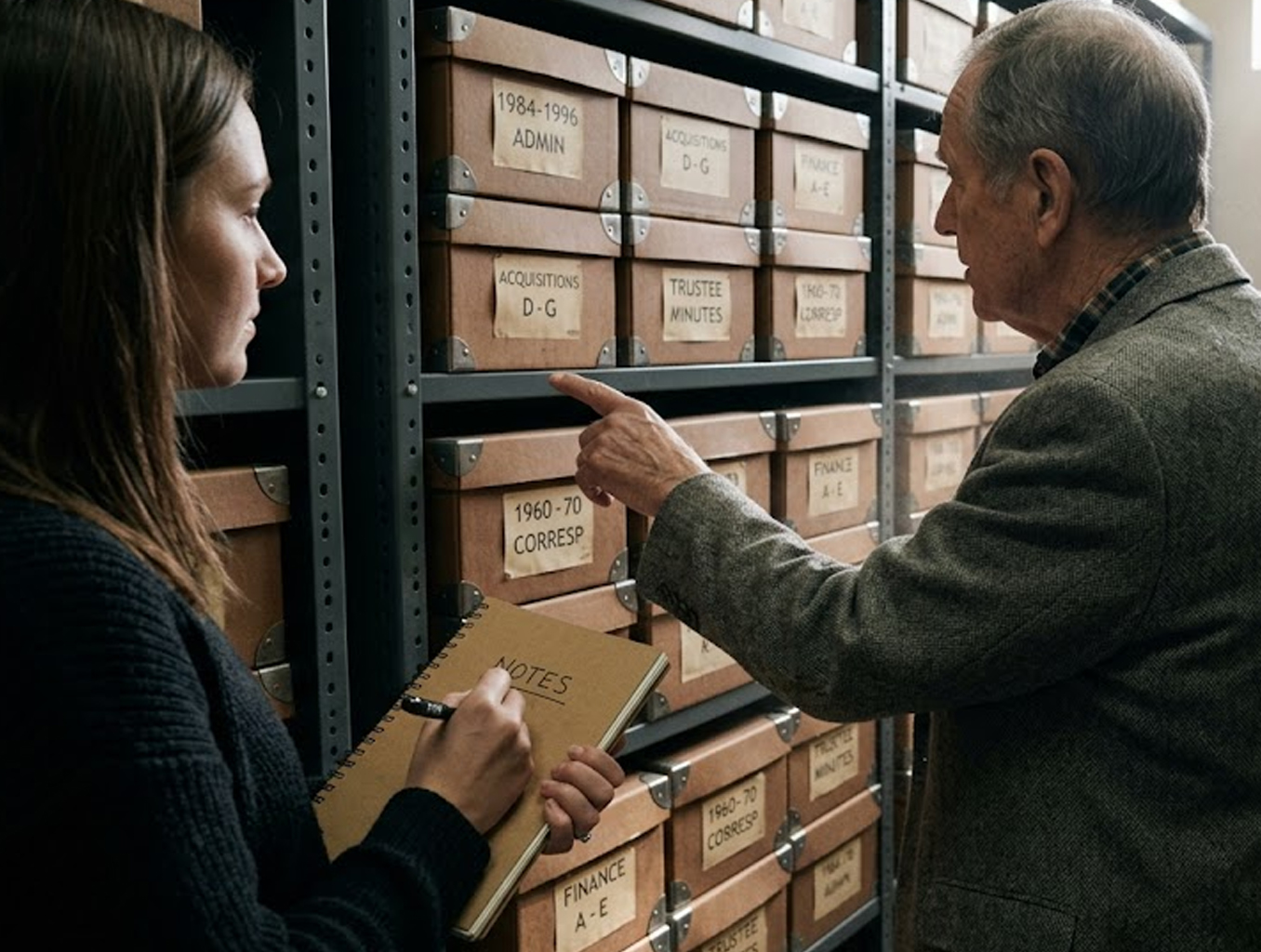
His work as a dedicated records steward offers a clear example of how routine archival practice can accumulate significant historical impact. For decades he managed documents, classification schemes, and public access with an emphasis on accuracy and context. That steady, methodical care altered how institutions remember past decisions and how historians reconstruct events. This piece examines the professional choices, institutional effects, and enduring lessons of that custodial career.

Early career and motivations

He began in a small municipal office where limited resources demanded pragmatic solutions. Early responsibilities included organizing incoming correspondence, creating inventories, and establishing retention schedules that balanced legal requirements with historical value. These tasks were never purely administrative for him; they reflected a conviction that orderly records support accountable governance and collective memory. That philosophy guided his choices as responsibilities grew.

Over time he translated practical constraints into durable procedures that colleagues could follow. Those early habits became templates for later reforms and influenced how records were preserved and retrieved.

Methodical approaches to record-keeping

He favored clear metadata, consistent naming conventions, and documented processes to reduce ambiguity for future users. Regular audits, cross-referencing systems, and simple but enforceable rules minimized loss and improved discoverability. He also prioritized training, believing that well-informed staff are the best safeguard against accidental destruction or misfiling. His methods emphasized the long-term interpretability of records as much as their immediate utility.

These practices made collections more resilient and easier for researchers to navigate. They underscored the practical value of investing time in process as an investment in future knowledge.

Institutional influence and reform

In leadership roles he advocated for policies that balanced transparency, privacy, and preservation. He worked with administrators to make retention schedules more transparent and to establish clear criteria for digitization and access. By framing records management as a governance tool, he secured modest but consequential investments in infrastructure and training. His influence often arrived through persuasion and demonstration rather than dramatic overhaul.

Colleagues credited him with shifting attitudes toward proactive stewardship. Institutions that adopted his approaches generally reported fewer compliance lapses and more usable historical files.

How scholarship and public understanding evolved

Researchers benefited from his insistence on context, which made archival materials more meaningful and easier to interpret. Clear provenance and consistent arrangement reduced the interpretive burden on historians and enabled more accurate narratives. Public inquiries and journalists also found the improved systems faster and more transparent, which bolstered institutional credibility. His work did not rewrite history, but it shaped the evidence historians rely on.

By improving access and clarity he helped narrow the gap between raw records and public understanding. That contribution enhanced both scholarship and civic accountability.

Legacy and lessons for archivists

His legacy rests less in dramatic moments than in durable practice: policies, templates, and a culture of conscientious care. For contemporary archivists the takeaway is practical—invest in clear processes, staff training, and a mindset that values future readability. Those investments pay dividends in research quality, institutional memory, and public trust. The stewardship model he practiced remains relevant in an era of rapid technological change.

Ultimately his career illustrates how everyday professional choices can reverberate across decades. It offers a quiet but persuasive blueprint for anyone responsible for preserving records.

Conclusion

Careful stewardship of records transforms scattered documents into coherent institutional memory. Small, consistent practices can produce outsized benefits for historians, administrators, and the public. His example reminds us that preservation is both technical work and a public service.


Previous Post

Monuments, Museums, and the Making of Local Memory

Next Post

The Private Life Behind Public Record Keeping Legacy

Related Posts

The Disguise That Broke Chains: Ellen and William Craft
Biographies

The Disguise That Broke Chains: Ellen and William Craft

September 15, 2026
Bass Reeves: The Marshal Who Hunted Outlaws in Indian Territory
Biographies

Bass Reeves: The Marshal Who Hunted Outlaws in Indian Territory

September 15, 2026
Ellen Craft: Passing as a Planter to Secure Freedom
Biographies

Ellen Craft: Passing as a Planter to Secure Freedom

September 15, 2026
Chien‑Shiung Wu: The Physicist Who Proved Parity’s Failure
Biographies

Chien‑Shiung Wu: The Physicist Who Proved Parity’s Failure

September 15, 2026
Next Post
The Private Life Behind Public Record Keeping Legacy

The Private Life Behind Public Record Keeping Legacy

Search..

No Result
View All Result

Recent Articles

The Disguise That Broke Chains: Ellen and William Craft

The Disguise That Broke Chains: Ellen and William Craft

September 15, 2026
Bass Reeves: The Marshal Who Hunted Outlaws in Indian Territory

Bass Reeves: The Marshal Who Hunted Outlaws in Indian Territory

September 15, 2026
How the Crystal Palace Turned Glass and Iron into a Modern Stage

How the Crystal Palace Turned Glass and Iron into a Modern Stage

September 15, 2026
Anne Bonny: The Pirate Who Broke Rules and Expectations

Anne Bonny: The Pirate Who Broke Rules and Expectations

September 15, 2026
How Haiti Broke Its Chains: A 1791–1804 Timeline

How Haiti Broke Its Chains: A 1791–1804 Timeline

September 15, 2026

Subscribe Us

By clicking submit, I authorize History Ours and its affiliated companies to: (1) use, sell, and share my information for marketing purposes, including cross-context behavioral advertising, as described in our Terms of Service and Privacy Policy, (2) supplement the information that I provide with additional information lawfully obtained from other sources, like demographic data from public sources, interests inferred from web page views, or other data relevant to what might interest me, like past purchase or location data, (3) contact me or enable others to contact me by email with offers for goods and services from any category at the email address provided, and (4) retain my information while I am engaging with marketing messages that I receive and for a reasonable amount of time thereafter. I understand I can opt out at any time through an email that I receive, or by clicking here

Subscribe To Our Newsletter

By clicking submit, I authorize History Ours and its affiliated companies to: (1) use, sell, and share my information for marketing purposes, including cross-context behavioral advertising, as described in our Terms of Service and Privacy Policy, (2) supplement the information that I provide with additional information lawfully obtained from other sources, like demographic data from public sources, interests inferred from web page views, or other data relevant to what might interest me, like past purchase or location data, (3) contact me or enable others to contact me by email with offers for goods and services from any category at the email address provided, and (4) retain my information while I am engaging with marketing messages that I receive and for a reasonable amount of time thereafter. I understand I can opt out at any time through an email that I receive, or by clicking here.

© 2026 History Ours | All Rights Reserved

  • Contact Us
  • Privacy Policy
  • Terms of Service
  • Unsubscribe
  • Privacy Choices
  • Contact Us
  • Privacy Policy
  • Terms of Service
  • Unsubscribe
  • Privacy Choices

© 2026 History Ours | All Rights Reserved

No Result
View All Result
  • Home
  • History
  • Biographies
  • Eras
  • Regions
  • Timeline

© 2026 History Ours | All Rights Reserved

Skip to content
Open toolbar Accessibility Tools

Accessibility Tools

  • Increase TextIncrease Text
  • Decrease TextDecrease Text
  • GrayscaleGrayscale
  • High ContrastHigh Contrast
  • Negative ContrastNegative Contrast
  • Light BackgroundLight Background
  • Links UnderlineLinks Underline
  • Readable FontReadable Font
  • Reset Reset