
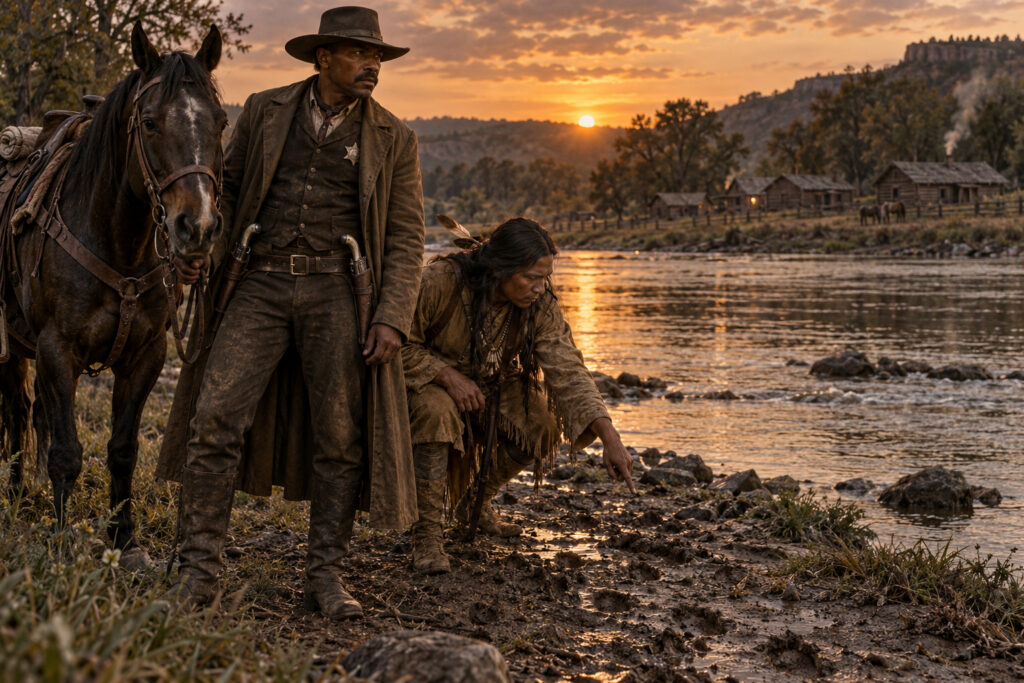
Bass Reeves was born into slavery in Arkansas around 1838. As a young man he escaped during the turmoil of the Civil War and slipped into the Indian Territory—land that would become modern Oklahoma—where the lines between tribal authority, federal law, and outlaw bands were thin and dangerous. Reeves learned to move in that place: he lived among Cherokee and Creek communities, acquired several languages and habits, and built the cultural fluency that would later make him an exceptional lawman.
Becoming a deputy in a lawless landscape
After the war Reeves settled in Van Buren, Arkansas. In the 1870s he was hired as a deputy U.S. marshal to serve under the federal courts that tried cases from the Indian Territory. His beat covered vast, rough country where jurisdiction was messy and fugitives could vanish across a river, into a reservation, or onto terrain few other officers dared to cross. Reeves was one of the first African Americans to hold that post west of the Mississippi.
Methods, myths, and an exacting record
Reeves’s methods became the stuff of frontier lore. He was said to carry two pistols, ride a powerful horse, and favor disguises—posing as a farmer, peddler, or preacher—to catch suspects off guard. He routinely tracked fugitives through woods and settlements, brought many in alive, and accepted the dangers of making arrests in places where a deputy could be isolated and outnumbered. Later accounts credit him with arresting thousands of criminals and with killing more than a dozen in self-defense; contemporary records and later recollections vary, so historians treat the numbers cautiously. What survives in court dockets, arrest warrants, and local reports, however, shows a consistent pattern: Reeves pursued cases other men would not, and he did so with a rare combination of patience, local knowledge, and legal resolve.
Conclusion
Bass Reeves retired after more than three decades of service and died in 1910. His life resists tidy legend and deserves attention precisely because it sits at the crossroads of post‑Civil War America: a formerly enslaved man enforcing federal law across contested terrain, fluent in cultures most officers had ignored. Over time the stories around him swelled into myths—the claim that he inspired fictional lawmen, for example—but the core truth remains striking on its own. Reeves’s career reveals how much of the American West depended on people who understood its languages, loyalties, and limits—and who could, against long odds, make the law work there.