
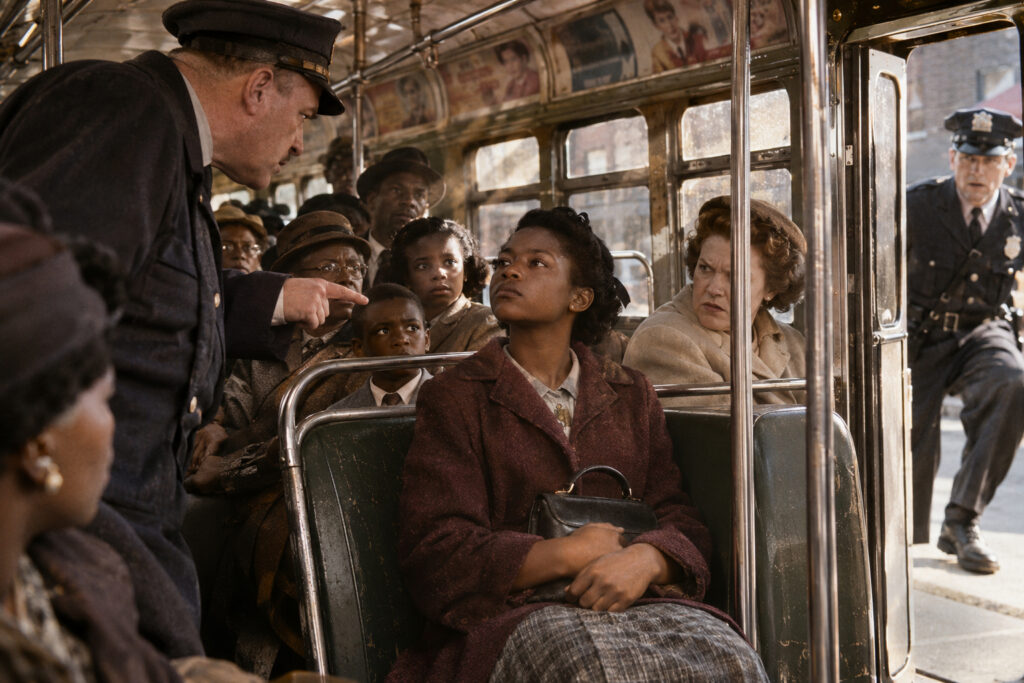
On March 2, 1955, a 15‑year‑old high‑school student in Montgomery, Alabama, boarded a city bus and sat down where she was told to sit. The driver ordered her to move for white passengers; she refused. Police arrested her for disorderly conduct and violating segregation laws—a routine charge under Jim Crow, except this time the refusal would ripple far beyond a single patrol report.
Colvin’s act was neither accidental nor solitary. Growing up in a segregated city, she had witnessed the daily humiliations of second‑class citizenship. She was part of a generation of young activists—students and churchgoers—who were quietly testing the limits of those rules long before Montgomery’s bus boycott became headline news.
Why Her Case Mattered—and Was Quieted
Legally, Claudette Colvin played a concrete role in dismantling bus segregation. When a class‑action challenge to Montgomery’s transit system reached federal court, she was one of the plaintiffs whose experiences were cited in the case that overturned segregated seating. That ruling, issued later in 1956, declared that state‑sanctioned segregation on public buses violated the Constitution.
Still, she did not become the public face of the movement. Civil‑rights organizers were tactical: they wanted a spokesperson who could withstand intense public scrutiny and draw sympathetic attention. Local leaders worried that Colvin’s youth, social standing and personal circumstances would not make her the ideal plaintiff for a mass campaign. Several months later, when Rosa Parks refused to give up her seat, organizers seized a different moment—one that produced a more unified, sustained boycott.
After the Headlines
Instead of parades and speaking engagements, Colvin’s life moved out of the newspapers. She left Montgomery for the North, where she worked and lived away from the spotlight. Like many who made sacrifices in the heat of a movement, she received recognition slowly: historians, legal scholars and community activists would later piece together her contribution to the legal strategy that helped end bus segregation.
Her story complicates the tidy narratives we often tell about civil rights: social change required both headline moments and quieter acts, public leaders and lesser‑known figures willing to risk arrest. Colvin’s refusal was raw and immediate; it forced institutions to respond and courts to reckon with the constitutionality of everyday discrimination.
Conclusion
Claudette Colvin didn’t set out to be a symbol. She was, simply, a teenager who would not stand where she was told. That single decision—made on a crowded Montgomery bus—became one of the building blocks of a legal victory that reshaped public life in the segregated South. Her name reminds us that movements are made of many people: some become famous, others provide the steady, essential pressure without which no landmark ruling would be possible.