
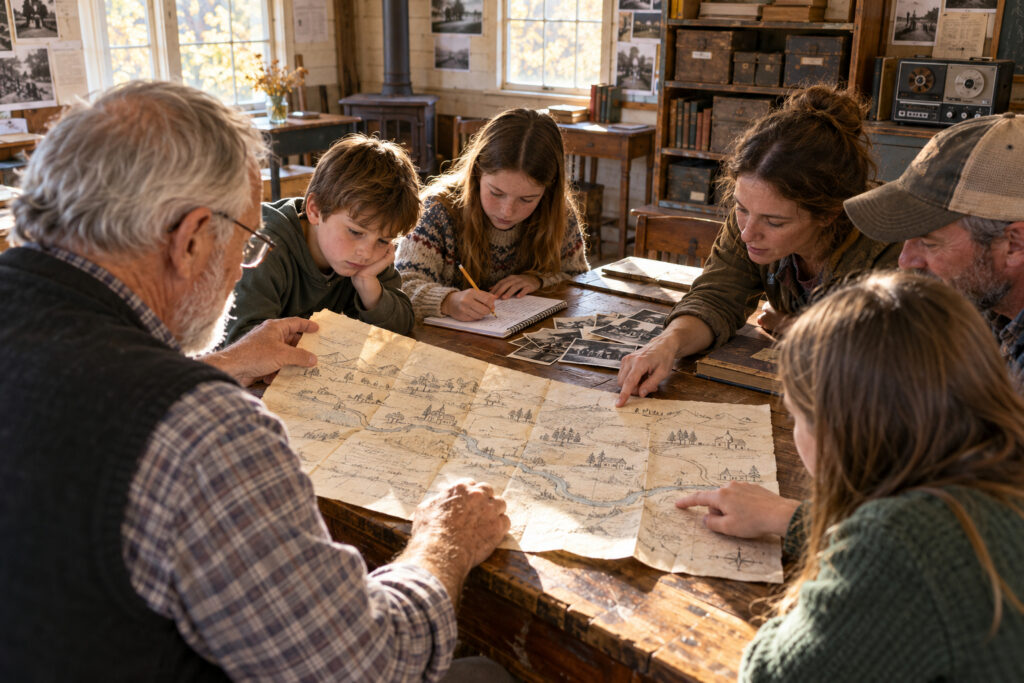
Born into a modest household, this educator found curiosity in everyday stories and small maps folded in kitchen drawers. He began teaching in a one-room schoolhouse where adults and children shared benches and questions about the past. His interest in local archives grew alongside his classes, and he began collecting oral histories after school hours. Those interviews formed a slow archive that later shaped both his curriculum and the community’s sense of identity.
Early Life and Influences
His childhood was shaped by practical tasks and respectful listening, which taught him to value narrative as much as facts. Family members recounted events that textbooks ignored, and those recollections stayed with him as models for teaching. Early mentors included a librarian who taught him how to catalog small collections and an elder who taught him to ask open questions. Together these influences guided his approach to combining pedagogy and preservation.
He carried these lessons into his professional life with patience and humility. Local traditions became part of his curriculum and helped students connect with their surroundings.
Teaching Career and Methods
He taught with a practical, inquiry-led method that encouraged students to research local places and interview neighbors. Lessons often began with a tangible object, such as a tool or photograph, and expanded into group projects that rehearsed research skills. He preferred fieldwork to rote memorization and created assignments that required students to present findings to the community. This applied approach built both competence and civic pride among pupils.
His classroom became a bridge between generations and a laboratory for public history. Students learned research habits and communication skills that carried beyond school walls.
Historical Work and Community Impact
Outside the classroom he organized small exhibitions, walking tours, and evening talks that translated academic methods into accessible formats. He focused on overlooked narratives: the experiences of laborers, craftspeople, and women who kept local institutions functioning. By documenting houses, inscriptions, and oral testimonies he created a patchwork archive valuable to later researchers. These efforts strengthened community memory and provided resources for civic initiatives and local planning.
His archival practices emphasized clarity and openness, making materials usable by non-specialists. The archive continues to inform local projects and school programs.
Legacy and Lessons
His legacy is not only in preserved documents but also in a teaching model that privileges place-based learning and public engagement. Colleagues who observed his work adopted similar methods, and former students later served as stewards of the collections he began. His career demonstrates how educators can function as custodians of communal memory while fostering critical thinking. The combination of pedagogy and preservation remains a replicable approach for small communities.
Even where formal recognition was limited, his influence persists in classrooms and community groups. The story reminds readers that local history thrives when education and memory intersect.
Conclusion
He taught people to listen to their surroundings and to record what mattered. His methods transformed ordinary objects into learning tools. That quiet model continues to guide educators and local historians alike.