
Born Elizabeth Jane Cochran, Nellie Bly began as a feisty local writer in Pittsburgh who refused the genteel assignments editors offered women. She took a column that criticized the paper’s treatment of female reporters and signed it with a borrowed stage name—Nellie Bly, plucked from a popular Stephen Foster song—and the byline stuck. Her appetite for attention wasn’t vanity; it was tactical. Bly learned early that to pry open closed rooms she would have to provoke the gatekeepers.
Ten Days in a Mad‑House: the stunt and its fallout
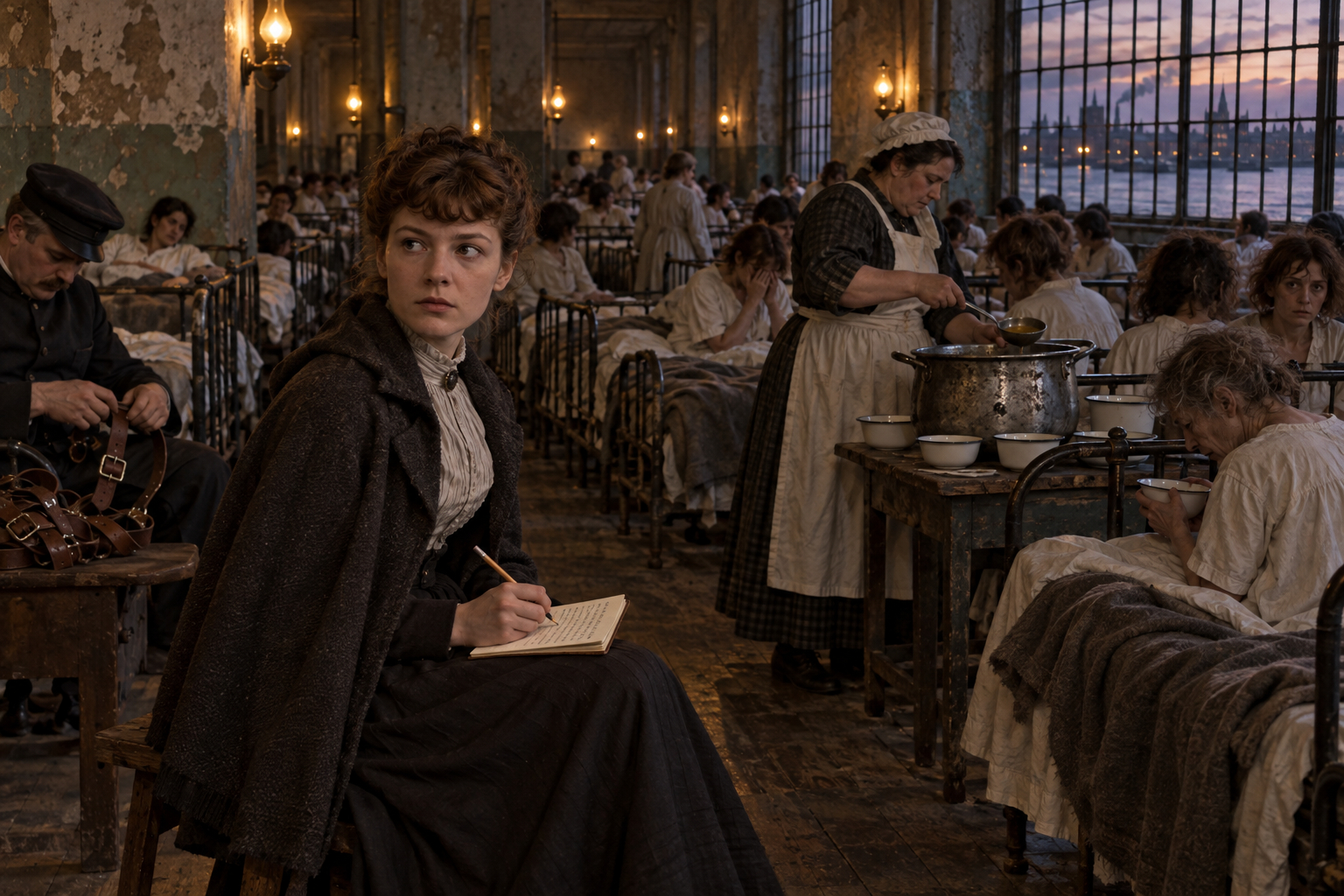
In 1887, working for Joseph Pulitzer’s New York World, Bly staged the investigative act that has come to define her. She checked herself into Blackwell’s Island Insane Asylum after deliberately behaving like someone desperate and wild enough to be suspected of madness. Once inside she stopped acting and began observing. Her dispatches—later collected as Ten Days in a Mad‑House—described filthy wards, overcrowded cells, cruel restraint, and staff indifferent to patients’ needs.
The pieces caused immediate outrage. Police investigations followed, and the city increased funding and oversight for the island hospitals. Bly didn’t invent the idea of undercover reporting, but her combination of theatrical risk and meticulous note‑taking made the tactic a public spectacle and a tool for reform.
Around the world in 72 days and life after headlines
Fame freed Bly for bolder gambits. Inspired by Jules Verne, she set off in 1889 on a real-life race against fiction and returned to New York in just 72 days—faster than Verne’s Phileas Fogg. She sent vivid dispatches from steamships, Suez, Hong Kong and San Francisco; newspapers cheered her up to the finish and readers devoured the travelogue as eagerly as her exposés.
Later she married Robert Seaman, an industrialist, and took charge of his Iron Clad Manufacturing Company after his death. Her reputation as a daring reporter did not spare her from the era’s business realities: she battled corrupt managers and declining fortunes. Still, she kept working—reporting on factory conditions and keeping her pen in circulation until illness ended her life in 1922.
Conclusion
Nellie Bly’s career blends theatrical flair with stubborn reporting discipline. She staged a personal crisis to reveal institutional cruelty, then turned celebrity into travel writing and industrial ambition. That mix—showmanship and scrappy documentation—helped create modern investigative journalism. What lingers is less the spectacle than the consequence: public outrage turned into policy changes, one reporter’s risky gambit producing reforms that mattered to vulnerable people she could not have named beforehand.