Uncover History’s Secrets with Daily Updates!
Daily News Entertainment
  • Home
  • History
  • Biographies
  • Eras
  • Regions
  • Timeline
No Result
View All Result
History Ours
  • Home
  • History
  • Biographies
  • Eras
  • Regions
  • Timeline
No Result
View All Result
History Ours
No Result
View All Result

Bahis vergilendirmesi Türkiye’de devlet kontrolündedir, ancak yeni açılan casino siteleri gibi uluslararası sitelerde oyuncular kendi kazançlarını yönetir.

Home Biographies

The Librarian Scholar Who Reshaped Historical Collections

in Biographies
The Librarian Scholar Who Reshaped Historical Collections

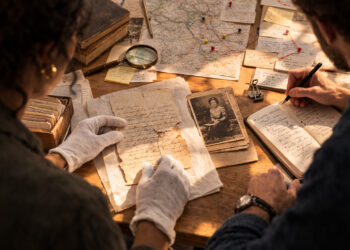
Few figures in archival history combine deep scholarship with practical collection-building as effectively as the librarian scholar at the center of this profile.
Her career bridged the gap between academic research and the daily stewardship of materials, redefining what historical collections can offer to scholars and the public.
She prioritized provenance, community engagement, and the preservation of marginal voices, often against institutional inertia.
This story traces the formative choices and methods that made her work both influential and enduring.

Early life and education
Born into a household that valued books and conversation, she developed an early appetite for primary sources and storytelling. Her formal education combined liberal arts study with specialized training in cataloging and conservation, which gave her both theoretical framework and practical skills. Mentors encouraged a field-based approach: learning in archives, engaging with donors, and understanding the social contexts of materials. These formative experiences shaped a philosophy that archives should serve living communities as well as researchers.

Career and archival innovations
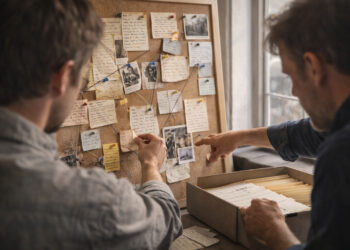
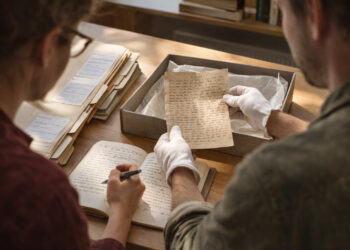
In her institutional roles she introduced cataloging practices that foregrounded context over mere object description, and she advocated for active acquisition of personal papers from underrepresented groups. Her approach emphasized building relationships with donors and local communities to ensure collections reflected a broader social history. She also championed in-house conservation workshops to extend the life of fragile materials and to build staff expertise.
– Contextual cataloging that recorded provenance and community narratives.
– Community-based acquisition programs to diversify holdings.
– Practical conservation training for staff to sustain long-term access.
These innovations reduced barriers between collections and the public. Staff trained under her methods often went on to replicate similar programs elsewhere, spreading her influence beyond any single institution.

Legacy and lessons for researchers
Her legacy is visible in how contemporary archives prioritize inclusive collecting and in the emergence of catalog records that tell more than the bare facts of creation. For researchers, her methodology offers clear lessons: engage with curators early, document the human stories behind materials, and treat preservation as part of scholarship rather than an afterthought. Institutions that adopt her model report richer interpretations and increased public trust in their holdings, demonstrating the practical benefits of a human-centered archival practice.

Conclusion
Her career illustrates how professional rigor and community-mindedness can transform collections into living resources.
By insisting on context, access, and care she helped rewrite expectations for what archives can be.
Her example continues to guide archivists, scholars, and anyone invested in preserving complex pasts.
Previous Post

The Educator Who Reimagined Childhood Learning and Archives

Next Post

Mapping Social Change Through Historical Periods

Related Posts

Strategies for Weaving Sparse Records into Fuller Biographies
Biographies

Strategies for Weaving Sparse Records into Fuller Biographies

March 19, 2026
Reading Lives: Practical Steps for Respectful Biographical Research
Biographies

Reading Lives: Practical Steps for Respectful Biographical Research

March 19, 2026
Restoring Quiet Lives: Practical Approaches to Biography
Biographies

Restoring Quiet Lives: Practical Approaches to Biography

March 14, 2026
Methods for Reconstructing Lives from Fragmented Sources
Biographies

Methods for Reconstructing Lives from Fragmented Sources

March 14, 2026
Next Post
Mapping Social Change Through Historical Periods

Mapping Social Change Through Historical Periods

Search..

No Result
View All Result

Recent Articles

Everyday Sites and the Shaping of Regional Memory

Everyday Sites and the Shaping of Regional Memory

March 21, 2026
Stacked Histories: How Places Accumulate Meaning

Stacked Histories: How Places Accumulate Meaning

March 21, 2026
Interpreting Eras: Principles for Clear Periodization

Interpreting Eras: Principles for Clear Periodization

March 20, 2026
Recognizing Historical Turning Points in Long-Term Change

Recognizing Historical Turning Points in Long-Term Change

March 20, 2026
Strategies for Weaving Sparse Records into Fuller Biographies

Strategies for Weaving Sparse Records into Fuller Biographies

March 19, 2026

Subscribe Us

By clicking submit, I authorize History Ours and its affiliated companies to: (1) use, sell, and share my information for marketing purposes, including cross-context behavioral advertising, as described in our Terms of Service and Privacy Policy, (2) supplement the information that I provide with additional information lawfully obtained from other sources, like demographic data from public sources, interests inferred from web page views, or other data relevant to what might interest me, like past purchase or location data, (3) contact me or enable others to contact me by email with offers for goods and services from any category at the email address provided, and (4) retain my information while I am engaging with marketing messages that I receive and for a reasonable amount of time thereafter. I understand I can opt out at any time through an email that I receive, or by clicking here

Subscribe To Our Newsletter

By clicking submit, I authorize History Ours and its affiliated companies to: (1) use, sell, and share my information for marketing purposes, including cross-context behavioral advertising, as described in our Terms of Service and Privacy Policy, (2) supplement the information that I provide with additional information lawfully obtained from other sources, like demographic data from public sources, interests inferred from web page views, or other data relevant to what might interest me, like past purchase or location data, (3) contact me or enable others to contact me by email with offers for goods and services from any category at the email address provided, and (4) retain my information while I am engaging with marketing messages that I receive and for a reasonable amount of time thereafter. I understand I can opt out at any time through an email that I receive, or by clicking here.

© 2026 History Ours | All Rights Reserved

  • Contact Us
  • Privacy Policy
  • Terms of Service
  • Unsubscribe
  • Privacy Choices
  • Contact Us
  • Privacy Policy
  • Terms of Service
  • Unsubscribe
  • Privacy Choices

© 2026 History Ours | All Rights Reserved

No Result
View All Result
  • Home
  • History
  • Biographies
  • Eras
  • Regions
  • Timeline

© 2026 History Ours | All Rights Reserved

Skip to content
Open toolbar Accessibility Tools

Accessibility Tools

  • Increase TextIncrease Text
  • Decrease TextDecrease Text
  • GrayscaleGrayscale
  • High ContrastHigh Contrast
  • Negative ContrastNegative Contrast
  • Light BackgroundLight Background
  • Links UnderlineLinks Underline
  • Readable FontReadable Font
  • Reset Reset