
Margaret Alden’s career bridged classrooms and dusty collections in surprising ways.
She believed that learning begins with curiosity and that records can teach as much as books.
Her methods reshaped how schools recorded student work and how local histories were preserved.
This article explores her life, pedagogical experiments, and lasting influence on education and archives.
Though not a household name, her practical innovations endure in many community institutions.
Early life and formative influences
Born to a family of modest means, Alden showed an early appetite for observation and storytelling. As a young teacher she combined nature study with narrative exercises, encouraging children to document what they saw. Influenced by progressive education thinkers, she emphasized hands-on learning rather than rote memorization. These experiences shaped her conviction that learning and record-keeping belonged together. She published articles describing her methods and advised schools on integrating documentation into curricula.
Classroom experiments and practical pedagogy
In her classrooms Alden tried experiments that made student work both evidence and curriculum. Children kept field notebooks, mapped neighborhood changes, and assembled portfolios that documented learning over time. Teachers used those portfolios to plan instruction and to create community exhibits that connected schoolwork to public memory. Her approach treated assessment as a dialogue, not a snapshot. Assessment reports from her schools later served as case studies for progressive education conferences.
Building community archives from everyday learning
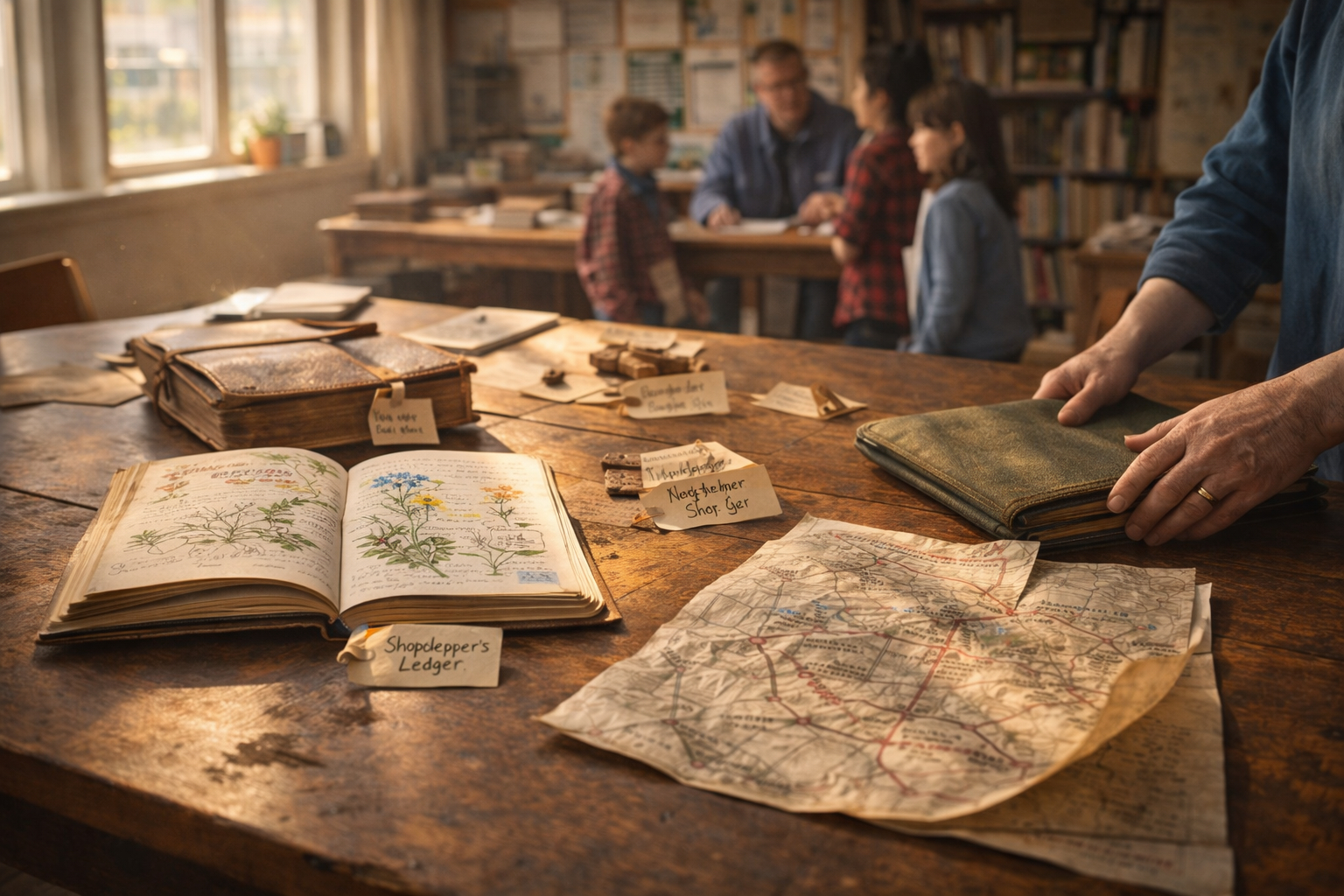
Alden extended classroom practice into community projects that preserved everyday life. She organized school-led oral history sessions and encouraged pupils to collect artifacts with provenance statements, creating archives accessible to residents. These collections emphasized small stories—shopkeepers’ ledgers, family recipes, neighborhood maps—that professional archives often overlooked. By validating local knowledge she broadened what counted as historical evidence. Her approach also encouraged collaboration between schools and local historians to contextualize artifacts.
Influence on teachers and institutions
Her ideas circulated through teacher workshops, journals, and municipal partnerships, modestly altering practice across districts. Libraries and archives adopted portable exhibit practices and provenance-first cataloguing inspired by classroom portfolios. Training programs began to include methods for engaging young people in documentation and curation. The result was a generation of educators who saw preservation as part of pedagogy. Even small cultural institutions credit her model when involving youth in exhibit development.
Conclusion
Margaret Alden’s legacy is a reminder that education and archival work can be mutually reinforcing.
Her insistence on student-created records shifted both teaching and local history preservation in subtle ways.
Today her model survives where communities prioritize everyday voices and where classrooms produce living archives.