
Uncover History’s Secrets with Daily Updates!
Daily News Entertainment
  • Home
  • History
  • Biographies
  • Eras
  • Regions
  • Timeline
No Result
View All Result
History Ours
  • Home
  • History
  • Biographies
  • Eras
  • Regions
  • Timeline
No Result
View All Result
History Ours
No Result
View All Result

Bahis vergilendirmesi Türkiye’de devlet kontrolündedir, ancak yeni açılan casino siteleri gibi uluslararası sitelerde oyuncular kendi kazançlarını yönetir.

Home Eras

Applying Eras: Tools for Clear Historical Narratives

in Eras
Applying Eras: Tools for Clear Historical Narratives

Historians use eras to group events, trends, and cultural shifts into manageable narratives.
Eras help readers see patterns over time and provide frameworks for comparison.
They are not fixed containers but analytical tools shaped by sources and perspective.
A careful approach balances clarity with complexity when assigning labels to the past.

Why Eras Matter

Eras organize large spans of time so complex developments become comprehensible to audiences and students. They allow historians to highlight continuities, disruptions, and turning points without reciting every detail. When chosen thoughtfully, era labels can illuminate causal chains and cultural transformations. An explicit periodization helps connect local events to broader regional and thematic processes. They also guide research agendas by suggesting comparative questions and hypotheses.

However, the usefulness of an era depends on how well it captures significant change. Good periodization is evidence-driven and adaptable to new research. Scholars should revisit era boundaries as new evidence emerges.

Criteria for Defining Eras

Scholars typically rely on a mix of economic, political, social, and cultural indicators to justify an era. Key developments such as technological innovation, institutional change, or major conflicts often mark boundaries. Sources and available evidence also influence whether a proposed era resonates beyond specialist debates. Transparency about criteria improves the interpretive value of any chronological scheme. Cross-disciplinary evidence strengthens claims about why a period stands out.

  • Economic shifts
  • Institutional transformations
  • Cultural realignments

Using clear criteria avoids arbitrary labels and supports comparative work across regions and themes. Bullet points can help readers quickly grasp the reasons behind a chosen periodization. In published work, footnotes can document the evidence behind chosen cutoffs.

Using Eras Responsibly

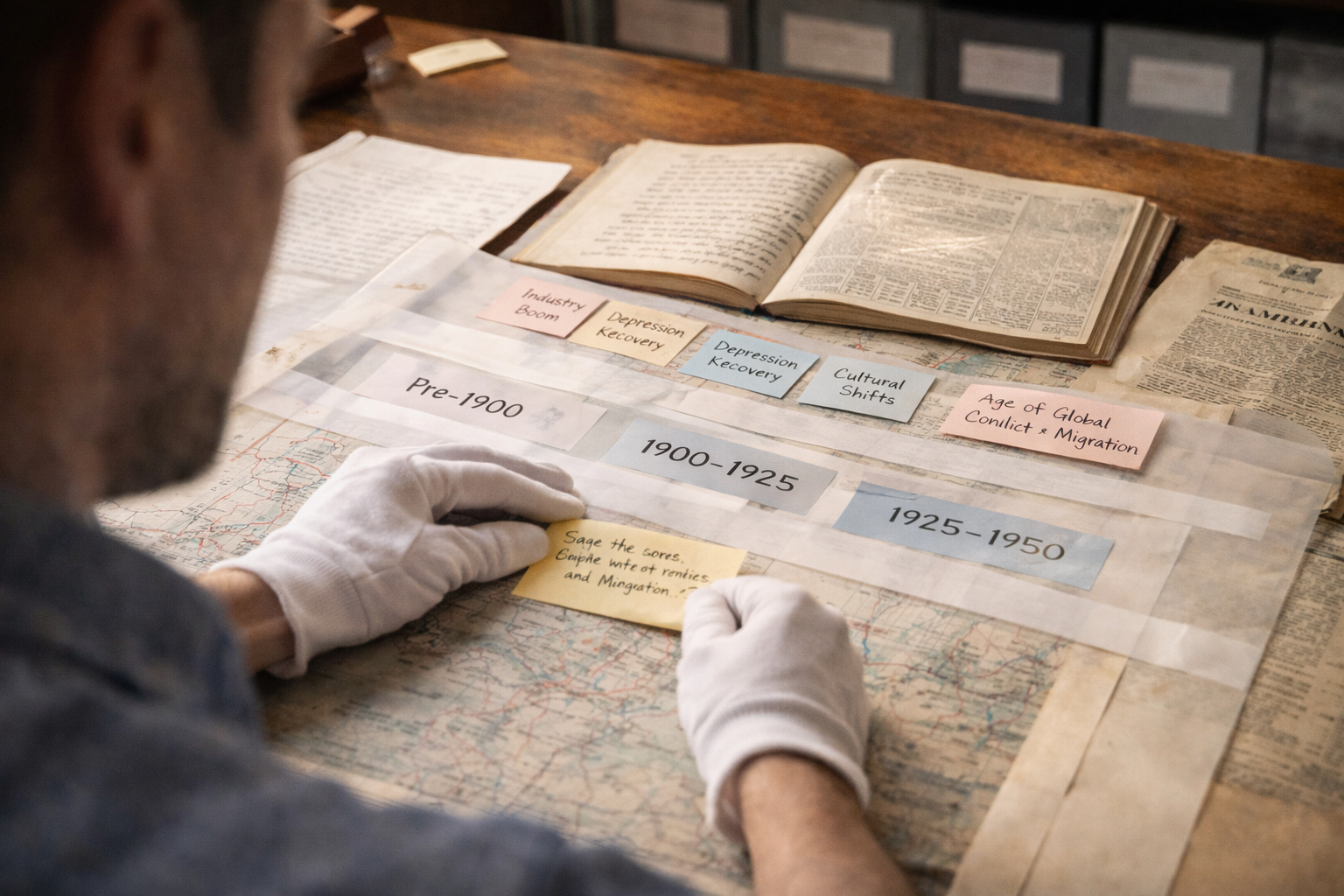
Responsible use of eras recognizes their limits and avoids reifying labels as natural facts. Historians should indicate when a boundary is contested or regionally specific rather than universal. Teaching and public history benefit from maps and timelines that show overlap and exceptions. Digital tools can reveal continuities and variations that single labels might obscure. Collaborative projects that map overlapping timelines can make period complexity visible.

Engaging audiences with the provisional nature of eras encourages critical thinking about historical interpretation. Eras are powerful when they guide inquiry rather than replace it. Clear explanation of choices builds trust with non-specialist audiences.

Conclusion

Eras are practical devices that shape how we tell historical stories and frame inquiry across topics.
Applied thoughtfully, they reveal patterns, highlight causal links, and remain open to revision as research progresses.
Clear criteria, transparent justification, and visible boundaries help keep periodization accountable, useful, and responsive to new evidence.
Previous Post

Crafting Thoughtful, Balanced Biographical Narratives That Respect Sources

Next Post

Using Eras to Trace Historical Continuities and Shifts

Related Posts

Using Eras to Trace Historical Continuities and Shifts
Eras

Using Eras to Trace Historical Continuities and Shifts

March 10, 2026
Eras in History: Tools for Organizing the Past
Eras

Eras in History: Tools for Organizing the Past

March 5, 2026
Framing Time: Understanding Historical Eras and Boundaries
Eras

Framing Time: Understanding Historical Eras and Boundaries

March 5, 2026
Understanding Transitions Between Major Historical Eras
Eras

Understanding Transitions Between Major Historical Eras

February 28, 2026
Next Post
Using Eras to Trace Historical Continuities and Shifts

Using Eras to Trace Historical Continuities and Shifts

Search..

No Result
View All Result

Recent Articles

Practical Workflow for Creating Accurate Historical Timelines

Practical Workflow for Creating Accurate Historical Timelines

March 12, 2026
Designing Timeline Layouts That Guide Public Understanding

Designing Timeline Layouts That Guide Public Understanding

March 12, 2026
Everyday Borders: Stories of Regional Change and Memory

Everyday Borders: Stories of Regional Change and Memory

March 11, 2026
Rediscovering Regional Voices Through Everyday Archives

Rediscovering Regional Voices Through Everyday Archives

March 11, 2026
Using Eras to Trace Historical Continuities and Shifts

Using Eras to Trace Historical Continuities and Shifts

March 10, 2026

Subscribe Us

By clicking submit, I authorize History Ours and its affiliated companies to: (1) use, sell, and share my information for marketing purposes, including cross-context behavioral advertising, as described in our Terms of Service and Privacy Policy, (2) supplement the information that I provide with additional information lawfully obtained from other sources, like demographic data from public sources, interests inferred from web page views, or other data relevant to what might interest me, like past purchase or location data, (3) contact me or enable others to contact me by email with offers for goods and services from any category at the email address provided, and (4) retain my information while I am engaging with marketing messages that I receive and for a reasonable amount of time thereafter. I understand I can opt out at any time through an email that I receive, or by clicking here

Subscribe To Our Newsletter

By clicking submit, I authorize History Ours and its affiliated companies to: (1) use, sell, and share my information for marketing purposes, including cross-context behavioral advertising, as described in our Terms of Service and Privacy Policy, (2) supplement the information that I provide with additional information lawfully obtained from other sources, like demographic data from public sources, interests inferred from web page views, or other data relevant to what might interest me, like past purchase or location data, (3) contact me or enable others to contact me by email with offers for goods and services from any category at the email address provided, and (4) retain my information while I am engaging with marketing messages that I receive and for a reasonable amount of time thereafter. I understand I can opt out at any time through an email that I receive, or by clicking here.

© 2026 History Ours | All Rights Reserved

  • Contact Us
  • Privacy Policy
  • Terms of Service
  • Unsubscribe
  • Privacy Choices
  • Contact Us
  • Privacy Policy
  • Terms of Service
  • Unsubscribe
  • Privacy Choices

© 2026 History Ours | All Rights Reserved

No Result
View All Result
  • Home
  • History
  • Biographies
  • Eras
  • Regions
  • Timeline

© 2026 History Ours | All Rights Reserved

Skip to content
Open toolbar Accessibility Tools

Accessibility Tools

  • Increase TextIncrease Text
  • Decrease TextDecrease Text
  • GrayscaleGrayscale
  • High ContrastHigh Contrast
  • Negative ContrastNegative Contrast
  • Light BackgroundLight Background
  • Links UnderlineLinks Underline
  • Readable FontReadable Font
  • Reset Reset