

Uncover History’s Secrets with Daily Updates!
Daily News Entertainment
  • Home
  • History
  • Biographies
  • Eras
  • Regions
  • Timeline
No Result
View All Result
History Ours
  • Home
  • History
  • Biographies
  • Eras
  • Regions
  • Timeline
No Result
View All Result
History Ours
No Result
View All Result
Home Eras

Creating Eras That Clarify Change Across History

in Eras
Creating Eras That Clarify Change Across History

Periodization—choosing how to group years and events—shapes how readers understand the past and influences the questions scholars ask. Thoughtful eras highlight patterns and connections without erasing nuance or privileging single causes. This article outlines practical steps for defining eras that illuminate historical change across political, economic, and cultural dimensions. The aim is to balance usefulness, evidence, and interpretive honesty for diverse audiences.

Why Define Eras

Defining eras matters because they make complex developments teachable, communicable, and comparable to students, general readers, and policymakers. A well-chosen period highlights causal chains, recurring dynamics, and interactions among institutions, while a poor choice can obscure continuities and produce misleading narratives. Begin by identifying a dominant thread—economic transformation, social movements, technological diffusion, or cultural reorientation—and test its explanatory reach across scales and contexts. Use a mix of primary sources, quantitative evidence, and comparative cases to assess whether the thread plausibly links events within the proposed timeframe.

Pay attention to diversity within an era, including regional and social variation, and to overlaps with other periods that run concurrently. Good eras explain more than they simplify by making explicit what they include and what they leave out.

Practical Criteria for Building Eras

Practical criteria help make period boundaries defensible and useful for research and teaching purposes. Consider duration carefully: shorter eras can capture rapid processes like revolutions or market integration, while longer ones reveal structural shifts such as demographic or environmental change. Look for clear turning points—policy shifts, technological take-up, ecological crises, or sustained economic trends—but avoid drawing boundaries on the basis of single events without corroborating evidence. Evaluate geographic scope, the social groups affected, and whether similar dating makes sense across urban, rural, elite, and popular experiences.

Document the sources and methods you used to set boundaries and be transparent about judgment calls and uncertainty. That transparency enables peers and readers to assess, critique, and refine era definitions over time.

Applying Eras in Public and Scholarly Narratives

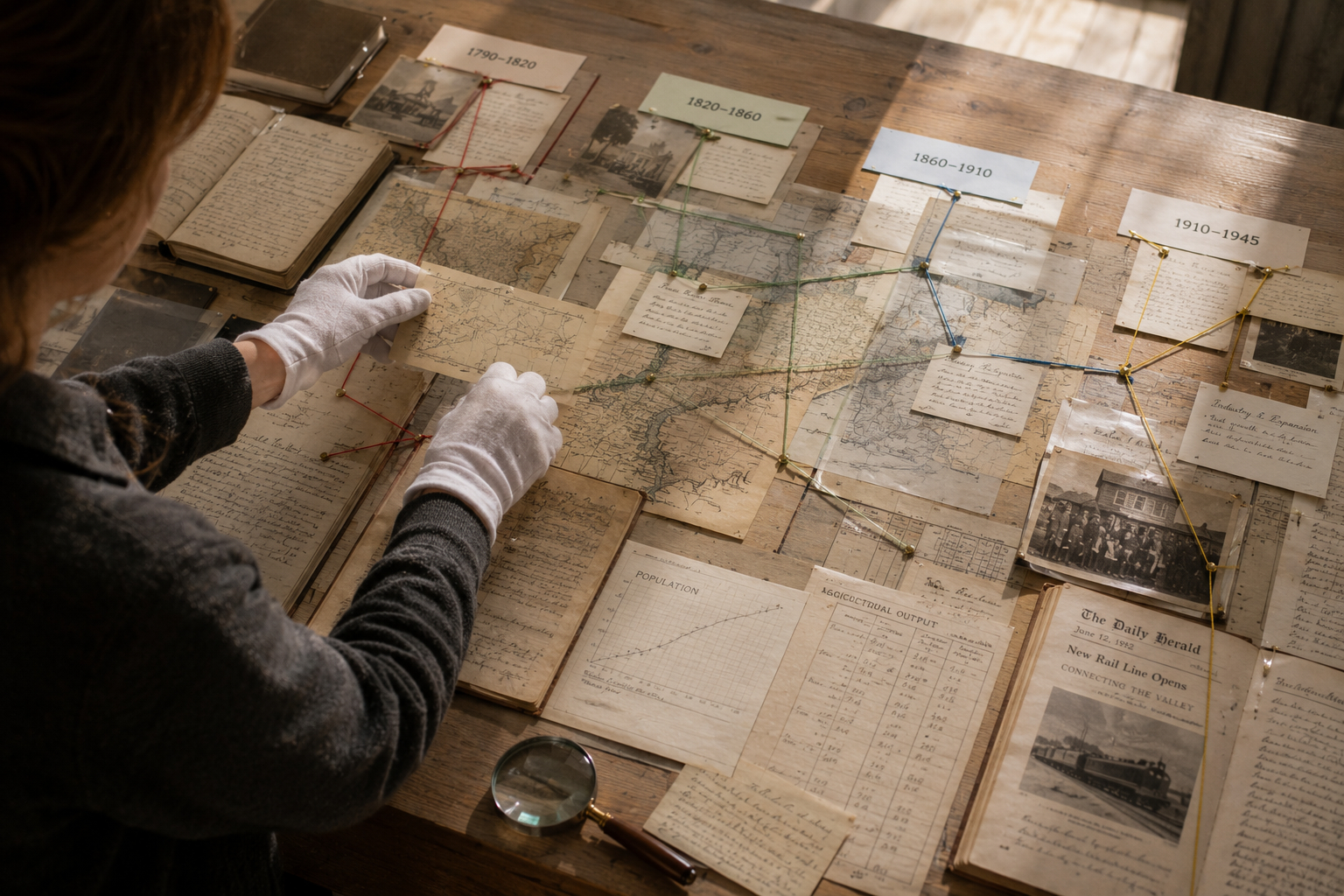
Apply eras flexibly: present them as interpretive frameworks rather than fixed containers that absorb every exception. Use case studies, timelines, and visual aids to show how an era highlights certain continuities and causes, and explicitly present counterexamples that complicate the account. When writing for a broad audience, anchor periods to familiar events while explaining why the chosen limits clarify rather than distort. In scholarly work, map overlapping timelines, discuss competing periodizations, and situate your choices within historiographical debates.

Balance clarity and complexity by signaling limits, alternatives, and avenues for revision. Iteration, interdisciplinary evidence, and peer feedback help periodization improve as new research emerges.

Conclusion

Creating eras is a craft that combines evidence, argument, and audience awareness to make history intelligible. Use clear criteria, document choices, and remain open to revision as fresh sources and perspectives appear. Thoughtful periodization helps readers appreciate both broad patterns and the exceptions that enrich our understanding of the past.


Previous Post

The Quiet Architect of Institutional Memory

Next Post

Setting Reliable Boundaries for Usable Historical Eras

Related Posts

Pax Mongolica: How Mongol Rule Rewired the Old World
Eras

Pax Mongolica: How Mongol Rule Rewired the Old World

September 15, 2026
Life Under the Tokugawa: How Edo Japan Rewrote Social Order
Eras

Life Under the Tokugawa: How Edo Japan Rewrote Social Order

September 15, 2026
When Empires Fell: The Late Bronze Age Collapse
Eras

When Empires Fell: The Late Bronze Age Collapse

September 15, 2026
1816: How a Volcano Turned Summer Into Crisis
Eras

1816: How a Volcano Turned Summer Into Crisis

September 15, 2026
Next Post
Setting Reliable Boundaries for Usable Historical Eras

Setting Reliable Boundaries for Usable Historical Eras

Search..

No Result
View All Result

Recent Articles

The Disguise That Broke Chains: Ellen and William Craft

The Disguise That Broke Chains: Ellen and William Craft

September 15, 2026
Bass Reeves: The Marshal Who Hunted Outlaws in Indian Territory

Bass Reeves: The Marshal Who Hunted Outlaws in Indian Territory

September 15, 2026
How the Crystal Palace Turned Glass and Iron into a Modern Stage

How the Crystal Palace Turned Glass and Iron into a Modern Stage

September 15, 2026
Anne Bonny: The Pirate Who Broke Rules and Expectations

Anne Bonny: The Pirate Who Broke Rules and Expectations

September 15, 2026
How Haiti Broke Its Chains: A 1791–1804 Timeline

How Haiti Broke Its Chains: A 1791–1804 Timeline

September 15, 2026

Subscribe Us

By clicking submit, I authorize History Ours and its affiliated companies to: (1) use, sell, and share my information for marketing purposes, including cross-context behavioral advertising, as described in our Terms of Service and Privacy Policy, (2) supplement the information that I provide with additional information lawfully obtained from other sources, like demographic data from public sources, interests inferred from web page views, or other data relevant to what might interest me, like past purchase or location data, (3) contact me or enable others to contact me by email with offers for goods and services from any category at the email address provided, and (4) retain my information while I am engaging with marketing messages that I receive and for a reasonable amount of time thereafter. I understand I can opt out at any time through an email that I receive, or by clicking here

Subscribe To Our Newsletter

By clicking submit, I authorize History Ours and its affiliated companies to: (1) use, sell, and share my information for marketing purposes, including cross-context behavioral advertising, as described in our Terms of Service and Privacy Policy, (2) supplement the information that I provide with additional information lawfully obtained from other sources, like demographic data from public sources, interests inferred from web page views, or other data relevant to what might interest me, like past purchase or location data, (3) contact me or enable others to contact me by email with offers for goods and services from any category at the email address provided, and (4) retain my information while I am engaging with marketing messages that I receive and for a reasonable amount of time thereafter. I understand I can opt out at any time through an email that I receive, or by clicking here.

© 2026 History Ours | All Rights Reserved

  • Contact Us
  • Privacy Policy
  • Terms of Service
  • Unsubscribe
  • Privacy Choices
  • Contact Us
  • Privacy Policy
  • Terms of Service
  • Unsubscribe
  • Privacy Choices

© 2026 History Ours | All Rights Reserved

No Result
View All Result
  • Home
  • History
  • Biographies
  • Eras
  • Regions
  • Timeline

© 2026 History Ours | All Rights Reserved

Skip to content
Open toolbar Accessibility Tools

Accessibility Tools

  • Increase TextIncrease Text
  • Decrease TextDecrease Text
  • GrayscaleGrayscale
  • High ContrastHigh Contrast
  • Negative ContrastNegative Contrast
  • Light BackgroundLight Background
  • Links UnderlineLinks Underline
  • Readable FontReadable Font
  • Reset Reset