
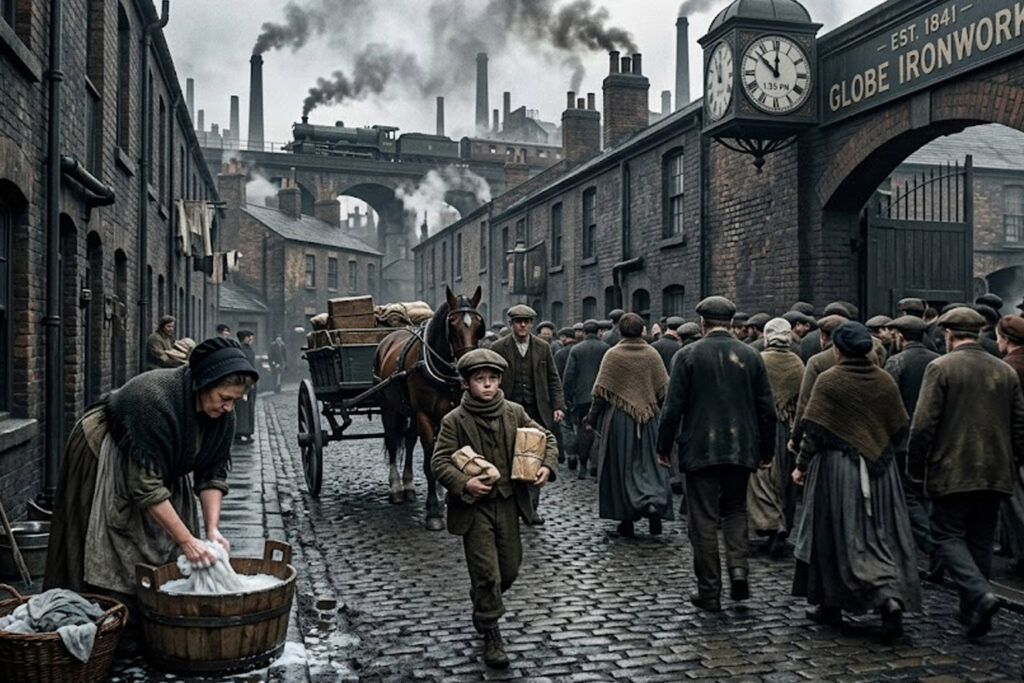
The Industrial Era rewired everyday experience, shaping how people lived, worked, and imagined the future. Rapid urbanization, new industrial rhythms, and evolving social expectations altered routines from the factory floor to the household. While technological innovations increased production, they also produced crowded cities, new labor patterns, and contested meanings of progress. This article explores key aspects of daily life during that transformative period and traces the continuities that emerged.
Urban Growth and Work
Mass migration from rural to urban areas concentrated populations near factories, rail hubs, and docks, creating dense neighborhoods with mixed living conditions. Work shifted from task-based cottage industries to regimented factory schedules governed by clocks and supervisors, changing how people measured time and valued productivity. Labor became more segmented, with specialized roles replacing multi-task household production and prompting new forms of workplace discipline. These shifts affected family incomes, social networks, and the visible rhythms of urban streets.
In response, communities adapted through informal support networks and emerging civic institutions. Municipal services, though often inadequate at first, slowly developed to meet public health and sanitation needs.
Family, Gender, and Social Roles
Household life was reshaped as members took on distinct economic functions: some labored in factories, others maintained the home, and children frequently contributed wage labor. Gender expectations hardened in many contexts, associating paid industrial work with masculinity and domestic responsibilities with femininity, even as many women and girls worked outside the home. Child labor was common where economic necessity outweighed newly developing norms about childhood and education. At the same time, reform movements and labor organizations began to challenge exploitative practices and advocate for schooling and better working conditions.
These contested roles created both friction and new solidarities, as families negotiated survival alongside emerging ideas about rights and responsibilities.
Culture, Leisure, and Technology
Technological advances transformed not only production but also how people experienced leisure and information. Cheap print, illustrated periodicals, and improved transportation expanded access to news, entertainment, and consumer goods for wider audiences. Public spaces such as parks, museums, theatres, and organized sports offered new venues for collective life and helped redefine civic identities. Innovations in household goods slowly altered domestic labor, although many conveniences arrived unevenly across social classes.
As a result, daily routines incorporated new rhythms of consumption and recreation, reflecting broader social and economic changes.
Conclusion
The Industrial Era remade ordinary life through urbanization, changing labor, and shifting cultural patterns. Everyday experiences reveal how technological and social transformations interacted to produce modern norms. Understanding these changes helps explain enduring features of contemporary life and the roots of ongoing social debates.