
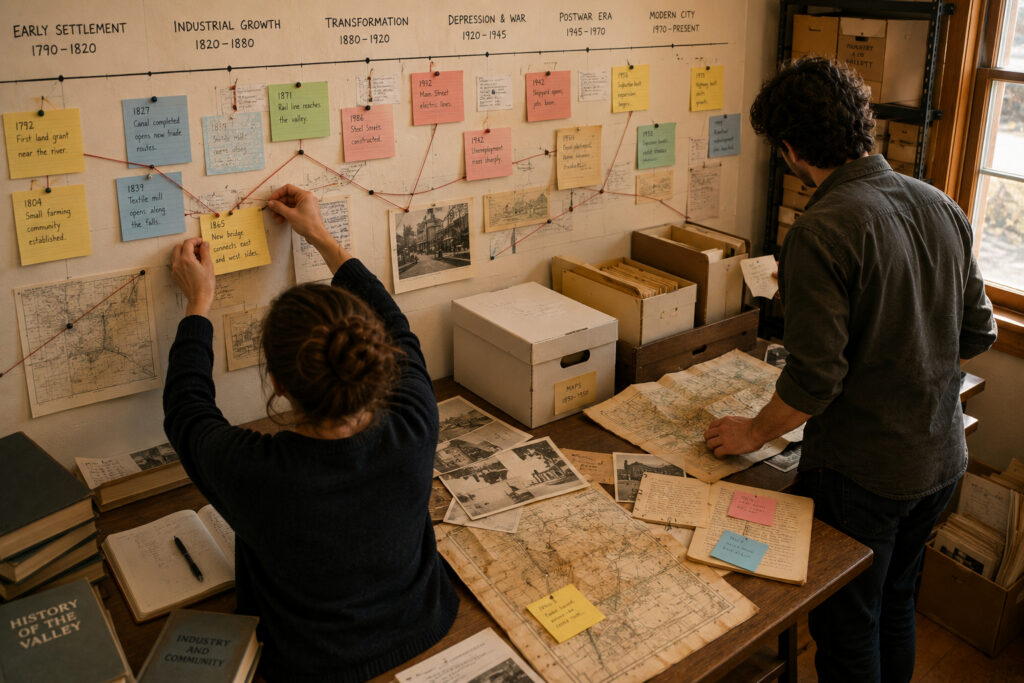
Historians organize the past into eras to make complex change intelligible. Clear timeframes help researchers and the public connect events, developments, and long-term trends. Choosing boundaries involves weighing evidence, scale, and meaningful continuities rather than imposing neat divisions. Thoughtful frameworks improve teaching, interpretation, and ongoing scholarly debate.
Why Define Eras
Defining eras gives structure to large amounts of information and highlights causal relationships across time. Eras can reveal patterns such as technological diffusion, social transformation, or sustained political systems that single events do not show. They also guide research priorities by focusing attention on transitional moments and periods of stability. At the same time, rigid era labels risk simplifying overlapping experiences and marginal voices.
Being explicit about why an era is chosen helps mitigate those risks. Clear rationale supports transparency and invites critique, which strengthens historical interpretation. Using eras as tools rather than answers keeps analysis open to revision.
Criteria for Useful Timeframes
Useful timeframes rest on evidence of change, coherence in causal mechanisms, and relevance to the questions being asked. Scale matters: local, regional, and global rhythms often require different period boundaries. Good eras balance continuity and discontinuity, showing both what persisted and what shifted. They should also be defensible with sources and adaptable as new information emerges.
Prioritizing clarity and explanatory power over catchy labels makes timeframes more robust. Researchers should test proposed boundaries against primary evidence and alternative periodizations. Doing so creates frameworks that support both argumentation and public communication.
Applying Timeframes in Public History
Museums, curricula, and digital projects translate scholarly timeframes for broader audiences and must craft eras that communicate clearly without oversimplifying. Public history benefits when scholars explain their choices and present multiple perspectives within the same period. Interactive timelines, thematic exhibits, and contextual narratives can show overlapping eras and lived experiences. This approach encourages visitors and readers to see history as layered and contested rather than fixed.
Collaboration between scholars, educators, and community stakeholders improves how eras are presented. Iteration and feedback ensure frameworks remain useful and relevant to diverse audiences.
Conclusion
Well-constructed chronological frameworks are analytic tools that clarify change and continuity. They require transparent criteria, attention to scale, and willingness to revise in light of new evidence. Approached thoughtfully, eras enhance both scholarly inquiry and public understanding.