

Uncover History’s Secrets with Daily Updates!
Daily News Entertainment
  • Home
  • History
  • Biographies
  • Eras
  • Regions
  • Timeline
No Result
View All Result
History Ours
  • Home
  • History
  • Biographies
  • Eras
  • Regions
  • Timeline
No Result
View All Result
History Ours
No Result
View All Result
Home Eras

Periodization Principles for Interpreting Historical Change

in Eras
Periodization Principles for Interpreting Historical Change

Periodization organizes large spans of time into manageable units that highlight patterns and change. It helps historians and readers see connections between political, economic, social, and cultural shifts. Effective eras clarify causation without oversimplifying continuity that runs across boundaries. This piece outlines principles and practices for defining eras that illuminate, rather than obscure, the past.

Defining Period Boundaries

Boundaries are analytical tools, not fixed facts, and should be chosen to reflect meaningful changes in institutions, technologies, or social practices. Analysts must weigh multiple signals—economic reorientation, political ruptures, cultural transformation—rather than privileging a single marker. Good boundaries are defensible when supported by evidence showing sustained alteration in structures or long-term trends. They should remain open to revision as new sources or perspectives emerge.

Clear justification matters for audience trust and scholarly debate. Explaining why a start and end date were selected helps readers evaluate interpretation and compare alternative frameworks.

Criteria for Useful Eras

Useful eras strike a balance between explanatory power and precision by grouping phenomena that share causal relationships or common trajectories. Temporal units should enhance comprehension: they must allow historians to ask coherent questions and test hypotheses across cases. Periods that are too brief can fragment narratives, while excessively broad eras risk flattening variation and marginalizing local dynamics. Cross-regional and thematic considerations also influence whether a single era applies universally or requires contextual adjustment.

Applying clear criteria—change, duration, and relevance—keeps periodization effective and transparent. These standards guide both academic work and public-facing narratives.

Applying Eras in Practice

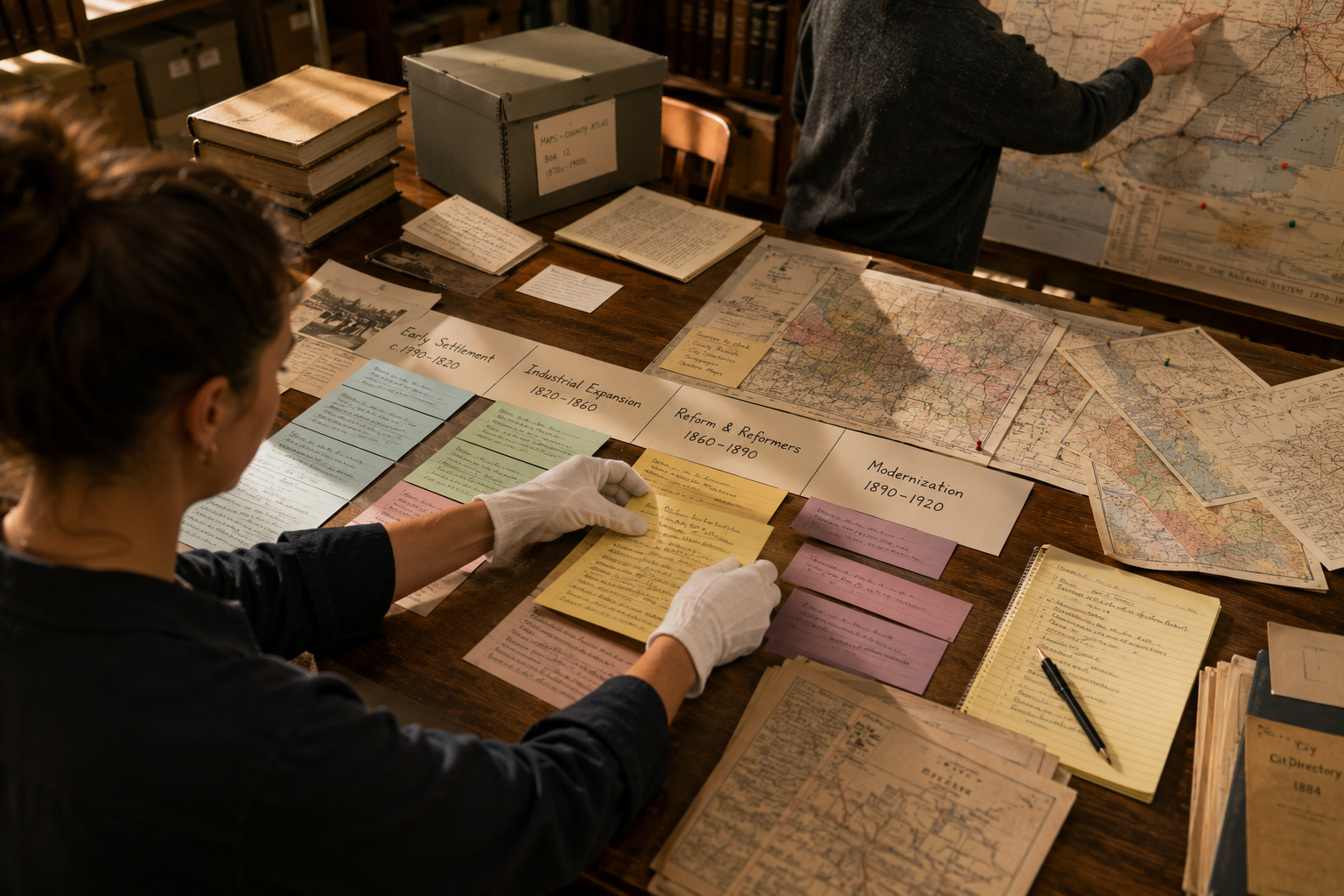
Practical periodization begins with a research question that determines what kinds of change matter for the study at hand. Comparative projects may adopt overlapping timeframes to account for differing speeds of transformation across regions or social groups. Combining microhistory with broader eras can illuminate how individual experiences fit within larger trends, enriching both levels of analysis. Communicating these choices upfront prevents misunderstanding and invites constructive critique.

Tools such as timelines, thematic maps, and layered chronologies help present complex overlaps without forcing a single neat boundary. Transparency about assumptions and sources strengthens interpretation.

Conclusion

Thoughtful periodization clarifies historical dynamics while acknowledging complexity. Choosing and justifying boundaries is a methodological act that should be explicit and evidence-based. When applied carefully, eras become powerful aids for insight rather than simple labels.


Previous Post

How Historians Build Helpful Chronological Frameworks

Next Post

Markets, Rituals, and the Slow Making of Regional Identity

Related Posts

Pax Mongolica: How Mongol Rule Rewired the Old World
Eras

Pax Mongolica: How Mongol Rule Rewired the Old World

September 15, 2026
Life Under the Tokugawa: How Edo Japan Rewrote Social Order
Eras

Life Under the Tokugawa: How Edo Japan Rewrote Social Order

September 15, 2026
When Empires Fell: The Late Bronze Age Collapse
Eras

When Empires Fell: The Late Bronze Age Collapse

September 15, 2026
1816: How a Volcano Turned Summer Into Crisis
Eras

1816: How a Volcano Turned Summer Into Crisis

September 15, 2026
Next Post
Markets, Rituals, and the Slow Making of Regional Identity

Markets, Rituals, and the Slow Making of Regional Identity

Search..

No Result
View All Result

Recent Articles

The Disguise That Broke Chains: Ellen and William Craft

The Disguise That Broke Chains: Ellen and William Craft

September 15, 2026
Bass Reeves: The Marshal Who Hunted Outlaws in Indian Territory

Bass Reeves: The Marshal Who Hunted Outlaws in Indian Territory

September 15, 2026
How the Crystal Palace Turned Glass and Iron into a Modern Stage

How the Crystal Palace Turned Glass and Iron into a Modern Stage

September 15, 2026
Anne Bonny: The Pirate Who Broke Rules and Expectations

Anne Bonny: The Pirate Who Broke Rules and Expectations

September 15, 2026
How Haiti Broke Its Chains: A 1791–1804 Timeline

How Haiti Broke Its Chains: A 1791–1804 Timeline

September 15, 2026

Subscribe Us

By clicking submit, I authorize History Ours and its affiliated companies to: (1) use, sell, and share my information for marketing purposes, including cross-context behavioral advertising, as described in our Terms of Service and Privacy Policy, (2) supplement the information that I provide with additional information lawfully obtained from other sources, like demographic data from public sources, interests inferred from web page views, or other data relevant to what might interest me, like past purchase or location data, (3) contact me or enable others to contact me by email with offers for goods and services from any category at the email address provided, and (4) retain my information while I am engaging with marketing messages that I receive and for a reasonable amount of time thereafter. I understand I can opt out at any time through an email that I receive, or by clicking here

Subscribe To Our Newsletter

By clicking submit, I authorize History Ours and its affiliated companies to: (1) use, sell, and share my information for marketing purposes, including cross-context behavioral advertising, as described in our Terms of Service and Privacy Policy, (2) supplement the information that I provide with additional information lawfully obtained from other sources, like demographic data from public sources, interests inferred from web page views, or other data relevant to what might interest me, like past purchase or location data, (3) contact me or enable others to contact me by email with offers for goods and services from any category at the email address provided, and (4) retain my information while I am engaging with marketing messages that I receive and for a reasonable amount of time thereafter. I understand I can opt out at any time through an email that I receive, or by clicking here.

© 2026 History Ours | All Rights Reserved

  • Contact Us
  • Privacy Policy
  • Terms of Service
  • Unsubscribe
  • Privacy Choices
  • Contact Us
  • Privacy Policy
  • Terms of Service
  • Unsubscribe
  • Privacy Choices

© 2026 History Ours | All Rights Reserved

No Result
View All Result
  • Home
  • History
  • Biographies
  • Eras
  • Regions
  • Timeline

© 2026 History Ours | All Rights Reserved

Skip to content
Open toolbar Accessibility Tools

Accessibility Tools

  • Increase TextIncrease Text
  • Decrease TextDecrease Text
  • GrayscaleGrayscale
  • High ContrastHigh Contrast
  • Negative ContrastNegative Contrast
  • Light BackgroundLight Background
  • Links UnderlineLinks Underline
  • Readable FontReadable Font
  • Reset Reset