
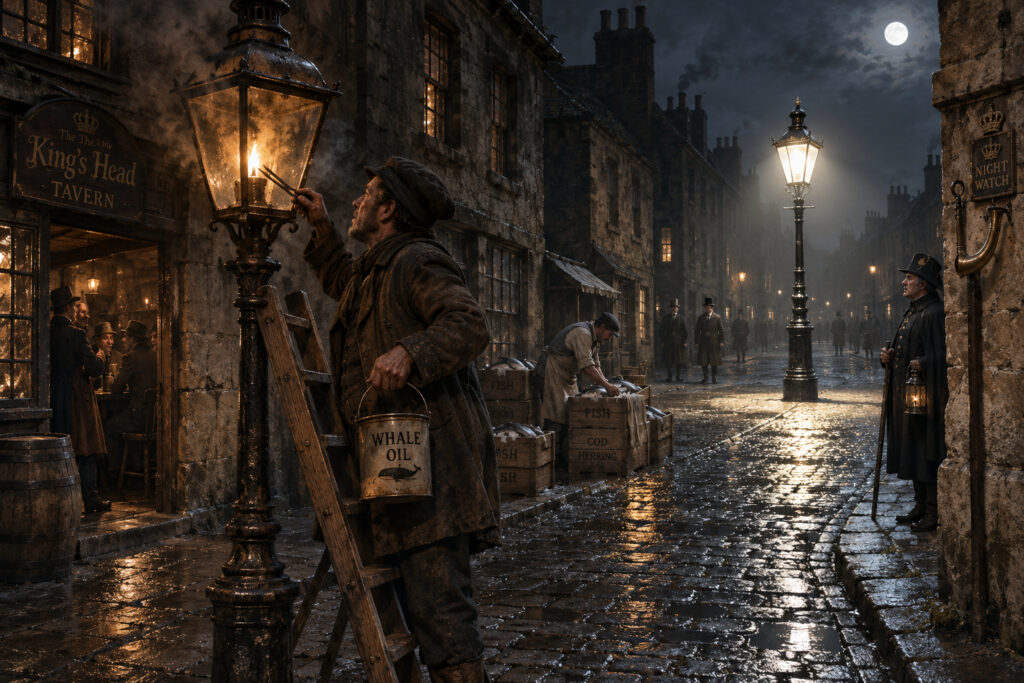
Long before electric bulbs erased the night, cities relied on a patchwork of light: handheld lanterns, candlelit shopfronts, and street lamps fueled by tallow, whale oil, or spermaceti. These fuels smelled, smoked, and required constant attention. Lighting a single thoroughfare was a small logistics operation. Lamplighters climbed ladders, trimmed wicks, topped up reservoirs and snuffed lamps at dawn. Their rounds—timed to tides of commerce and weather—were one of the few predictable rituals of urban nights.
Gaslight later changed the pattern, introducing brighter, steadier illumination and large cast-iron lamps that needed an engineer’s touch and a network of pipes. Even then, streets remained islands of brightness separated by deep shadow. Light was a public service and a visible sign of a city’s resources and priorities.
Markets, Taverns, and the Business of Darkness
Night shaped where people worked, shopped, and met. Markets for perishable goods often moved to evening hours when fishermen and butchers returned from the docks. Taverns, coffeehouses, and playhouses thrived after dusk; public entertainment and sociability migrated around whatever light existed. For many artisans—bakers, candlemakers, coopers—night was simply another shift in a 24-hour economy.
Some trades depended on the cover of darkness. Night-soil collectors cleared streets while most residents slept. Delivery services and certain craftsmen scheduled work for the night to avoid daytime congestion. Conversely, shops that could afford glass windows and brighter lamps used light as a lure: a lit frontage was an advertisement visible to any passing stranger.
Patrols, Curfews, and the Commons of Fear
The hush and concealment of night also encouraged crime and anxiety. Cities employed watchmen and patrols whose duties combined policing with communal announcements: calling the hour, warning of fires, or enforcing curfews. Bells, horns, and posted placards supplemented the imperfect coverage of lamps. Fires were an omnipresent terror—open flames and wooden buildings made a single spark an existential threat—so night patrols kept an eye on chimneys and taverns as much as on pickpockets.
Darkness shaped social boundaries. Some neighborhoods were densely lit and safer; others were left to shadow. Women, servants, and children experienced these divisions differently, restricted by custom and safety rather than law. Night was a political and physical environment with its own rules and hierarchies.
Conclusion
Life before neon wasn’t simply dimmer; it ran by a different timetable. Light was expensive, uneven, and curated. It organized labor, leisure, danger, and power. When electricity finally poured into streets and shops, it did more than banish shadow—it rewired when people worked, met, and feared the night. But for centuries the night remained a lived, negotiated landscape: a mix of small flames, human bodies, and the routines that kept cities moving after sunset.