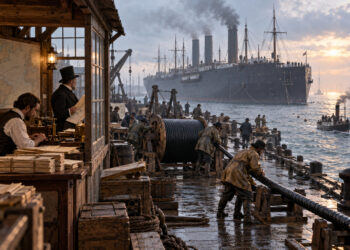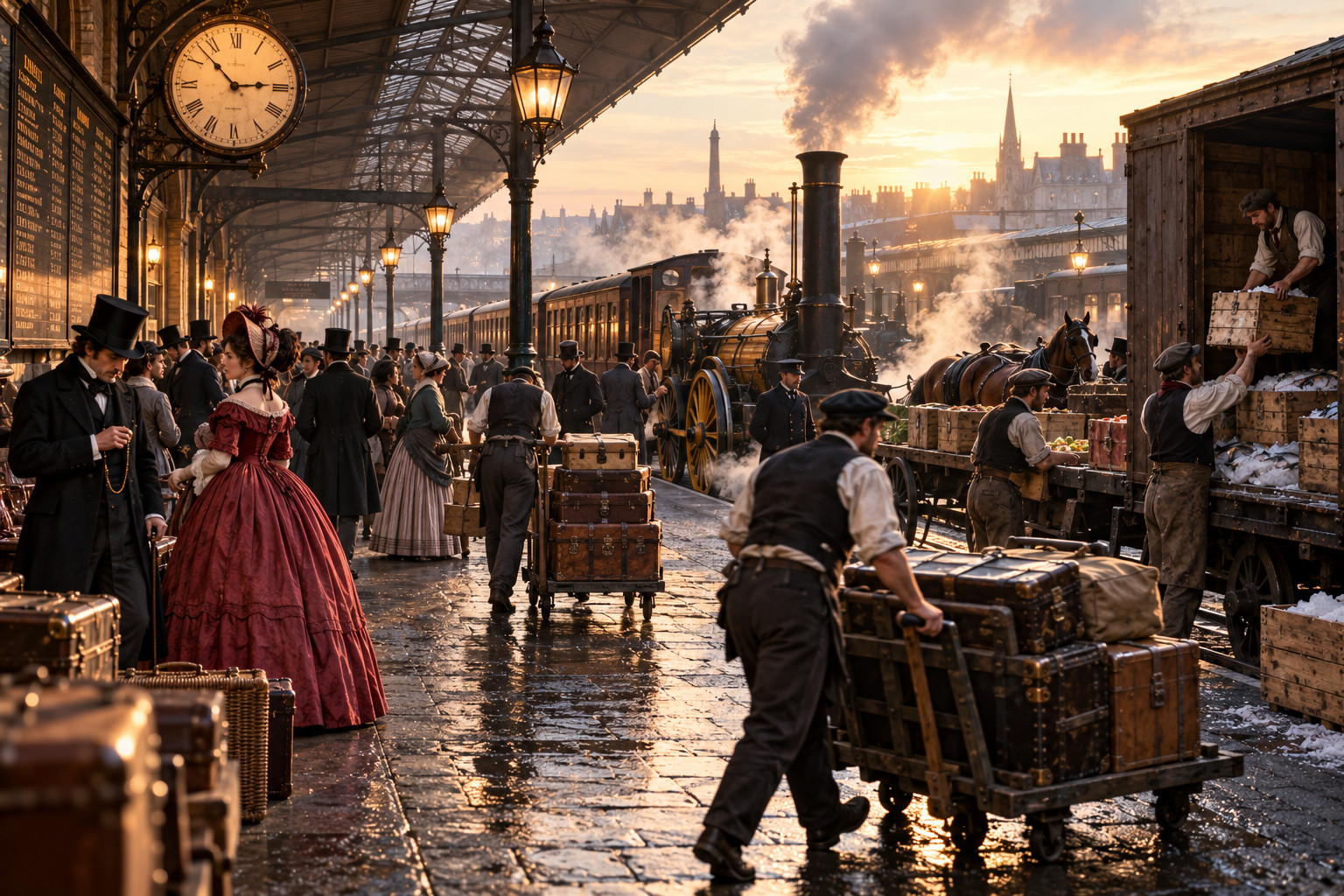
The first time a steam locomotive carried people in numbers, the sense of speed felt almost indecent. Journeys that once took days by coach shrank to hours on lines driven by engines such as George Stephenson’s Rocket, which won the Rainhill Trials in 1829 and helped prove that steam could haul reliably. Stations sprang up like new public squares; travelers remembered platforms as places equal parts bustle and theater, where clocks, porters, and printed timetables organized movement in a way no market fair ever had.
Speed changed perception as much as geography. Distances no longer measured the effort of travel but the minutes in a schedule. The timetable—rows of destinations, departure times, and platform numbers—became an everyday object, steering when people worked, shopped, or visited relatives. The slow, indeterminate tempo of pre-rail life began to yield to appointments, connections, and the punctuality of iron and steam.
Markets, meat, and the chilled revolution
Railroads didn’t just carry people. They moved meat, milk, fruit and vegetables across regions that had previously been local economies. The refrigerated railcar, developed to ship dressed beef from the American Midwest in the 1870s, meant a Boston butcher could offer beef from Chicago; coastal towns found their markets flooded with inland produce. Prices and diets shifted as seasonal limits loosened. Fish once sold only near the shore arrived fresh inland by morning trains, and rural producers accessed city demand on a scale never before possible.
Freight schedules remade supply chains. Factories timed their furnaces and deliveries to arriving wagons; merchants planned sales around the day a train arrived with goods. In short, the railroad turned patchwork local economies into integrated, time-regulated markets.
Cities, suburbs, and new daily rhythms
Iron tracks reshaped where people lived. Regular, affordable services allowed workers to live outside dusty industrial centers and commute in. Suburbs—rows of houses within half an hour of a town center—grew along railway lines, changing social geography. Weekend and holiday culture transformed, too: seaside towns that had been quiet fishing ports swelled with day-trippers who rode excursion trains for a slice of sun and salt air.
Railways also enforced a new temporal standard. When trains needed synchronized timetables, local towns gradually adopted a common time—first a railway time, then national standard time—so watches and church bells were adjusted to fit the railway’s clock. The very notion of time as a public, shared schedule owes a great deal to the demands of the track.
Conclusion
By binding landscapes, markets, and schedules together, the railroad age did more than speed travel: it reordered daily life. Stations became civic hubs, freight cars redrew diets, and timetables taught millions to live by the minute. Long after steam began to fade, the patterns it introduced—commuting, synchronized time, and national markets—remained, a quiet iron script written into modern life.