

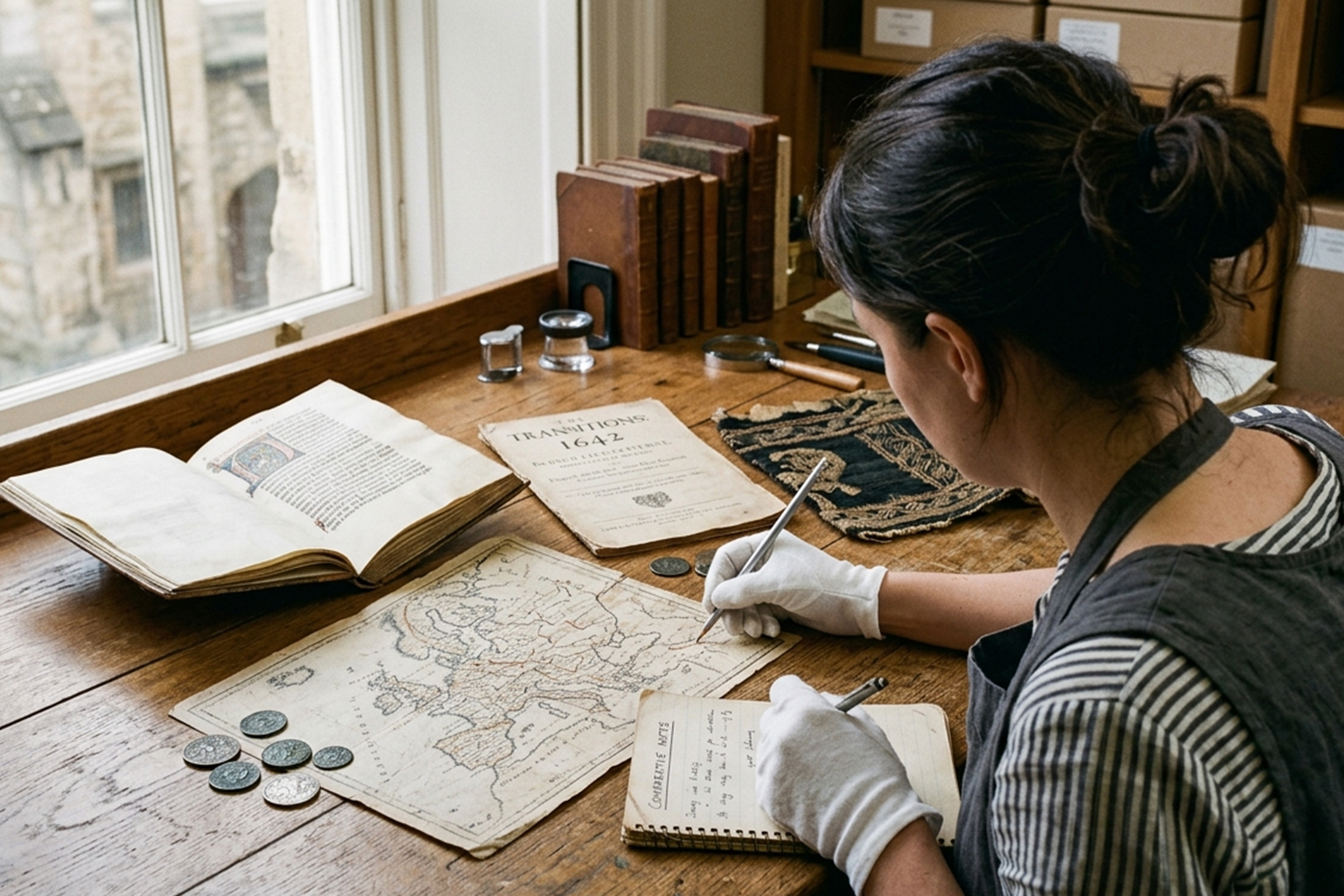
Transitional eras mark shifts between established periods and emergent orders, shaping long-term trajectories.
They are defined less by fixed dates than by overlapping changes in institutions, technology, and culture.
Understanding these intervals helps historians trace continuity amid change and identify moments of acceleration.
This article outlines frameworks for interpreting transitions and the forces that drive them.
Defining Transitional Eras
Transitional eras often resist neat boundaries because developments unfold unevenly across geographic and social landscapes. Historians rely on multiple indicators — institutional reform, technological diffusion, and intellectual movements — to identify turning points. Emphasizing processes such as gradual integration, sudden innovation, and shifting power relations offers a way to compare different moments without forcing an artificial snapshot. This perspective privileges networks of change rather than single dates or events.
A clear conceptual framework helps avoid teleological readings that assume inevitable outcomes. It encourages attention to contingency and varied local experiences within broader trends.
Social and Economic Drivers
Economic transformation frequently underpins transitions, whether through new trade routes, shifts in production, or changes in labor organization. Population dynamics, urbanization, and environmental pressures also interact with material change to produce new social orders. Technological innovations accelerate communication and mobility, while fiscal and governance reforms reconfigure state-society relations. Together these drivers create feedback loops that can widen or dampen transitional momentum.
Recognizing the compound nature of these drivers prevents oversimplified cause-and-effect explanations. It points scholars toward integrated, multi-scalar analysis.
Cultural Continuities and Disruptions
Cultural life both stabilizes and destabilizes during transitional eras: shared traditions can provide resilience even as new ideas spread. Religious, artistic, and intellectual exchanges often accompany economic and political shifts, producing hybrid forms and reinterpreted identities. Memory practices, education, and elite patronage influence which elements persist and which are abandoned. Examining these patterns reveals how people experienced and made sense of change at everyday and elite levels.
- Markers include language shifts, ritual adaptations, and new literary genres.
- Material culture such as dress and architecture can indicate hybridization.
- Institutions of knowledge often reflect and accelerate cultural change.
Focusing on cultural processes illuminates the human dimensions of transitions and highlights continuities that survive apparent ruptures. This balance enriches narratives beyond simple replacement models.
Conclusion
Transitional eras are complex tapestries woven from material, social, and cultural threads.
Studying them requires careful, comparative frameworks that respect local variability.
Such approaches yield richer, more nuanced histories of change.