
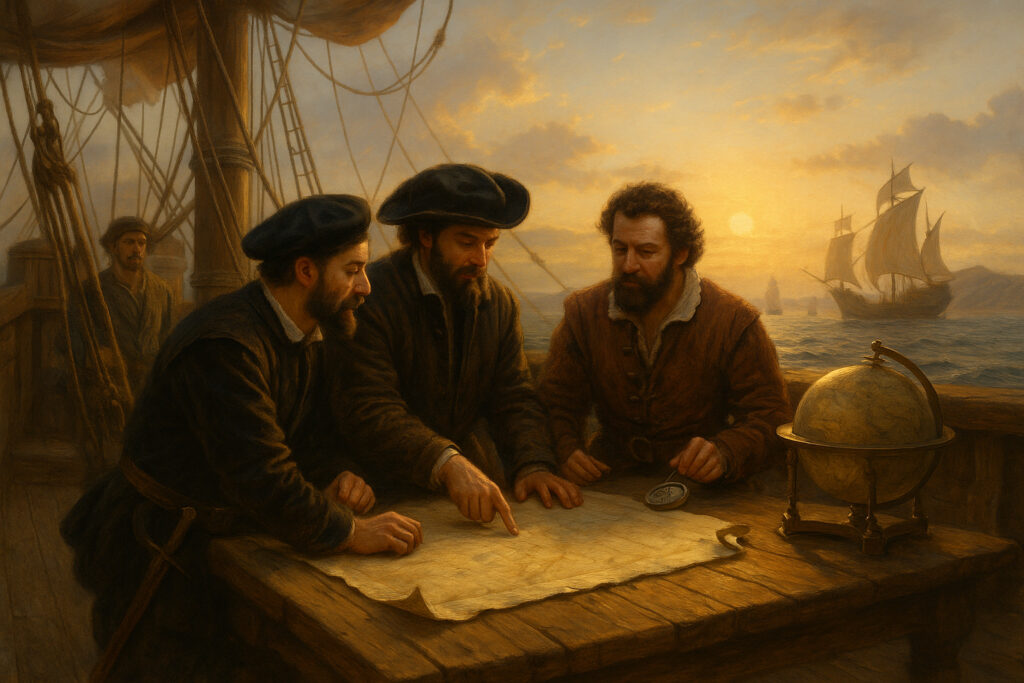
The Age of Empires, spanning from the 15th to the 19th century, marked an era when nations sought power not just through conquest but through exploration and global reach. Fueled by ambition, technological innovation, and economic desire, European powers expanded across continents, reshaping the political, cultural, and economic landscapes of the world. This was an age of daring voyages, imperial rivalries, and unprecedented global connection.
The Spirit of Exploration
Exploration was the lifeblood of empire-building. The Portuguese pioneered maritime routes under Prince Henry the Navigator, while Spain’s expeditions led by Columbus and Magellan connected Europe to the Americas and Asia. These journeys were more than geographic achievements—they opened the floodgates for cultural exchange, new trade goods, and the spread of ideas and technologies.
Navigational innovations such as the astrolabe, compass, and improved ship designs like the caravel made longer, riskier voyages possible. Empires saw the world as a vast, uncharted opportunity—and explorers were their scouts for profit and prestige.
Empire and Commerce
With discovery came colonization. Empires like Spain, Portugal, Britain, and France established colonies across Asia, Africa, and the Americas. The extraction of gold, silver, spices, and other resources enriched imperial economies, fueling the rise of capitalism and global trade networks.
The British East India Company and Dutch VOC became powerful economic forces, blurring the line between commerce and conquest. Ports from Goa to Havana became hubs of exchange, where cultures, languages, and goods intertwined—though often at the expense of indigenous populations.
Cultural Exchange and Consequences
The Age of Empires brought both enlightenment and exploitation. While it connected distant societies and advanced navigation, science, and art, it also spread diseases, slavery, and cultural domination. The clash of civilizations left legacies that still shape international relations today.
From the spread of Christianity and European languages to the global circulation of crops and commodities, this age fundamentally transformed how societies interacted and viewed the world.
Conclusion
The Age of Empires was a double-edged sword—an age of discovery and domination, of progress and pain. It expanded human horizons while redefining power and culture on a global scale. The explorers’ maps and empires’ ambitions changed the course of history, setting the stage for the modern interconnected world.