Uncover History’s Secrets with Daily Updates!
Daily News Entertainment
  • Home
  • History
  • Biographies
  • Eras
  • Regions
  • Timeline
No Result
View All Result
History Ours
  • Home
  • History
  • Biographies
  • Eras
  • Regions
  • Timeline
No Result
View All Result
History Ours
No Result
View All Result
Home Eras

The Age of Reason: When Science Challenged Faith

in Eras
The Age of Reason: When Science Challenged Faith

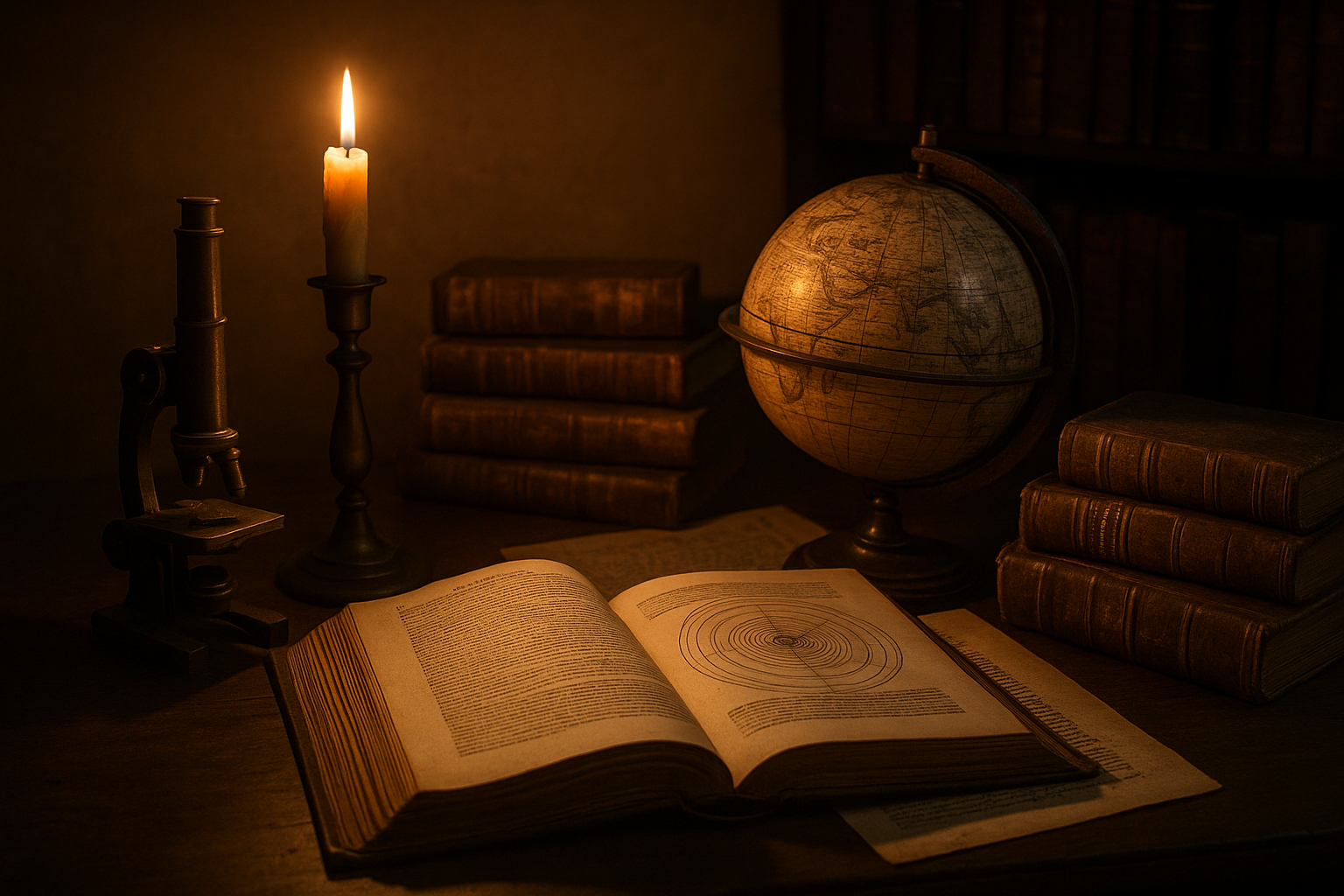
The Age of Reason marked one of humanity’s most profound turning points — a period when curiosity began to question convention, and knowledge dared to challenge authority. Spanning the 17th and 18th centuries, this intellectual revolution ushered in modern science, philosophy, and individual thought. It was a time when observation replaced superstition and logic began to redefine truth. Yet, the Age of Reason wasn’t merely a rebellion against faith; it was a dialogue between belief and discovery that forever changed how the world understands itself.

The Birth of Rational Inquiry

The seeds of the Age of Reason were planted during the Scientific Revolution. Thinkers like Galileo Galilei, Isaac Newton, and Francis Bacon began to question long-held views of nature and the cosmos. Observation, experimentation, and evidence replaced dogma as the basis for understanding the universe. Galileo’s telescope revealed celestial bodies in motion, challenging centuries-old teachings. Newton’s laws of motion and gravity provided a mathematical framework that unified heaven and earth. These discoveries ignited a new confidence in human intellect — the belief that reason could unlock the secrets of creation itself.

Philosophy and the Power of the Mind

Beyond science, the Age of Reason was shaped by philosophy. Thinkers such as René Descartes, John Locke, and Voltaire urged people to use rational thought rather than accept inherited truths. Descartes’ famous declaration — “I think, therefore I am” — symbolized this shift toward self-awareness and inquiry. Locke introduced the idea of natural rights and the social contract, laying the foundation for democratic ideals. Voltaire championed freedom of thought, challenging religious intolerance. Together, these minds redefined humanity’s place not as passive subjects under divine will, but as active participants in shaping destiny.

Faith Under Scrutiny

The rise of reason inevitably brought tension with organized religion. For centuries, religious institutions had been the primary source of knowledge and moral authority. But as science advanced, it began to question literal interpretations of scripture. The church, once the guardian of truth, now faced a growing challenge from rational thinkers who saw contradictions between revelation and observation. Yet, not all viewed this as opposition. Many Enlightenment thinkers believed faith and reason could coexist — that understanding the natural world was, in itself, a way of appreciating the divine.

Knowledge for the People

The Age of Reason wasn’t confined to scholars — it reached the public through the printing press, pamphlets, and salons. Knowledge became accessible, and education was increasingly seen as a path to empowerment. Encyclopedias compiled facts about art, science, and society, symbolizing the democratization of knowledge. The idea that learning should be shared, not guarded, laid the groundwork for modern education and scientific progress. The world was opening its eyes, and curiosity became a universal right.

The Legacy of Enlightenment

The debates of the Age of Reason gave birth to revolutions — political, scientific, and cultural. It inspired movements for liberty, secular governance, and human rights. The spirit of inquiry it ignited continues to shape the modern world — from medicine to technology to law. Yet, its greatest legacy may be the balance it sought: the belief that reason and faith need not be enemies, but companions in humanity’s endless search for truth.

Conclusion
The Age of Reason transformed how people thought about existence, knowledge, and power. It was a time of courage — when questioning was seen not as rebellion, but as progress. Science may have challenged faith, but in doing so, it expanded our understanding of both the world and ourselves. The dialogue between belief and reason continues even today, reminding us that wisdom often lies not in choosing between them, but in finding harmony between heart and mind.


Previous Post

The Age of Industrial Growth and Global Trade

Next Post

Medieval Europe: Castles, Crusades, and Culture

Related Posts

Pax Mongolica: How Mongol Rule Rewired the Old World
Eras

Pax Mongolica: How Mongol Rule Rewired the Old World

September 15, 2026
Life Under the Tokugawa: How Edo Japan Rewrote Social Order
Eras

Life Under the Tokugawa: How Edo Japan Rewrote Social Order

September 15, 2026
When Empires Fell: The Late Bronze Age Collapse
Eras

When Empires Fell: The Late Bronze Age Collapse

September 15, 2026
1816: How a Volcano Turned Summer Into Crisis
Eras

1816: How a Volcano Turned Summer Into Crisis

September 15, 2026
Next Post
Medieval Europe: Castles, Crusades, and Culture

Medieval Europe: Castles, Crusades, and Culture

Search..

No Result
View All Result

Recent Articles

The Disguise That Broke Chains: Ellen and William Craft

The Disguise That Broke Chains: Ellen and William Craft

September 15, 2026
Bass Reeves: The Marshal Who Hunted Outlaws in Indian Territory

Bass Reeves: The Marshal Who Hunted Outlaws in Indian Territory

September 15, 2026
How the Crystal Palace Turned Glass and Iron into a Modern Stage

How the Crystal Palace Turned Glass and Iron into a Modern Stage

September 15, 2026
Anne Bonny: The Pirate Who Broke Rules and Expectations

Anne Bonny: The Pirate Who Broke Rules and Expectations

September 15, 2026
How Haiti Broke Its Chains: A 1791–1804 Timeline

How Haiti Broke Its Chains: A 1791–1804 Timeline

September 15, 2026

Subscribe Us

By clicking submit, I authorize History Ours and its affiliated companies to: (1) use, sell, and share my information for marketing purposes, including cross-context behavioral advertising, as described in our Terms of Service and Privacy Policy, (2) supplement the information that I provide with additional information lawfully obtained from other sources, like demographic data from public sources, interests inferred from web page views, or other data relevant to what might interest me, like past purchase or location data, (3) contact me or enable others to contact me by email with offers for goods and services from any category at the email address provided, and (4) retain my information while I am engaging with marketing messages that I receive and for a reasonable amount of time thereafter. I understand I can opt out at any time through an email that I receive, or by clicking here

Subscribe To Our Newsletter

By clicking submit, I authorize History Ours and its affiliated companies to: (1) use, sell, and share my information for marketing purposes, including cross-context behavioral advertising, as described in our Terms of Service and Privacy Policy, (2) supplement the information that I provide with additional information lawfully obtained from other sources, like demographic data from public sources, interests inferred from web page views, or other data relevant to what might interest me, like past purchase or location data, (3) contact me or enable others to contact me by email with offers for goods and services from any category at the email address provided, and (4) retain my information while I am engaging with marketing messages that I receive and for a reasonable amount of time thereafter. I understand I can opt out at any time through an email that I receive, or by clicking here.

© 2026 History Ours | All Rights Reserved

  • Contact Us
  • Privacy Policy
  • Terms of Service
  • Unsubscribe
  • Privacy Choices
  • Contact Us
  • Privacy Policy
  • Terms of Service
  • Unsubscribe
  • Privacy Choices

© 2026 History Ours | All Rights Reserved

No Result
View All Result
  • Home
  • History
  • Biographies
  • Eras
  • Regions
  • Timeline

© 2026 History Ours | All Rights Reserved

Skip to content
Open toolbar Accessibility Tools

Accessibility Tools

  • Increase TextIncrease Text
  • Decrease TextDecrease Text
  • GrayscaleGrayscale
  • High ContrastHigh Contrast
  • Negative ContrastNegative Contrast
  • Light BackgroundLight Background
  • Links UnderlineLinks Underline
  • Readable FontReadable Font
  • Reset Reset