
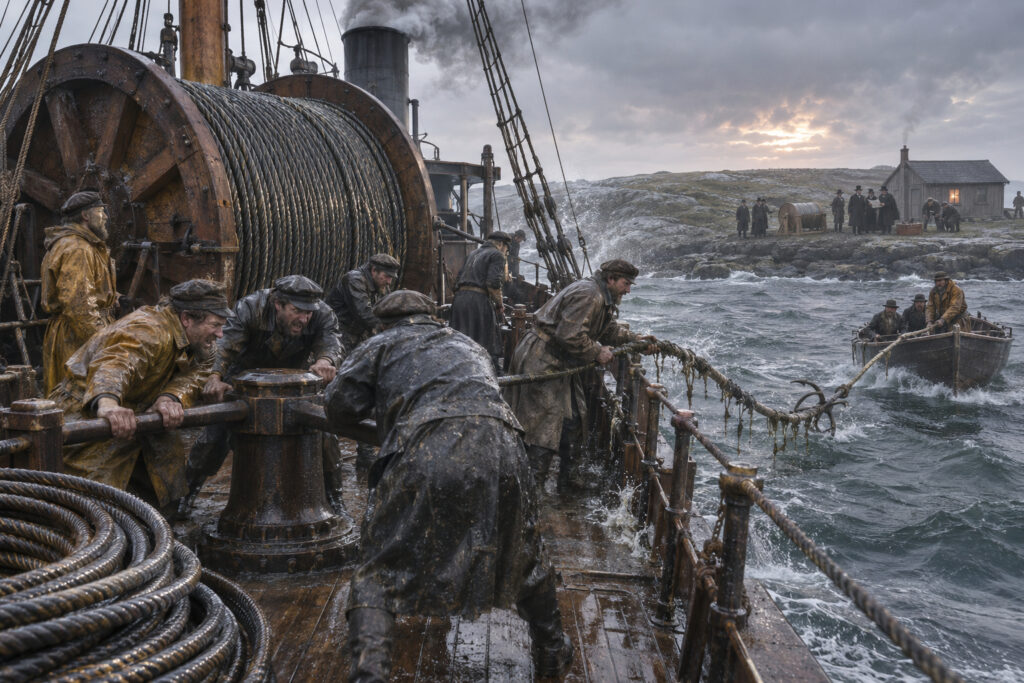
By the mid-1800s, messages that once took weeks on sailing ships began to move at the speed of electricity—except for one stubborn obstacle: the ocean. The solution was physical and unlikely. Insulated copper wire, wrapped in gutta-percha from Southeast Asia, was bundled, armored and laid across seabeds by purpose-built ships. The famous effort to join Europe and North America produced a string of failures and a few spectacular successes; an 1858 cable carried public messages for a short time before failing, and a sturdier link finally stayed lit in 1866. These early triumphs launched what people at the time called a new era—cities, markets and governments were suddenly linked by undersea lifelines.
Power, profit, and a new geography of statecraft
Submarine cables rewired power in practical ways. Telegraph lines let diplomats and military commanders communicate without waiting for a packet schooner; instructions could reach a colonial outpost in hours rather than months. Commercial centers felt the change even sooner. Exchanges in London, New York and Calcutta began pricing information not by rumor but by instant reports, tightening global markets and making financial panic travel faster.
Control of cable routes and landing stations became a strategic asset. Empires invested in cable companies, governments pressured private firms, and remote coastal towns suddenly hosted valuable stations watched round-the-clock. Attacks on cables during conflicts—cutting or tapping them—became both tactic and temptation, because severing a link could blind an opponent for days.
Everyday ripples and fragile connections
The cables changed ordinary life in ways that are easy to miss now. Newspapers could carry foreign correspondents’ reports overnight. Families could learn of births, deaths and disasters much sooner. But the system was delicate: cables broke on rocky shoals, snapped under storms, and succumbed to corrosion. Repairing them was a labor-intensive business. Ships dragged grapnels along the seabed, hauled the wire to the surface, spliced it and dropped it back. The gadgets and habits that grew up around maintenance—specialized ships, engineers, and coastal stations—were as much a part of the era as the triumphant ceremonies when a new route first hummed with Morse code.
Conclusion
The cable-laying era shrank distances not by changing the sea but by binding it. For a few decades it created a physical web that sped diplomacy, markets and news, while revealing how vulnerable modern communication could be. By the time radio and later fiber optics arrived, the undersea cable had already left an unmistakable legacy: a map of the world redrawn in lines of wire, each one a small, stubborn instrument of connection.