
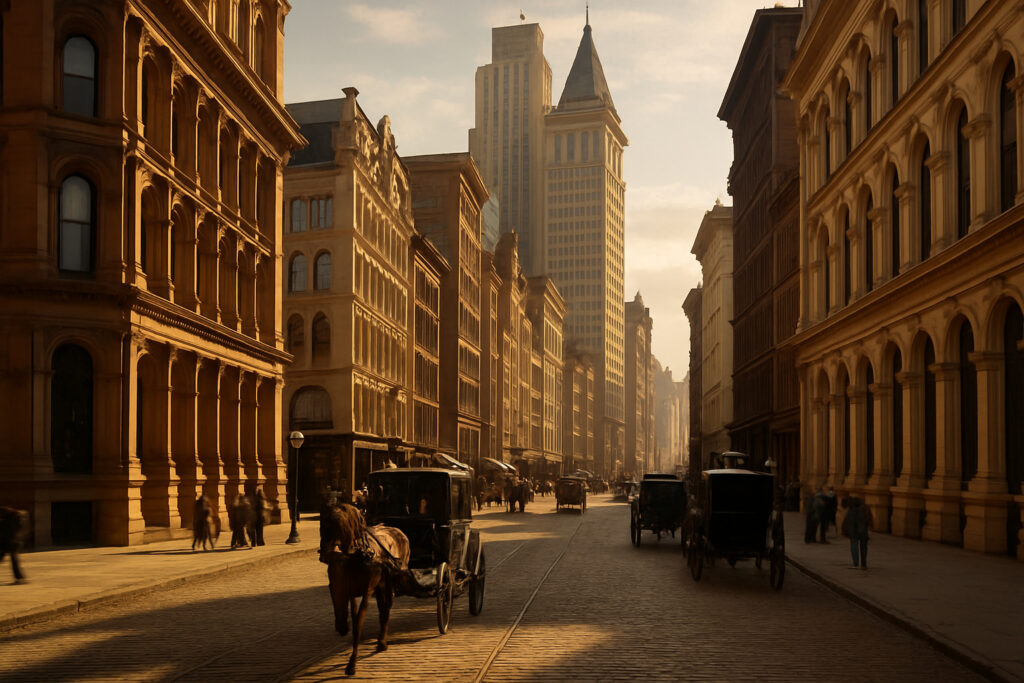
The Gilded Age was a period of dramatic growth, striking contrasts, and rapid transformation. Spanning the late 19th century, it marked a time when industries expanded at lightning speed, cities evolved into bustling hubs, and a new era of wealth reshaped American life. Yet beneath the glittering surface of prosperity lay deep social challenges that defined the era’s complexity. This period laid the groundwork for modern economic systems, urban development, and political reform.
Industrial Titans and Expanding Wealth
Advances in steel, railroads, oil, and manufacturing created enormous fortunes for influential figures like Carnegie, Rockefeller, and Vanderbilt. Their innovations and business empires transformed how people lived and worked. The era’s economic boom fueled unprecedented construction, trade, and technological progress. Factories ran nonstop, rail lines connected distant regions, and new industries offered opportunities unheard of just decades earlier.
Urbanization and Social Change
As industries grew, so did cities. Millions moved into urban areas seeking steady jobs, while waves of immigrants contributed to cultural diversity and economic expansion. Skyscrapers began rising, public transit expanded, and consumer culture started taking shape. However, this rapid growth also led to overcrowded neighborhoods, unsafe working conditions, and widening divisions between the wealthy elite and the working class.
Political Reform and Rising Awareness
The Gilded Age also sparked conversations about fairness, corruption, and the responsibilities of wealth. Political machines, labor organizations, journalists, and reformers highlighted issues that demanded public attention. Their efforts contributed to major shifts in labor rights, antitrust laws, and social reforms that would influence the decades to come. The era didn’t just showcase economic success—it exposed inequalities that inspired long-lasting change.
Conclusion
The Gilded Age remains one of the most fascinating chapters in modern history. It was a time of bold innovation, immense fortunes, and sweeping social challenges. Its legacy can be seen in today’s economic structures, urban landscapes, and ongoing conversations about opportunity and inequality. The era’s blend of progress and complexity continues to shape how we understand growth and power.