
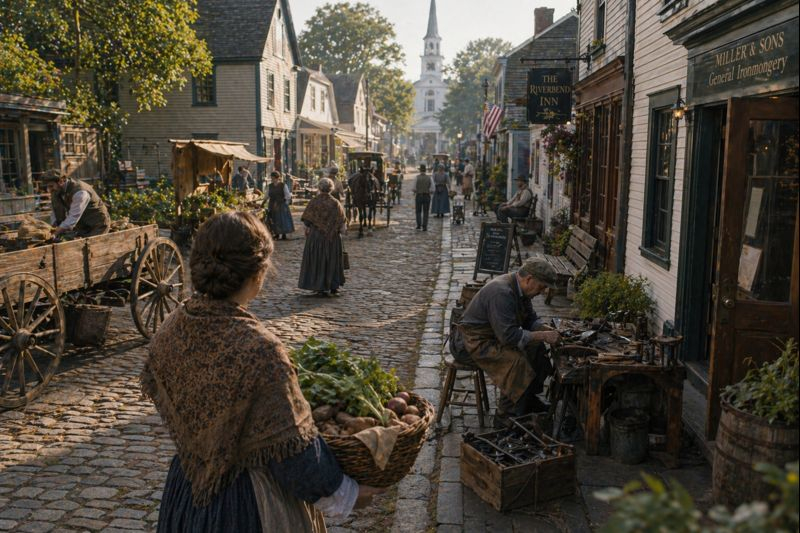
Small towns were shaped by a steady pattern of trade, domestic life, and communal routines that structured everyday experience. Market days, household chores, and communal worship punctuated the week and tied disparate neighborhoods together. Ordinary objects and repeated movements — carts, doorways, benches — organized social encounters as much as formal institutions. Understanding those rhythms helps explain how communities maintained cohesion without centralized planning.
Marketplace as Social Hub
The marketplace served as more than a venue for exchange; it was an arena for gossip, negotiation, and public performance. Vendors and customers negotiated prices and reputations simultaneously, producing informal rules that governed behavior. Public notices, casual conversation, and street-side artisan work turned markets into vital information networks. Daily interactions here shaped trust and could resolve disputes before they escalated.
These market interactions reinforced social boundaries and allowed people to read reputations. Markets thus acted as civic spaces where economic and social life intertwined.
Work, Home, and Shared Spaces
Domestic and commercial activities often overlapped, with workshops opening directly onto streets and houses doubling as shops. Families balanced production, childcare, and sales in tight quarters, creating routines that blended private and public responsibilities. Neighborhood neighbors provided mutual aid, lending tools or labor during harvests or repairs. Such arrangements meant that social support was woven into the architecture of daily life.
This blending of roles cultivated interdependence and local knowledge. Everyday cooperation became a form of social insurance in times of scarcity.
Seasonal Calendars and Movement
Seasonal rhythms—harvests, fairs, and religious festivals—shaped patterns of mobility and conspicuous consumption. People timed journeys to coincide with fairs or market cycles, bringing goods and news from neighboring areas. Transport infrastructures like roads, bridges, and inns channeled movement and affected which towns prospered. These calendars also set expectations for labor and leisure, structuring when communities gathered and when they dispersed.
- Harvest fairs concentrated trade and celebration.
- Weekly markets regulated supply and social contact.
Mobility forged wider social ties while reinforcing local rhythms. The ebb and flow of people created predictable patterns communities relied upon.
Governance, Order, and Informal Authority
Local officials, guild elders, and informal leaders all played roles in regulating behavior without heavy bureaucracy. Rules about weights, trading hours, and sanitation were enforced through fines, shaming, or social exclusion rather than formal courts alone. Religious leaders and merchant elites mediated disputes and sponsored charitable works that reinforced norms. Together, these mechanisms balanced individual autonomy with communal expectations.
Informal governance sustained trust and enabled cooperation on shared projects. That mix of formal rules and social enforcement helped towns adapt to change.
Conclusion
Everyday rhythms in small towns were produced by a combination of economic practices, spatial arrangements, and communal norms. These routines sustained social order and made cooperation possible without formal institutions. Studying them reveals how ordinary people shaped resilient communities through repeated, shared behaviors.