
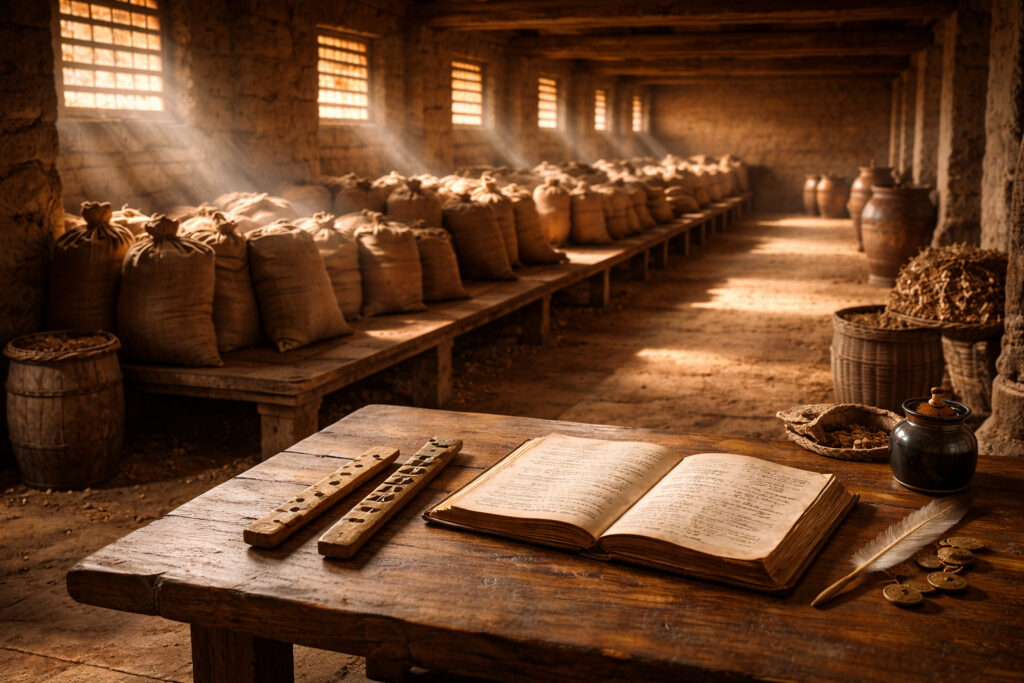
In preindustrial cities, storage infrastructure was as vital as roads or markets.
Granaries, public warehouses and private storehouses moderated shortages and smoothed supply.
Their presence shaped urban layouts, political power, and seasonal rhythms of work.
Understanding these systems reveals how communities managed risk, surplus and distribution.
Storerooms and Granaries as Urban Anchors
Granaries and warehouses functioned as physical buffers that converted irregular harvests into predictable urban supplies. Local authorities often supervised public storehouses to stabilize prices and provide relief during lean seasons. Merchants and guilds controlled private depots that supported long-distance trade, enabling bulk shipments and delayed sales. The interplay of public and private storage created a layered network of access and control.
– Stored grain and goods reduced price volatility and prevented famine.
– Public depots could be requisitioned in emergencies under civic regulations.
– Private warehouses enabled merchants to speculate and coordinate long-haul commerce.
These facilities therefore were not neutral warehouses but instruments of policy and profit. Their locations and rules influenced who ate well and who bore risk.
Seasonal Storage and Crisis Management
Seasonality defined preindustrial supply cycles, with harvest peaks followed by long consuming months. Effective storage extended the eating season and supported urban populations through winter or drought. Authorities used reserves for famine relief, military provisioning, and to assert legitimacy by distributing staples. Conversely, poor storage led to spoilage, pest infestations, and price spikes that could destabilize cities.
Managing the timing of release required administrative systems and transparent measurement. The ability to convert a surplus year into social stability depended on both infrastructure and governance.
Technology, Records, and Labor in Logistics
Storage systems relied on technology and administration as much as on buildings. Innovations in silo design, ventilation, and raised floors reduced spoilage, while standard measures and sealed amphorae helped preserve value during transport. Clerks maintained detailed ledgers, tally sticks or token systems to track ownership and receipts for stored goods. Labor—dockworkers, grain inspectors, and cart drivers—formed the human backbone of distribution networks.
– Inventory records underpinned credit arrangements and market trust.
– Building techniques evolved to address local climates and pest pressures.
– Labor organizations and customs regulated access and fees for storage services.
Together these elements made storage a sophisticated economic sector rather than mere physical space. They also created points where power and privilege could be exercised.
Conclusion
Granaries and warehouses were central to the longevity and resilience of preindustrial cities.
They linked agriculture, commerce, and governance through material practices and institutions.
Studying them uncovers how everyday logistics shaped historical outcomes.