
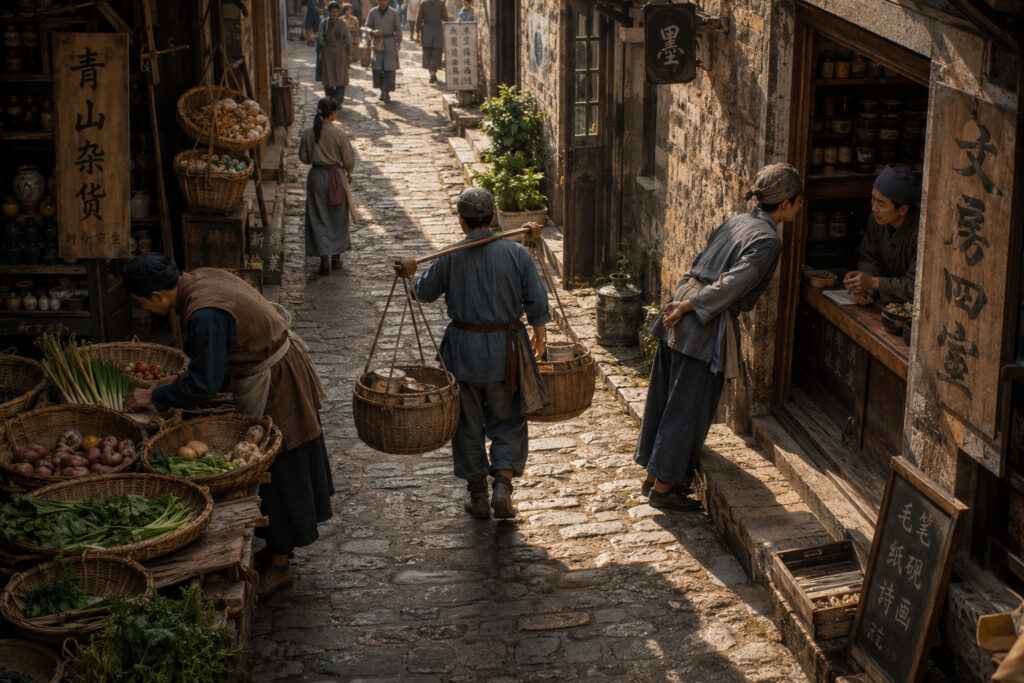
Market streets were the living rooms of historic towns, where goods, news and social ties circulated in equal measure. Daily exchanges on pavements and around stalls structured how people encountered one another and judged reputations. Material culture—from baskets to shop signs—guided movement and signaled status and intent. Understanding these street-level practices reveals how social order was produced through routine interaction. This article examines the routines and relationships that made street life intelligible.
Streets as Commercial Stages
Merchants, hawkers and household producers used shopfronts and temporary stalls to stage transactions that were as much social as economic. The arrangement of space—alcoves, thresholds, and open plots—shaped who could be seen and who could be excluded. Vendors adapted call, display and timing to attract customers while navigating neighbors’ expectations. These performances also encoded information about prices, quality and obligations that kept local economies intelligible. Seasonal fairs and periodic markets intensified these dynamics and introduced episodic crowding that tested local norms.
Together, these visible practices made commerce legible to residents and strangers. They turned streets into negotiated public arenas.
Everyday Choreography and Movement
Movement along market streets followed predictable rhythms like early morning provisioning, midday bargaining and evening closure. Regular routes by porters, apprentices and shoppers established familiarity and created opportunities for gossip, credit and mutual aid. Informal signals— a raised hand, a door left ajar, a lingering group—coordinated interactions without formal announcements. Over time such choreography reduced friction and allowed complex exchanges to proceed smoothly. Seasonal variations and festival days routinely altered traffic and bargaining patterns, creating temporary hierarchies of priority.
Patterns of circulation therefore mattered as much as the goods carried. The tempo of streets shaped social expectations and access.
Regulation, Reputation, and Shared Norms
Local authorities and community actors regulated street life through ordinances, fines and customary sanctions, but many norms were enforced informally. Reputation, reciprocal favors and visible acts of care or exclusion often resolved disputes faster than official channels. Collective maintenance—road repairs, refuse clearing, festival preparations—linked commerce with civic obligations and reinforced belonging. These practices created layered systems of trust that sustained everyday market life. Informal credit, apprenticeship ties and family networks complemented formal institutions and often determined who prospered.
- Stallholders who managed space and display.
- Porters and itinerant sellers facilitating movement.
- Apprentices and neighbors providing services and oversight.
Recognizing these actors helps map the social ecology of streets. Their roles show how economic necessity and social expectation coexisted.
Conclusion
Street-level sociability sustained historic market towns by embedding commerce in networks of trust and routine. Studying these patterns illuminates how ordinary practices built resilient local economies and social cohesion. Today’s planners and scholars can draw practical insights from the tacit rules that once kept streets productive and communal.